- Premium Content It takes our newsroom weeks - if not months - to investigate and produce stories for our premium content. You can’t find them anywhere else.
 Simon Huang · · 5 min read
A guide to Grab’s upcoming Q1 2022 earnings amid ‘seismic shift’
When Grab announced its results for the fourth quarter and full-year 2021 in March, its shares suffered a precipitous 37% decline.
Investors were concerned about the Singapore-headquartered company’s growth and profitability prospects, compounded by increasing nervousness around the macroeconomic environment.
If anything, things now are even more pessimistic, with shares tumbling down a further 23% since the announcement.
Even Dara Khosrowshahi, CEO of US-based Uber, recently warned his staff about this “seismic shift” in the market. “In times of uncertainty, investors look for safety. They recognize that we are the scaled leader in our categories, but they don’t know how much that’s worth … we need to show them the money.”
What Khosrowshahi, who also sits on Grab’s board of directors, conveyed also applies to the Southeast Asian super app, which faces a similar challenge. While Grab is the leading player in food delivery and ride-hailing in Southeast Asia, it has not yet proven its ability to achieve or sustain profitability amid intense competition.
Efficient spending on incentives is crucial
To win over investors, Grab will have to prove that it can reduce incentives (relative to commissions and fees earned) while maintaining growth. This will be a tough tightrope to walk.
Grab offers incentives to attract both demand and supply on its platform. To encourage demand, Grab offers“consumer incentives” – discounts and promotions for users who wish to order a meal or get a ride. To boost supply, the super app provides “partner incentives,” which refer to payments made to merchants and drivers who provide goods and services to consumers.
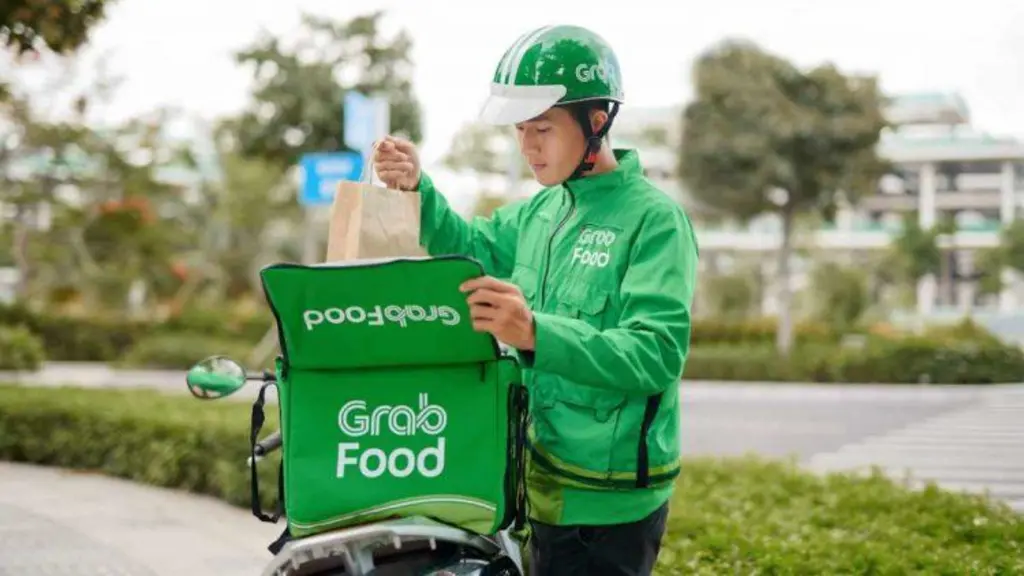
Photo credit: Grab
Giving incentives to draw users is common practice in the ride-hailing and food delivery industries. Uber similarly provides what it calls “driver incentives” and “end-user discounts and promotions.”
However, there are differences in accounting. While Grab’s consumer and partner incentives both result in reduced revenue, Uber classifies incentives as either reducing revenue or as sales and marketing expenses, depending on whether certain criteria are met. This makes apples-to-apples comparisons more challenging.
The conundrum is that to drive revenue, Grab will need to boost the gross merchandise value (GMV) of transactions on its platform and raise the commissions it charges consumers and partners. But one of the key ways to attract both sides is to offer incentives, which in turn slashes revenue and profitability.
Another platform business – Shopee’s marketplace – just about managed this in its most recent first quarter, as reported by its parent firm Sea Group. Sales and marketing expenses fell by 17% quarter on quarter, while marketplace revenue held steady at US$1.3 billion.
Facing fierce competition, some spending on incentives is inevitable. However, Grab needs to spend such incentives efficiently while finding ways to increase users’ retention rates.
A proxy for the efficiency of incentives spend is how much corresponding GMV growth it generates. If incentives as a percentage of total GMV are declining, Grab can make the case that it is getting bang for its buck.
Stagnant GMV growth expected this quarter
Will the mobility user base stabilize?
Cash flows, not EBITDA
Stay ahead in Asia’s tech landscape
This is premium content. Subscribe to read the full story.
If Grab wants to win over investors, it must prove the efficiency of its incentives spend and show a path to profitability.
We know this is not ideal. ⌛ Sign up in 20 seconds. Cancel anytime.
Our subscriber community includes professionals from these companies:





Stay updated on the go with our mobile app.
Get latest insights with smoother, more personalized experience through TIA mobile app.