- Premium Content It takes our newsroom weeks - if not months - to investigate and produce stories for our premium content. You can’t find them anywhere else.
 Jack Ellis · · 8 min read
Ninja Van CEO talks profitability, deals with Grab, and pitfalls of the gig economy
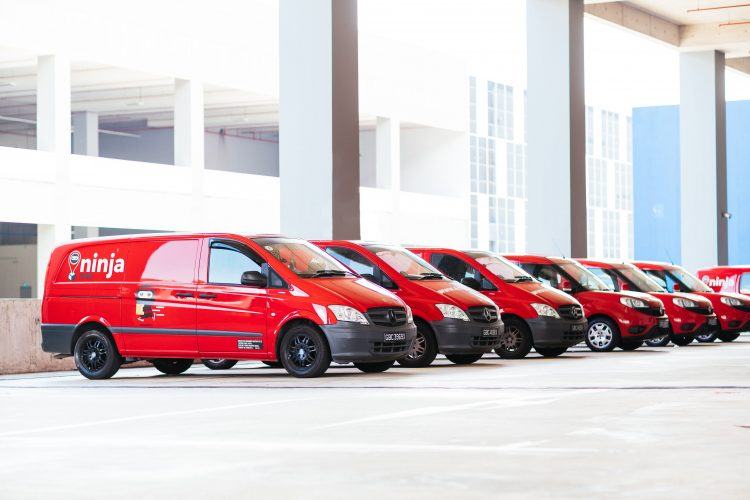
Photo credit: Ninja Van
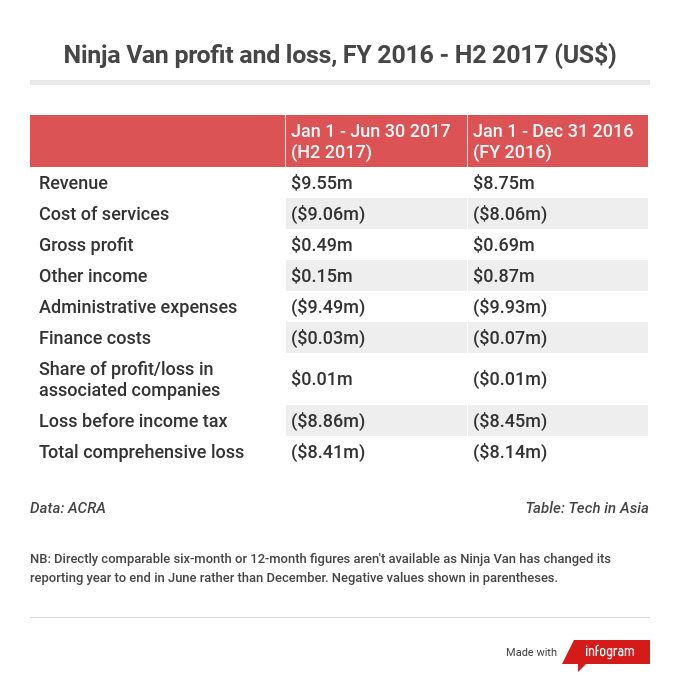
Ninja Van booked almost US$9.55 million in revenue between January and June 2017, according to its most recent regulatory filing seen by Tech in Asia.
That’s more than the US$8.75 million revenue that the Singapore-based startup made in the entire 12-month period from January 1 to December 31, 2016.
And since then, the logistics company’s volumes have grown more rapidly, making its latest filing with Singapore’s Accounting and Corporate Regulatory Authority (ACRA) “outdated,” CEO and co-founder Lai Chang Wen tells Tech in Asia.
“Our business moves really fast and these numbers don’t accurately reflect the ongoing business. Two years is an eternity in our world!”
This business has been around for centuries… we are confident that profitability isn’t an ‘if,’ but a ‘when.’
Ninja Van clocked US$8.86 million in pre-tax losses for the six months ending June 30, 2017 – which represents H2 2017.
The company changed its reporting year to end in June, as December tends to be its busiest month, says Lai. “Think 11.11 and Christmas. It does not make sense to do any budget planning, strategy offsites, nor closing of accounts during that period,” he explains.
According to the ACRA filing, the H2 2017 losses were largely due to operating costs and “administrative expenses”:
 However, according to Lai, Ninja Van now delivers close to 1 million parcels each day across Indonesia, Malaysia, Singapore, Thailand, Vietnam, and the Philippines.
“If you were to just apply a rough average selling price to them, you will realize that these numbers [filed with ACRA] are so far off that it does not serve to add credibility to the report,” he says.
The startup measures operational efficiency by cost per parcel, and Lai claims this has been “steadily declining” every month.
It has multiple levels of fixed costs, starting with line hauls and hubs. These are followed by country-specific costs like office headcount and other expenses, he says.
Monetizing its network
Teaming up with Grab
Glamorizing the micro-entrepreneur
Stay ahead in Asia’s tech landscape
This is premium content. Subscribe to read the full story.
The end-to-end logistics startup is getting closer to turning a profit, and its new partnership with Grab could help get it over the line.
We know this is not ideal. ⌛ Sign up in 20 seconds. Cancel anytime.
Our subscriber community includes professionals from these companies:





Stay updated on the go with our mobile app.
Get latest insights with smoother, more personalized experience through TIA mobile app.









📅 Upcoming Events
22 October 2026
Payoneer x CSPN Summit 2026