- Premium Content It takes our newsroom weeks - if not months - to investigate and produce stories for our premium content. You can’t find them anywhere else.
 Simon Huang · · 5 min read
Grab’s GMV is stagnant. It needs to reverse that to break even
Grab delivered results for the first quarter of 2023 that some analysts described as “solid” and “a good set of numbers.”
Yet the market was unimpressed, sending the company’s shares down by 10% in the trading session that followed, although they have since recovered most of those losses.
Results were actually stronger than expected, with overall revenue for the quarter up 130% year on year, while adjusted EBITDA losses narrowed for the fifth consecutive quarter to US$66 million.
The company’s post-income tax loss was also its smallest ever at US$250 million.
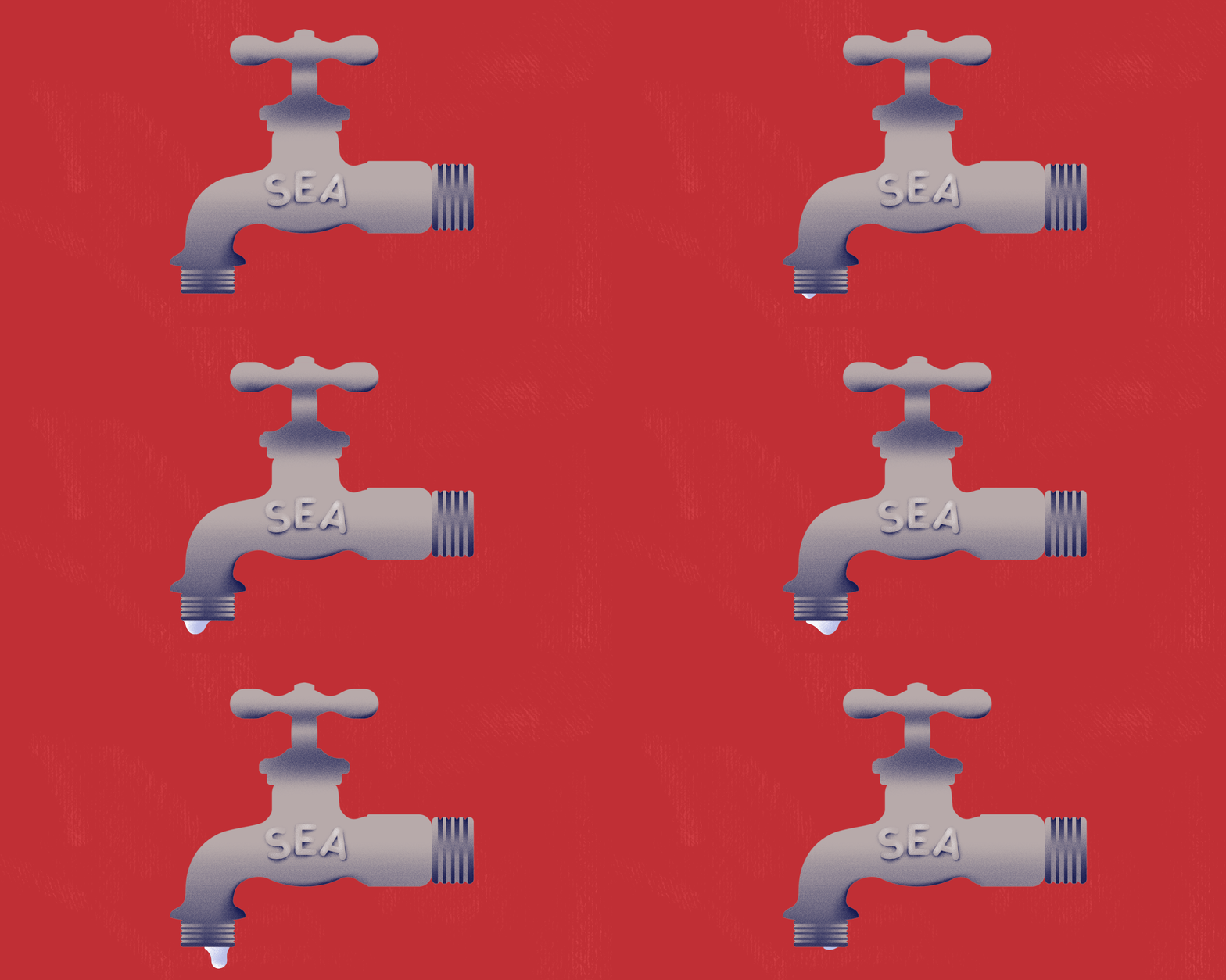
But investors seemed to look past all this positive news and instead fixate on stagnant gross merchandise value (GMV) numbers, caused by declines in Grab’s deliveries and financial services segments.
This may seem unfair, especially since some of the slowdown in growth can be attributed to cutbacks in incentives, which were necessary to get the company on the path to profitability that investors are demanding.
Ultimately, though, Grab will have to thread this needle and find ways to grow GMV – which will feed through to its bottom line – while keeping a lid on expenses in order to maintain its profit margins.
Without GMV growth, it may be hard for Grab to achieve breakeven by Q4 of this year, as it has guided.
Deliveries growth disappoints
Revenue in deliveries, the super app’s biggest segment that consists mainly of an online food delivery platform, grew by 203% from the same period last year.
Adjusted EBITDA as a percentage of GMV reached 2.6%, an all-time high.
Grab is targeting a steady-state adjusted EBITDA margin of “3% plus” of GMV for the segment.
While there’s still some room to go before that target is reached, most of the growth in adjusted EBITDA in the long run will have to come from an expansion in GMV rather than further increases in EBITDA margin.
Perhaps this is why the market reacted so negatively to the stagnating GMV over the past few quarters.
Grab attributed part of this flat growth to the Ramadan holidays, when Muslims fast during the day. This year, part of Ramadan began at the end of Q1, whereas last year it fell entirely within Q2.

Mobility moving along nicely
Still early days for digital bank
Growing the pie
Stay ahead in Asia’s tech landscape
This is premium content. Subscribe to read the full story.
While EBITDA losses narrowed for a fifth consecutive quarter, the market was still skeptical of the company’s results.
We know this is not ideal. ⌛ Sign up in 20 seconds. Cancel anytime.
Our subscriber community includes professionals from these companies:





Stay updated on the go with our mobile app.
Get latest insights with smoother, more personalized experience through TIA mobile app.







📅 Upcoming Events
22 October 2026
Payoneer x CSPN Summit 2026