- Premium Content It takes our newsroom weeks - if not months - to investigate and produce stories for our premium content. You can’t find them anywhere else.
 Jofie Yordan · · 6 min read
As Grab leads SEA’s food delivery race, challengers vie for 2nd spot
Uncertain macroeconomic conditions and mounting pressure to turn a profit have changed the approach of tech companies to the food delivery sector in the past year.
Grab, GoTo, Foodpanda, and Shopee have reduced incentives they previously relied on to encourage growth.
Instead, they are expanding their revenue streams with features such as advertising and subscriptions. This move is expected to increase their profitability.
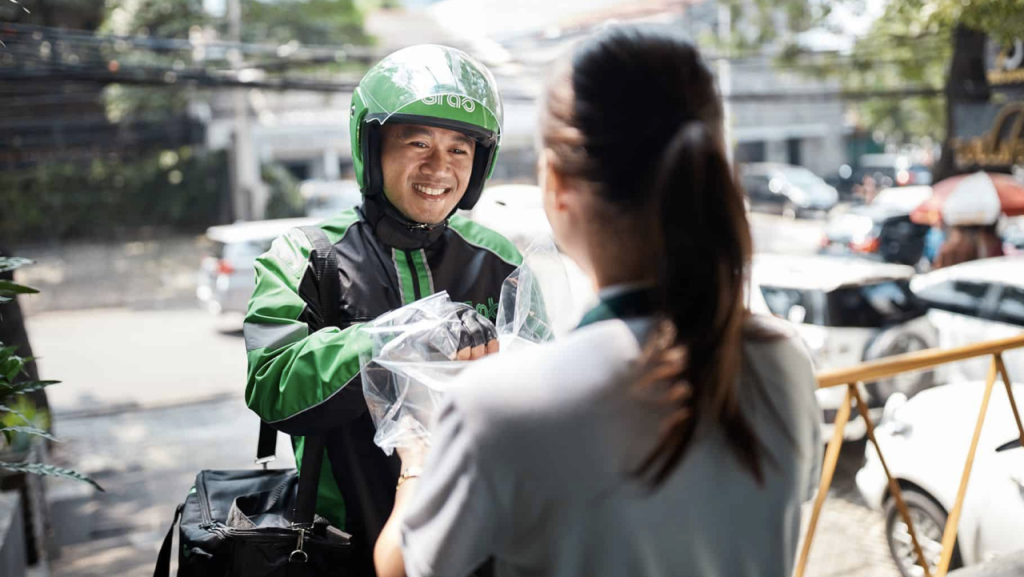
A Grab driver delivering food / Photo credit: Grab
The question is whether this newfound emphasis on efficiency is sustainable, especially as market-leader Grab consolidates its position, while its rivals fight for second place in markets that tend to coalesce around two large players.
“There are indeed limitations on discounts from food delivery players, but price will still be one of the determining factors for them to compete in the market,” says Nailul Huda, a researcher at the Indonesia-based Institute for the Development of Economics and Finance (Indef).
In addition, the food delivery industry experienced a slowdown in growth last year following the end of the pandemic and the return of dine-in customers at restaurants.
The gross merchandise value (GMV) of this sector only rose by 5% to US$16.3 billion in 2022 compared to the previous year, according to a report from venture builder firm Momentum Works.
Grab leads in each of the six major markets in the region, according to the same report. Other players are also starting to solidify their positions as Grab’s strongest competitor in their respective markets, such as GoTo’s GoFood in Indonesia, ShopeeFood in Vietnam, and Foodpanda in Singapore, the Philippines, and Malaysia.
Less incentives, more features
Food delivery is a low-margin business, in which profitability is “attainable through volume, density, and operational efficiency,” according to Momentum Works.
That’s why players in the region are changing their incentive strategies for customers. GoTo and Foodpanda even laid off some employees to reduce expenses.
Expansion of revenue streams is useful for companies to achieve profitability faster. Advertising, for example, helps merchants promote their brand while being a higher-margin business for the platform. Subscriptions like GrabUnlimited and Foodpanda’s Pandapro offer special discounts for consumers and contribute to a steady revenue stream for the companies.
Grab gains momentum, Shopee scales back
Survival of the fittest
Stay ahead in Asia’s tech landscape
This is premium content. Subscribe to read the full story.
Food delivery players have reduced their incentives and are focusing more on generating revenue and improving consumer loyalty.
We know this is not ideal. ⌛ Sign up in 20 seconds. Cancel anytime.
Our subscriber community includes professionals from these companies:





Stay updated on the go with our mobile app.
Get latest insights with smoother, more personalized experience through TIA mobile app.











📅 Upcoming Events
22 October 2026
Payoneer x CSPN Summit 2026