- Premium Content It takes our newsroom weeks - if not months - to investigate and produce stories for our premium content. You can’t find them anywhere else.
 Jaclyn Tiu · · 5 min read
Indonesian startup that turns mushrooms into leather nabs 6-figure funding
From French legacy fashion brands Louis Vuitton and Hermès to Italian houses Prada and Gucci, accessories made from high-quality animal leather make up a huge part of their online and offline inventories.
While such goods are status symbols for consumers, they’re big business for the brands. Data research agency Statista estimates that the global market for luxury leather products – which include handbags, suitcases, and briefcases, plus wallets and other smaller items – will hit around US$50.4 million in 2019 and is expected to soar by 3.1% annually.
But crafting those stylish objects (and even the cheaper, less prestigious ones) comes at a hefty cost. Not only does leather production use massive amounts of water and energy, but it also involves toxic chemicals like formaldehyde that can literally kill people and harm the environment. And since leather is made from animal hides, the issues of animal cruelty and suffering as well as excessive slaughter aren’t far behind.
To address these concerns, some groups are looking into sustainable leather production to minimize its hazardous effects. Some have also turned to eco-friendly or natural materials to create vegan or faux leather, but these have generated mixed results.
One company that’s exploring alternatives to animal leather is Mycotech, a small Indonesian biotech startup that uses mushrooms to make faux leather. Having started a mushroom-based business before, the five founders were intimately familiar with the resource.
In 2018, Mycotech caught the attention of a global investor and raised “hundreds of thousands” of dollars in seed funding, says CEO Adi Reza.
Before launching Mycotech in 2015, the founding team researched on the production process for a year. But because they didn’t have proper facilities, they had many failed attempts. “We just used my mom’s kitchen,” recalls Reza. It was only after they reached out to research agencies to use their laboratories that they eventually made significant progress.
The products
The process of making Mycotech’s leather is simple. The startup collects agricultural waste like coconut husks and sugarcane waste, processes these materials, and then binds them with mushroom mycelium – the root-like parts of mushrooms. The binding is strong enough that the resulting product can hold its shape.
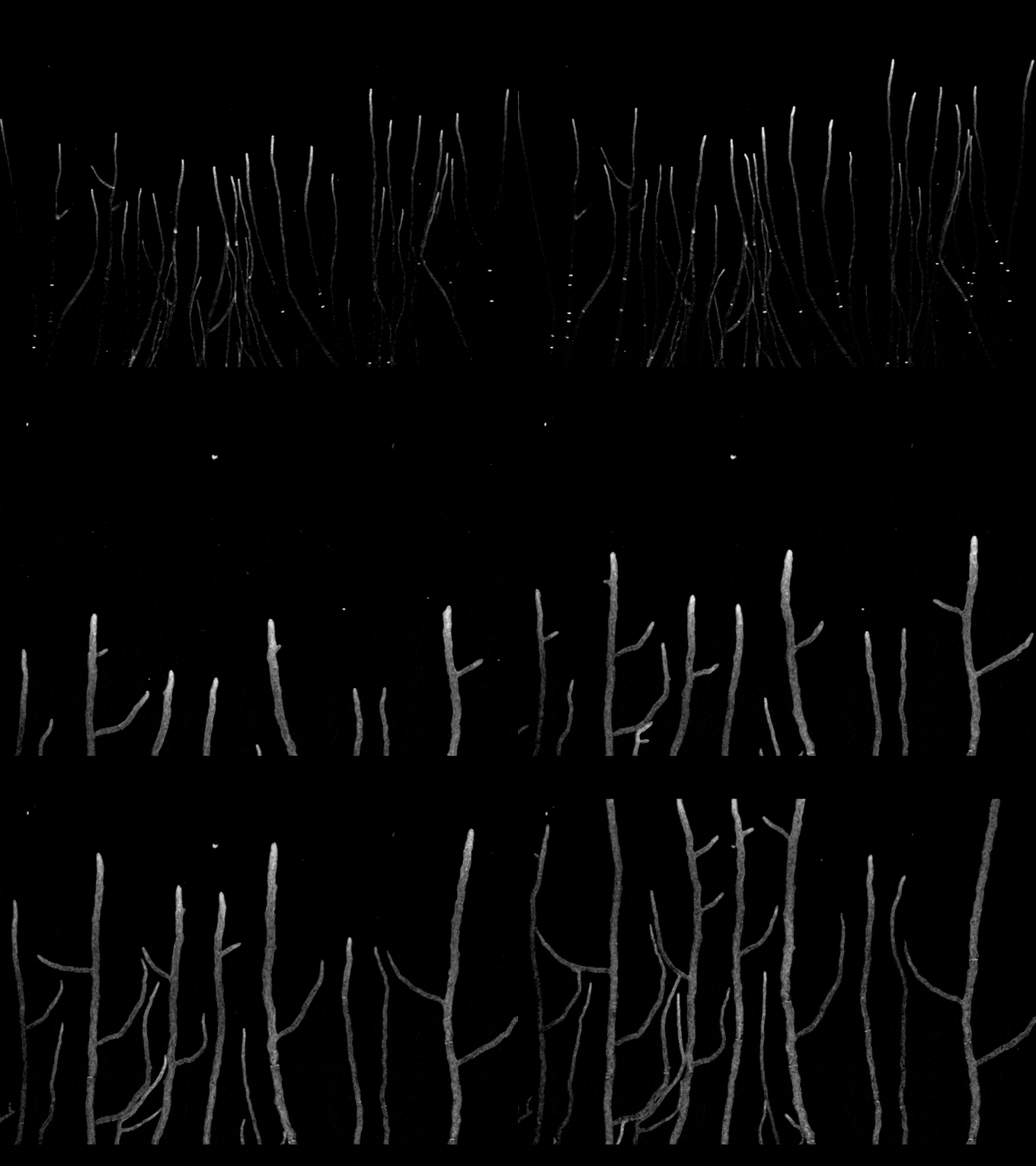
Photo credit: Peter Hinkie
The company calls this mushroom leather Mylea and has already used it to craft products like watches, wallets, and notebooks, which it sold on Kickstarter.
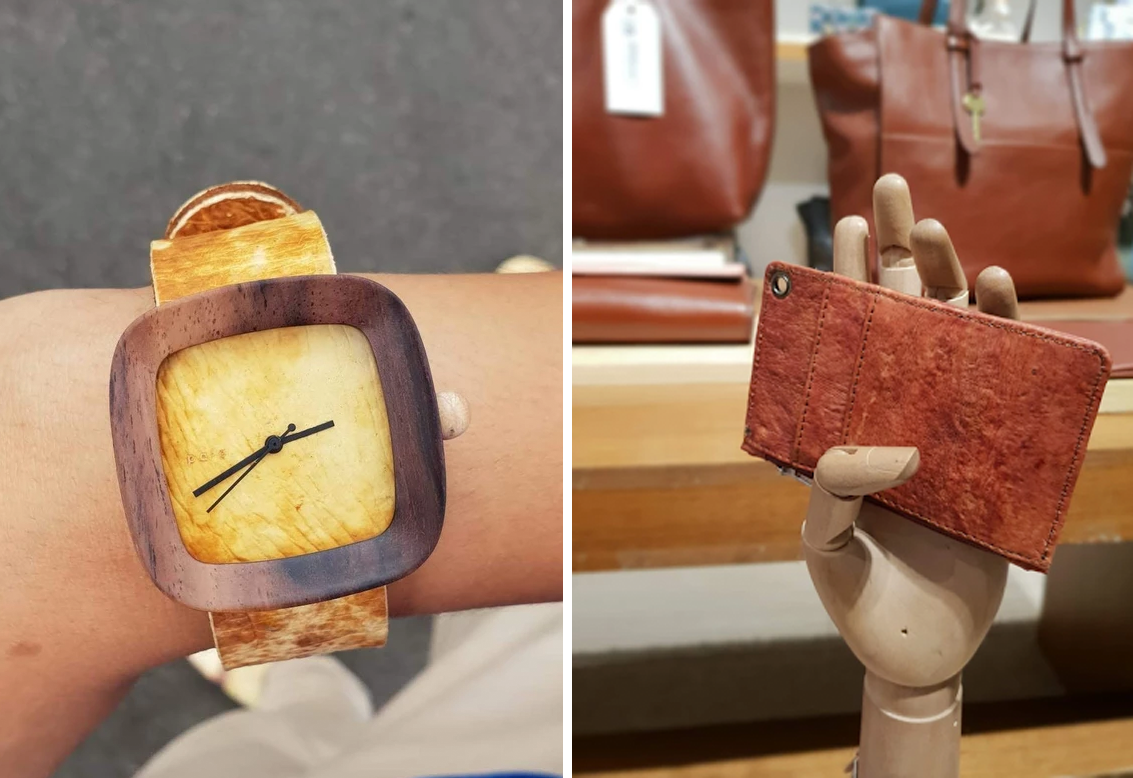
(L-R) A watch made from Mylea and a wallet made from the same material / Photo credit: Mycotech
According to Reza, Mylea is much more sustainable than animal leathers in the market. Not only does Mylea take exponentially less time to make, but the production process also involves less water and produces less carbon dioxide. Here are some stats for comparison:
| Time to grow | Water to produce | Amount of carbon dioxide |
Challenges and future plans
Stay ahead in Asia’s tech landscape
This is premium content. Subscribe to read the full story.
The startup has sold watches, wallets, and notebooks from the leather on Kickstarter.
We know this is not ideal. ⌛ Sign up in 20 seconds. Cancel anytime.
Our subscriber community includes professionals from these companies:





Stay updated on the go with our mobile app.
Get latest insights with smoother, more personalized experience through TIA mobile app.