- Premium Content It takes our newsroom weeks - if not months - to investigate and produce stories for our premium content. You can’t find them anywhere else.
 Melissa Goh · · 10 min read
Demystifying Omise parent Synqa’s plans to disrupt payment networks
Imagine being able to pay for a cup of coffee at a Starbucks outlet in Singapore as well as a taxi ride in Japan using any digital value in your possession – be it bitcoin, GrabRewards, or airline miles. That’s the future Synqa (formerly called Omise Holdings) group CEO and founder Jun Hasegawa envisions.
“Since [loyalty points] have a value, you can tokenize them on the blockchain. We can make them interoperable,” he tells Tech in Asia.
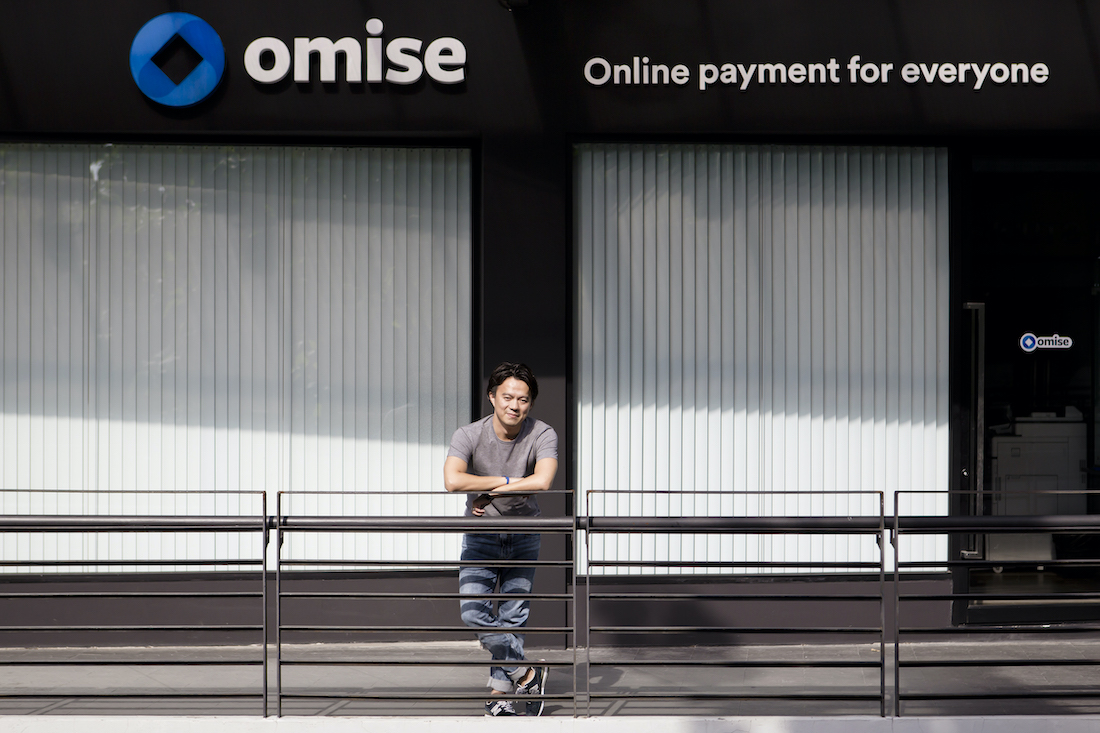
Synqa founder and Group CEO Jun Hasegawa / Photo credit: Synqa
To get there, Synqa appears to have a two-pronged approach. Firstly, to acquire merchant customers through Omise, its payment gateway business, though this isn’t game-changing in itself. Stripe, Adyen, 2C2P, and Red Dot Payment are some of its competitors.
Secondly, to develop OMG Network (formerly OmiseGo), its blockchain technology that’s meant to disrupt the Visa/MasterCard regime dominating the payments space.
The last step would be marrying the two together and cutting traditional payment networks out of the equation. This means migrating Omise onto the OMG Network and onboarding tens of thousands of merchants onto the platform in the process. Making the marriage work and bringing merchants and users onboard at scale will be a big test.
“We’re two separate companies under the same group. We would provide our services to Omise Payments just like we would if they were an OMG Network customer. Omise Payments’ merchants are Omise Payments’ merchants,” Vansa Chatikavanij, CEO of OMG Network, said in July.
Omise, the payment gateway
Similar to the US-based payment processing company Stripe, Omise helps enterprises reduce friction for customers during the checkout process by providing a range of digital payment methods. For Omise, these include payments via credit and debit cards, e-wallets TrueMoney and AliPay, and national funds transfer services PromptPay and PayNow.
It counts Thailand, Japan, and Singapore as its main markets. Some of its big-name clients in Thailand include McDonald’s, King Power, budget carrier Nox Air, and telco True Corporation. The bulk of its volume comes from business-to-consumer (B2C) transactions for small and medium-sized enterprises – which make up 95% of its client pool – though it also processes business-to-business (B2B) transactions.
Hasegawa reveals that Omise has made over 60 million transactions since its inception. That number is expected to hit 100 million by the end of this year.

Omise CEO Ezra Don Harinsut (L) and Synqa Group CEO Jun Hasegawa / Photo credit: Synqa
Omise, which was set up in 2015, isn’t profitable yet. According to public filings with Thailand’s Digital Government Development Agency (DGDA), Synqa’s entity in Thailand lost 115.9 million baht (US$3.7 million), decreasing by 14% from the year before, while revenue was at 549.5 million baht (US$17.4 million).
“The Thai entity is a development and operations center for all Omise (payment) subsidiaries. Investments on R&D and market are made from Thailand,” Hasegawa says, regarding the figures.
Tapping the SME market
OMG, seamless transactions?
A rough start
Lack of updates on past partnerships
Has the ship sailed?
Stay ahead in Asia’s tech landscape
This is premium content. Subscribe to read the full story.
In the past seven years, the firm previously known as Omise Holdings has been many things. Is it finally on the verge of a breakthrough?
We know this is not ideal. ⌛ Sign up in 20 seconds. Cancel anytime.
Our subscriber community includes professionals from these companies:





Stay updated on the go with our mobile app.
Get latest insights with smoother, more personalized experience through TIA mobile app.