- Premium Content It takes our newsroom weeks - if not months - to investigate and produce stories for our premium content. You can’t find them anywhere else.
 Scott Shuey · · 6 min read
Can AI bots shake up SEA’s thriving livestreaming industry?
Max Headroom wasn’t supposed to be prophetic technology. He was created nearly four decades ago to promote music videos on Channel 4 in the UK.
Introduced in 1985, Headroom was the world’s first – albeit fictional – AI-controlled deepfake. The character, who was supposed to be a digital copy of fictional journalist Edison Carter, was incredibly popular in both the US and the UK and found itself working as a pitchman by 1987.
While Skynet from The Terminator – arguably Max’s most famous AI contemporary – was trying to wipe out mankind on the big screen, Headroom was pitching New Coke to people in their living rooms.

The images on the left and right show livestreams on LazLive, Lazada’s livestreaming service. The center image is an AI-generated livestreamer created by Silicon Intelligence. / Image credit: Tech in Asia
Fast forward to today and AI-controlled bots, which are sometimes created via deepfake technology to imitate well-known livestreamers, are on the rise in China. Over 765 million people in the country watched livestreamed content in the first six months of 2023, according to Statista.com.
The question is, when will this start disrupting Southeast Asia’s livestreamers?
The rise of the AI bots
In September, the Chinese government gave five companies including Baidu and SenseTime approval to launch AI chatbots. With only an investment of US$1,000 and a few minutes’ sample video of a human livestreamer, any company can create an AI bot capable of streaming content 24/7, according to one report.
Singapore-based Hanno Stegmann of BCG X, Boston Consulting Group’s tech build and design unit, expects these AI bots to eventually become more prominent in Southeast Asia’s retail livestreaming scene over the next six to 12 months.
According to a Ninja Van survey that focused on Singapore, Malaysia, Indonesia, Philippines, Thailand, and Vietnam, one in three online sellers now offers livestreaming to customers. The top three platforms for livestreaming in Southeast Asia are Lazada, Shopee, and TikTok.
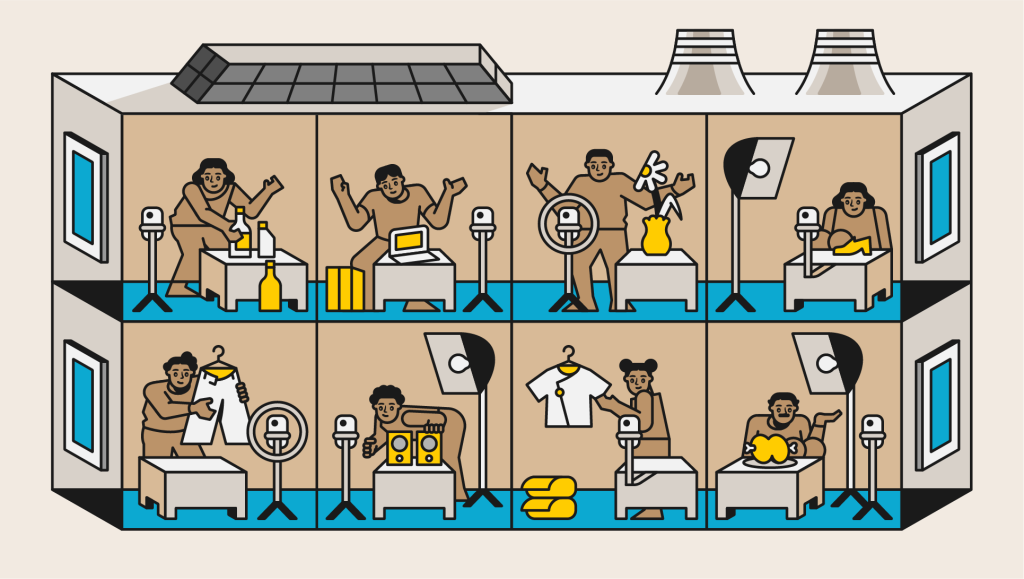
Image credit: Timmy Loen
E-retailers can reap immediate benefits from AI livestreamers, such as the potential to boost customer engagement and reduced labor costs, notes Stegmann, who serves as managing director and partner at BCG X. However, many potential users are still on the fence on whether this is a fad or a sustainable business model.
I think people are going to be surprised at the price of using AI livestreamers because it’s not as cheap as we think it would be.
Before AI livestreamers can really take off in Southeast Asia, retailers and ecommerce platforms need to build the technology infrastructure to accommodate large audiences and train human staff, according to Stegmann. This will include adjustments such as changing workflows and content approval routines.
Cheap bots?
Picking up a thing or two
Working the night shift
Stay ahead in Asia’s tech landscape
This is premium content. Subscribe to read the full story.
The region’s e-retailers are expected to adopt AI-controlled deepfake bots for live commerce in 2024.
We know this is not ideal. ⌛ Sign up in 20 seconds. Cancel anytime.
Our subscriber community includes professionals from these companies:





Stay updated on the go with our mobile app.
Get latest insights with smoother, more personalized experience through TIA mobile app.









📅 Upcoming Events
22 October 2026
Payoneer x CSPN Summit 2026