- Premium Content It takes our newsroom weeks - if not months - to investigate and produce stories for our premium content. You can’t find them anywhere else.
 Putra Muskita · · 5 min read
Being no. 2 isn’t a bad thing: Bukalapak’s Achmad Zaky
Indonesia’s Bukalapak may now be riding a wave of success as a unicorn valued at US$2.5 billion. But things weren’t always smooth sailing for the ecommerce player, especially in its early days.
Co-founder and CEO Achmad Zaky recalls that his first pitch fundraising for Bukalapak was for US$10,000. “Nobody wanted to invest,” he said during a fireside chat at the Tech in Asia Conference in Jakarta this week. “I remember wanting to close the company after one year because we had no money at all.”
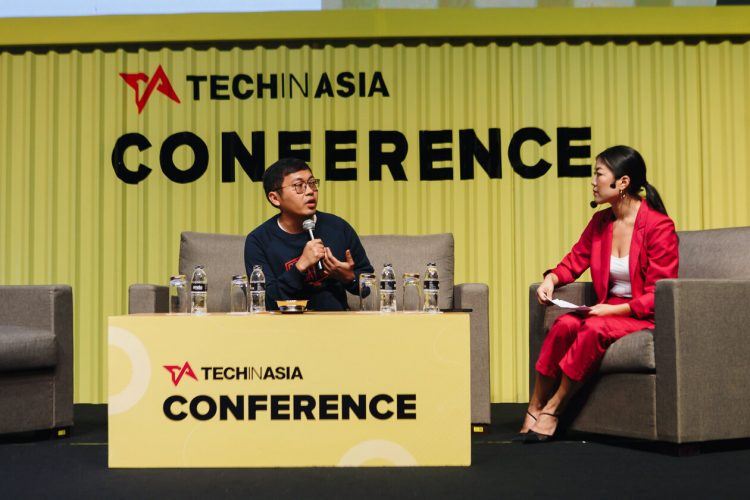
Photo credit: Tech in Asia
But merchants who sold their goods on Bukalapak loved the platform so much that some of them even shared part of their proceeds with the company, adds Zaky. He and his team thought about how closing down meant these vendors would lose business, and that provided them with the fuel to go on.
Having started with a small team, Bukalapak now has a sizable workforce.
“There’s no textbook in growing a company from two people to 2,000. No one had that experience,” Zaky said. “It’s a crazy moment for me.”
Upsides of not being no. 1
Bukalapak knows a thing or two about competition. Along with Tokopedia, the company is one of two unicorns in Indonesia’s crowded ecommerce space. Big regional players Shopee and Lazada are also in the mix, along with smaller platforms like JD.ID – an offshoot of Chinese giant JD.com – and Djarum-backed Blibli.
Bukalapak became Indonesia’s fourth unicorn in January 2018, despite landing relatively less funding compared to its three predecessors. Tokopedia secured US$1.1 billion in its latest round, having banked over US$2 billion in total. Gojek is currently raising a series F round that’s on pace to reach US$2.5 billion, while Traveloka has secured close to US$1 billion in disclosed funding.
Bukalapak, on the other hand, has raised total funding of around US$400 million to US$500 million, according to Zaky.
“To be honest, we are very lucky, because it makes us hungrier every day,” he said about Bukalapak’s rivals. “We look around to see what [our competitors] are doing better. We have to fill their gaps. We have to be better than them in terms of execution.”
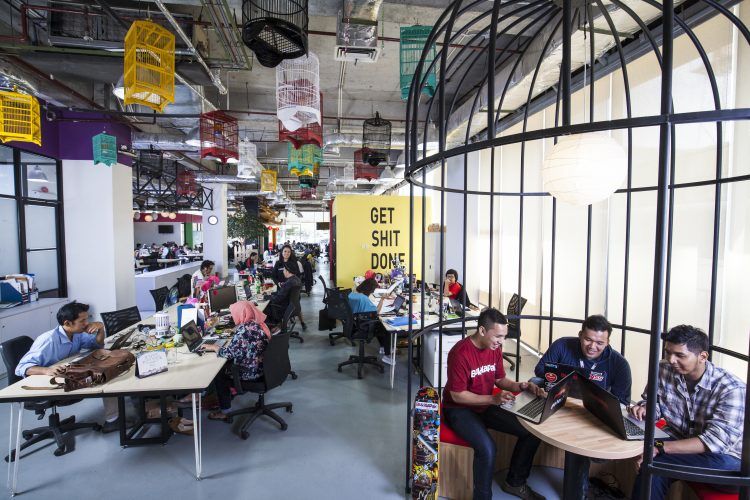
Bukalapak headquarters in Jakarta / Photo credit: Bukalapak
Working with limited resources had been part of the company’s DNA since it launched in 2010 – a time when nobody was really investing in internet businesses. The company’s first funding came courtesy of Batavia Incubator.
“Having little funding is also a blessing – it helps you to think more creatively,” he explained. “That’s actually the ideal [kind of] startup, if you look at Facebook, Google, or Apple. At the beginning, they had limited amounts of money, but they can scale the company.”
The responsibility of being a role model
Stay ahead in Asia’s tech landscape
This is premium content. Subscribe to read the full story.
The ecommerce company’s CEO shared his experiences and advice for founders during a session at the Tech in Asia Conference.
We know this is not ideal. ⌛ Sign up in 20 seconds. Cancel anytime.
Our subscriber community includes professionals from these companies:





Stay updated on the go with our mobile app.
Get latest insights with smoother, more personalized experience through TIA mobile app.








📅 Upcoming Events
22 October 2026
Payoneer x CSPN Summit 2026