- Premium Content It takes our newsroom weeks - if not months - to investigate and produce stories for our premium content. You can’t find them anywhere else.
 Putra Muskita · · 6 min read
WeLab Bank cracked Hong Kong. Now it’s taking on Southeast Asia
Hong Kong-based WeLab Bank announced in December 2024 that it had reached monthly breakeven for the first time, marking a milestone four years after its launch.
That time frame is longer than those of KakaoBank, WeBank, and MyBank, which became profitable within their first two years of operations, setting benchmarks for rivals in Asia and beyond.
But for Simon Loong, founder and group CEO of WeLab, reaching breakeven is what matters most.
“Typically, a digital bank will break even between five to seven years – if they ever do,” he tells Tech in Asia in an interview. “If you look across Asia Pacific, only 16 out of 45 digital banks have broken even so far.”
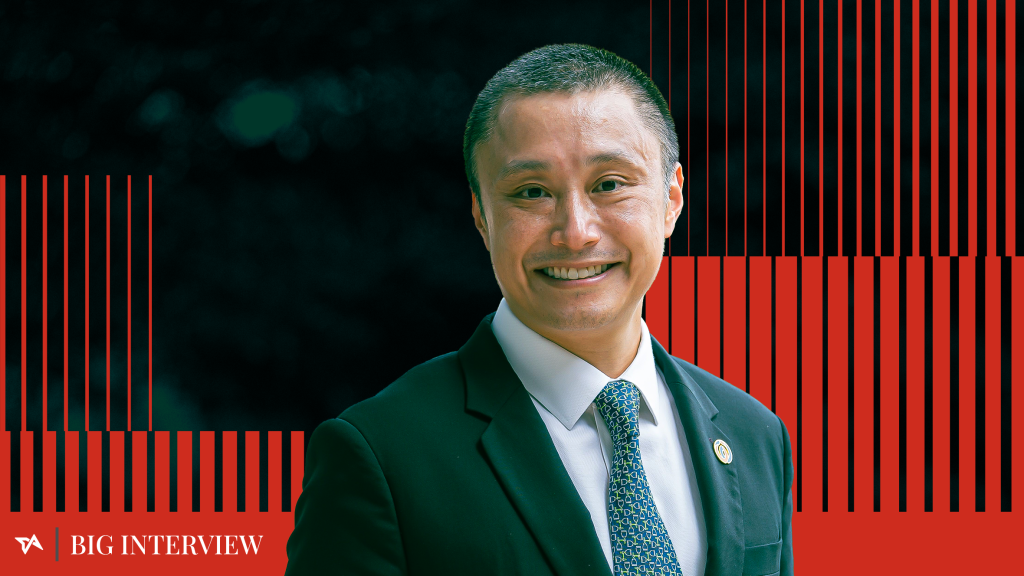
WeLab Bank founder and group CEO Simon Loong / Image credit: Tech in Asia
Loong says WeLab Bank has become profitable on a monthly basis since then, and he expects that momentum to hold “for the foreseeable future.” Now, the bank is zeroing in on Southeast Asia, the first step in its bid to build a regional digibank franchise.
WeLab has already launched Bank Saqu in Indonesia, where it partners with local conglomerate Astra, and is aiming to get a license for a similar launch in Thailand.
Compared to Hong Kong’s small and overbanked market with a high GDP per capita, Southeast Asia offers the opposite dynamic – a larger but less affluent consumer base and a nascent digibank space.
Still, Loong is betting big on a regional play while most Southeast Asian digibanks focus domestically. He believes that WeLab has a shot at turning a profit in both Indonesia and Thailand within three to five years.
No parent
In Hong Kong’s crowded digibank space, WeLab Bank’s breakeven timeline is still on par with its rivals. ZA Bank, which is Hong Kong’s largest digibank by assets, hit monthly profitability in July 2024, around four years after its founding. Mox Bank has not crossed that threshold yet.
As a group, WeLab has raised close to US$1 billion in venture funding. One of its investors is TOM Group, a unit of Hong Kong conglomerate CK Hutchison.
But it doesn’t have backing in the same level as its rivals. ZA Bank was founded by Chinese insurance giant ZhongAn, while Mox Bank is a joint venture between Standard Chartered, Trip.com, as well as PCCW and HKT – two entities owned by Hong Kong billionaire Richard Li.
“We’re not part of a conglomerate, we’re not part of a Tencent or Alibaba, we’re not part of Grab,” Loong emphasizes.
No high interest rates
Fintech what?
Stay ahead in Asia’s tech landscape
This is premium content. Subscribe to read the full story.
Founder Simon Loong expects profits in Indonesia and Thailand within five years of launch. It’s an uphill climb.
We know this is not ideal. ⌛ Sign up in 20 seconds. Cancel anytime.
Our subscriber community includes professionals from these companies:





Stay updated on the go with our mobile app.
Get latest insights with smoother, more personalized experience through TIA mobile app.