In three to four years, consumers in Indonesia will only pay Rp 400,000 (US$30) for 4G smartphones, Indonesia’s tech minister Rudiantara announced last month.
4G technology is only now beginning to enter Indonesia on a large scale. All three major operators are currently engaged in country-wide 4G infrastructure upgrades. And while Indonesia has a mobile phone penetration of over 100 percent, as little as 23 percent of those are smartphones.
To achieve the minister’s goal and to kick Indonesia’s smartphone revolution into motion, the nation’s mobile phone industry needs to transform itself. Policymakers and the industry players have launched an orchestrated effort, nudging consumers to make the switch from 2G feature phones to 4G.
In the new mobile landscape, previously dominant brands may stumble and even die off as new brands, both local and foreign, emerge. But the concern is not only which company can offer the cheapest 4G LTE handsets – brands will also have to find smart ways to stand out from the crowd.
A big leap to 4G
“Indonesia is behind in adopting 4G,” says Dave Shuker, a consultant at Redwing Asia and telecommunications expert. Shuker helped establish the mobile phone carrier XL back in 1995. “That’s typical for Indonesia, but not a bad strategy. In some cases, Indonesia can leapfrog technologies because it waits longer. The country has not even fully adopted 3G, so it can go straight to 4G now.”
4G LTE was introduced to Indonesia in small-scale trials in 2013. It was first made commercially available through a USB-connected device called Bolt. In August 2014, Internux, a subsidiary of Lippo Group, introduced a Bolt phone, dubbed the “Powerphone.” It was marketed as the first LTE smartphone to be “made in Indonesia.” This didn’t prove to be the big shake-up that some analysts and consumers expected, and telcos chose not to react to this development in any significant way.
“To them, Bolt was not a dangerous competitor. Its coverage area is small, and it is limited in the way that it only offers data services, no voice and messaging,” explains Shuker. To use Bolt’s phone as an actual phone, customers have to insert a second SIM card.
But by last December, all three big telcos came out with statements in quick succession that they too would now begin to commercialize 4G. The big roll-out began in mid-April, after the the 1800 MHz spectrum had been officially allocated to 4G networks.
In the long run, the investments made by telcos now should pay off in the future. Faster and more efficient networks will drive data usage. Equipped with smartphones, consumers will use data not only to chat, but to watch video and make financial transactions.
This is where telcos hope they can cash in.
The great phone flood
There is still a long way to go to achieve the minster’s price goal of Rp 400,000 (US$30) for 4G LTE devices. The cheapest smartphone available today is a niche product from CDMA operator Smartfren and costs Rp 499,000 (US$37.7).
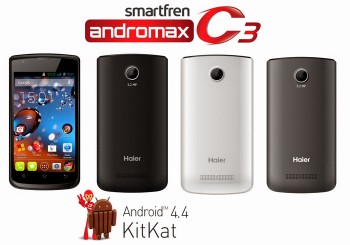
Smartfren’s Andromax C3 is currently Indonesia’s cheapest smartphone.





Stay updated on the go with our mobile app.
Get latest insights with smoother, more personalized experience through TIA mobile app.










