- Premium Content It takes our newsroom weeks - if not months - to investigate and produce stories for our premium content. You can’t find them anywhere else.
 Putra Muskita · · 5 min read
Why Bukalapak is opening its platform to international users through BukaGlobal
Indonesian ecommerce unicorn Bukalapak recently launched BukaGlobal, a new feature that lets consumers outside Indonesia shop on the Bukalapak platform.
“We want to break down barriers that hinder young and small entrepreneurs from competing on a global playing field, primarily on access, infrastructure, and connectivity,” said Fajrin Rasyid, co-founder and president of Bukalapak, during a launch event at the Indonesian embassy in Singapore. “With BukaGlobal, Indonesian products are readily accessible by consumers anywhere in the world through a fast and reliable platform.”
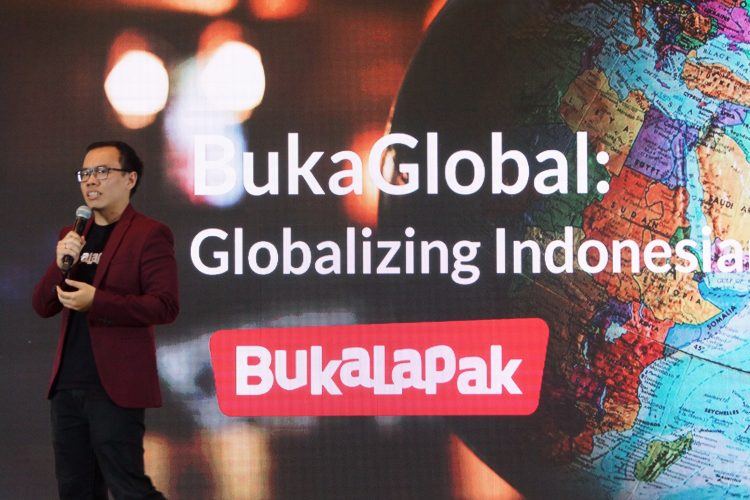
Bukalapak co-founder and president Fajrin Rasyid at the launch event for BukaGlobal / Photo credit: Bukalapak
Accessible from May 20, BukaGlobal is open to shoppers in Malaysia, Singapore, Brunei, Hong Kong, and Taiwan. Delivery time is approximately six to 11 days, depending on the destination. At the moment, only qualified sellers in Jakarta and Tangerang are able to offer BukaGlobal as part of their service.
With BukaGlobal, Bukalapak is the first Indonesian ecommerce company to be available internationally. Homegrown competitors like Tokopedia continue to focus solely on the Indonesian market, while regional rivals Lazada and Shopee are both headquartered in Singapore.
But for BukaGlobal’s first phase, the company is targeting Indonesians who live in the destination countries. The app and website are not yet available in English or other languages.
Dipping its toes
Bukalapak started developing BukaGlobal late last year, says Rasyid in an interview with Tech in Asia.
“Before, we thought that global expansion is a daunting task, but it turned out not so complicated,” he says. “It’s worth a try. We see this as a positive development for local SMEs, and obviously the bigger it gets, the more we invest.”
The move has not required a large upfront investment, Rasyid adds. From a tech standpoint, the team added the BukaGlobal feature into Bukalapak’s existing app and website. There was also marketing initiatives like the launch video and events. There are no immediate plans to open overseas offices, though that might change depending on how BukaGlobal evolves.
Partnering with Janio, a Singapore-headquartered startup that specializes in cross-border logistics, for deliveries also lets Bukalapak tap into the startup’s know-how. This is similar to Bukalapak’s past expansion strategies. When the company launched its BukaReksa mutual funds feature, for example, it partnered mutual funds startup Bareksa.
Businesses funded by venture capital, like Bukalapak and Tokopedia, need to constantly seek growth. But while Indonesia’s ecommerce industry may seem huge, it only represented 3% of total retail in 2017.
This has led both Bukalapak and Tokopedia to unveil an offline strategy, although Tokopedia so far has made no indication of venturing outside Indonesia. Rasyid declined to disclose sales and marketing as a percentage of gross merchandise value and other growth figures. However, he claims that Mitra Bukalapak – its main offline strategy – has continued to grow, with more than 700,000 offline merchants on board.
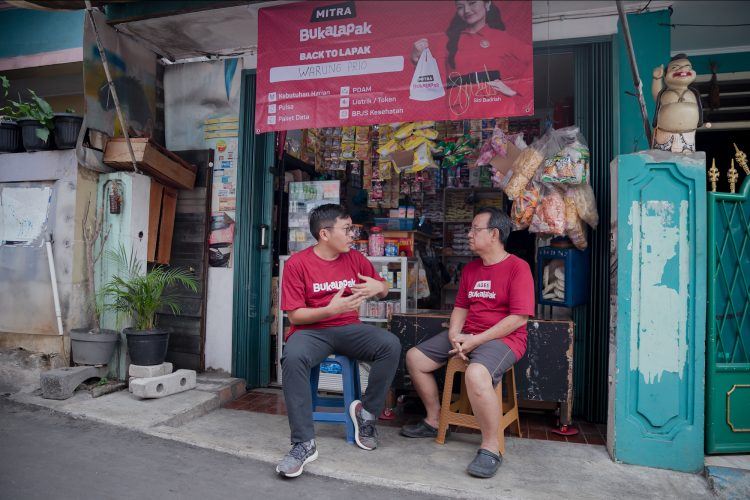
Co-founder and CEO Achmad Zaky with a Bukalapak partner / Photo credit: Bukalapak
Cornering the Muslim market
Stay ahead in Asia’s tech landscape
This is premium content. Subscribe to read the full story.
This is “new territory” for the ecommerce unicorn.
We know this is not ideal. ⌛ Sign up in 20 seconds. Cancel anytime.
Our subscriber community includes professionals from these companies:





Stay updated on the go with our mobile app.
Get latest insights with smoother, more personalized experience through TIA mobile app.