Mary-Anne Lee · · 4 min read
Games in Asia x l337 Accelerator meetup Malaysia: Kurechii Studio’s journey (Part 1)
Games in Asia’s Malaysia meetup, done in cooperation with the l337 Accelerator, saw Malaysian game developer veterans P’ng Yiwei of Kurechii Studio and Desmond Lee of Appxplore share their journeys and the lessons they learned from day one.
If you’re aspiring to be an indie game developer in Malaysia, then you need to read this.
P’ng started as a multimedia designer and lecturer at the One Academy in Malaysia. He developed little games like Reachin’ Pichin on the side before he decided he decided he wanted to go into game development full time. This was in 2011, a time where there weren’t many game companies in Malaysia.
So P’ng decided to start out on his own. He targeted to complete his first game—The King’s League—in thirty days. And he did! However, he also realized that it had a lot of bugs, and that it could be completed within just half an hour. So he went back to the drawing board.
It was a long, lonely journey since P’ng had started out alone. He had rented a small apartment to serve as a home office, and found himself staring either at the computer screen or at a wall. He shared that he began keeping a developer diary on his Facebook page, and challenged himself to post something about the development every day. That way, he had to get something done so that he could mention it on Facebook. He also had added interaction from his Facebook fans and friends.
(See: Good news for Malaysian game devs: MDeC announces more support)
It took a total of 217 days before the final build of The King’s League game went out on Armorgames.
From this initial endeavor, P’ng learned the following lessons that would help him in his journey.
- Make prototypes, and test them early
- Keep motivated through the development process
- Complete your game and get it released!
- Polish your game before release
- Listen to feedback, use it as a guide
- Be prepared for long comments
- Be disciplined
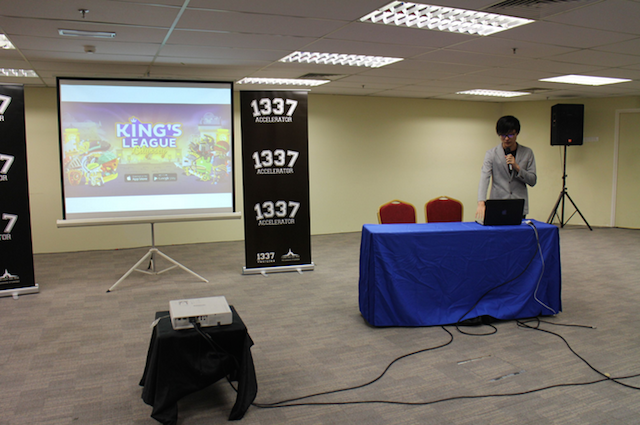
P’ng said that while the advice he gave was mostly common sense, one needed to finish a game in order to truly understand all of the above. He shared that the biggest enemy of an indie was his freedom, since freedom meant you could do whatever you wanted, and that usually led the developer away from his goal.
P’ng went on to talk about the next few games he worked on after he had scrounged up a team. The biggest learning point was definitely his most recent game, The King’s League: Odyssey.
Odyssey took 12 months of development for its flash version, and was worked on by three people. For Odyssey, P’ng said the team applied all lessons it learned from its previous games, and released the flash version before thinking of porting the game. However, he said that the game was prepared for mobile beforehand through its user interface and its art, although monetization was not worked into its mechanics.
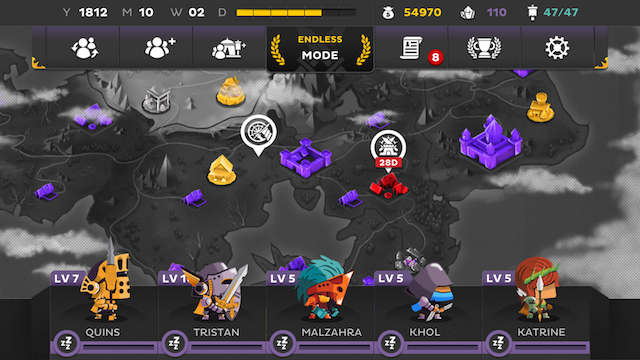
Once Odyssey went out on Kongregate on April 10, 2013, the social gaming giant approached P’ng to ask for premium content to be added to the game. That gave the Kurechii team just one week to add in premium content, as P’ng said that games “live” for a month before they fizzle out into oblivion.
The premium content the team prepared sold for about $5, and sales surprised it. Following the flash edition’s success, P’ng decided to port The King’s League: Odyssey to mobile.
(See: Check out some of the games from Casual Connect Asia 2014’s Indie Prize showcase! (VIDEO))
The game’s success was momentarily halted as the team discovered it now had to re-code the entire Odyssey game in Unity. This took nine months, but eventually resulted in the purple award-winning app you see today. The King’s League: Odyssey mobile edition was sold as a premium game for $1.99, with in-app purchases ranging from $1.99 to $4.99, with the $4.99 character being its most popular buy.
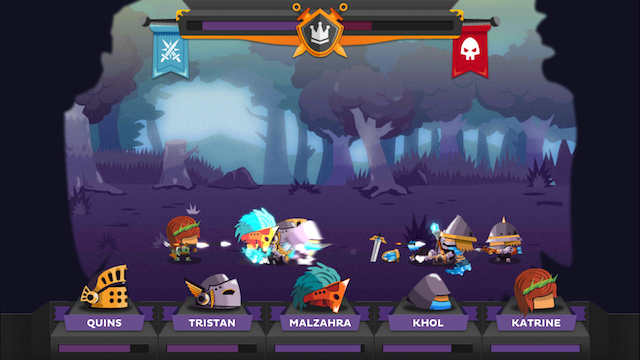
As for what P’ng learned from this version of The King’s League?
- Your game is more important than your tech
- User analytics from the flash version were helpful
- Sequels are good because you get more time to improve on the game
- A fan base is important for premium games
- Games that focus on content are not meant to be freemium
And finally, “create games based on team strengths, not on trends.”
It’s been a challenging yet satisfying journey, P’ng summed up. And now that you’ve the tips and tricks of the trade from him, what will your journey be like?
Learn from Appxplore’s Desmond Lee as well:
l337 Accelerator x Games in Asia meetup Malaysia: Appxplore’s journey (Part 2)Stay updated on the go with our mobile app.
Get latest insights with smoother, more personalized experience through TIA mobile app.
Recommended reads
 Indonesian AI startup goes global
 Forrest Li on scaling Sea, building smarter bots, and founder grit
 An AI assistant that joins sales calls and scores team skills
 SGX’s CEO says it doesn’t need a unicorn to win
 SMEs want AI too, but not the kind Big Tech is selling
 Oatside’s alt-milk rise hits a profitable gear
 Alibaba’s financial health in 12 charts
 Asia’s telcos bundle AI into mobile plans. Will it pay off?
 M-Daq chases bigger clients as revenue falls, losses grow
 VC tracker: Accel raises US$3.5b, including US$550m for India