Josh Horwitz · · 13 min read
Meet the man behind Pleco, the revolutionary Chinese language learning app that’s older than the iPhone
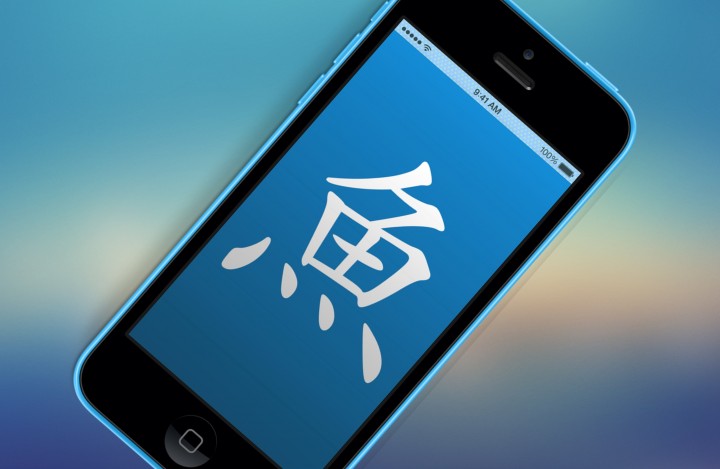
Learning Chinese is not for the faint of heart. Not only does the non-native Mandarin speaker have to master the language’s infamous tones, he or she must memorize thousands of (practically speaking) non-phonetic characters, get acquainted with a range of accents, and grapple with a deceptively simple grammar system.
At the same time, even the most gifted linguist will admit that one of the biggest challenges posed by Mandarin isn’t the mechanics of the actual language, but the grunt work required to learn it well. Looking up characters in a paper-bound Chinese dictionary is a multi-step process that can take tens of minutes if you’re not careful. Also, relying on a single Chinese-English dictionary for reference is a surefire way to commit language suicide. For such a long-lasting, quickly-evolving language, you’ll need at least three dictionaries handy in order to get a rough idea of what a specific character, word, or phrase means – and even then you’ll usually have to apply some brainpower to figure out how it’s used properly.
Enter Pleco – the best Chinese dictionary app on the planet. To some of our readers, a dictionary app might not seem like the most exciting of subjects, but those who know and use Pleco understand how crucial it is to one’s language learning regimen. It’s one of those rare brand names (if you can call it a brand) that will elicit sheer glee from its users upon the very mention of its name. A Swiss Army knife app featuring 25 dictionaries, almost anyone that’s used it can recall a moment when Pleco “saved their life.”
While the app has won legions of fans, few are aware just how revolutionary it was and continues to be. Pleco was first launched as an app for Palm in 2001 – before the big boom in Chinese language learning and the world’s mass adoption of mobile handsets. It pioneered the notion of a Chinese dictionary as a powerful, always-on tool for a wide range of learners, and was the first cross-platform Chinese dictionary to merge handwriting input with character searches across multiple dictionaries. Want to know what 熊貓 means but don’t know how to pronounce the characters? Just trace them in the input field and you’ll find the word next to “panda,” its definition, alongside “xiongmao,” its romanized phonetic pronunciation.
Now the app features optical character recognition (“hover-to-translate”), mixed character-pinyin search (trust us, that’s a big deal), voice input, flashcards, and many other bells and whistles that make learning Chinese that much easier for hardcore students.
When you consider that for centuries, the only way to look up the word for “panda” was to count the number of strokes for the radical component of 熊, consult a series of charts, and then hope that the suggested definition remotely made sense, the convenience of Pleco marks a major turning point in the history of Chinese language learning.
Moreover, more than ten years after it first appeared on Palm, Pleco remains a mostly one-man operation. For 32-year-old Mike Love, a programmer based in New York, Pleco is a full-time hobby that doubles as a business. While many of the apps on our smartphones were created by Silicon Valley hustlers with pipe-dream ambitions and half-baked business plans, Love has added tremendous value to language learners around the world simply by building a better dictionary. Think of him as the pastor overseeing the long-awaited wedding between the Chinese language and mobile electronic devices.

In an effort to learn more about his role as the unsung hero of Chinese Learning 2.0, Tech in Asia sat down with Love to talk about the genesis of Pleco, the evolution of mobile technology, and the perks of solo entrepreneurship.
Let’s start from the beginning. What are the origins of Pleco?
In my senior year of high school I was studying abroad in China in 1999. I saw these neat little portable electronic dictionaries that every Chinese person was using to learn English. I wanted my own version of one of those dictionaries, but for Mandarin. I didn’t have a factory in Shenzhen to churn out my own portable Chinese dictionary, so I needed an already-available device to put it on. At the time, that device was the Palm.
My parents gave me a Palm IIIx for Christmas in 1999. I put something together using some off-the-shelf Palm apps – a handwriting app, a Chinese enabler app (since Palm wasn’t Chinese enabled), and CEDICT – a predecessor of CC-CEDICT – which was a simple Chinese dictionary that had about 20,000 entries. I built a prototype using those, and then some of my friends started buying Palm Pilots because they wanted to use it.





Stay updated on the go with our mobile app.
Get latest insights with smoother, more personalized experience through TIA mobile app.