Steven Millward · · 4 min read
What you need to know about Hong Kong’s first unicorn
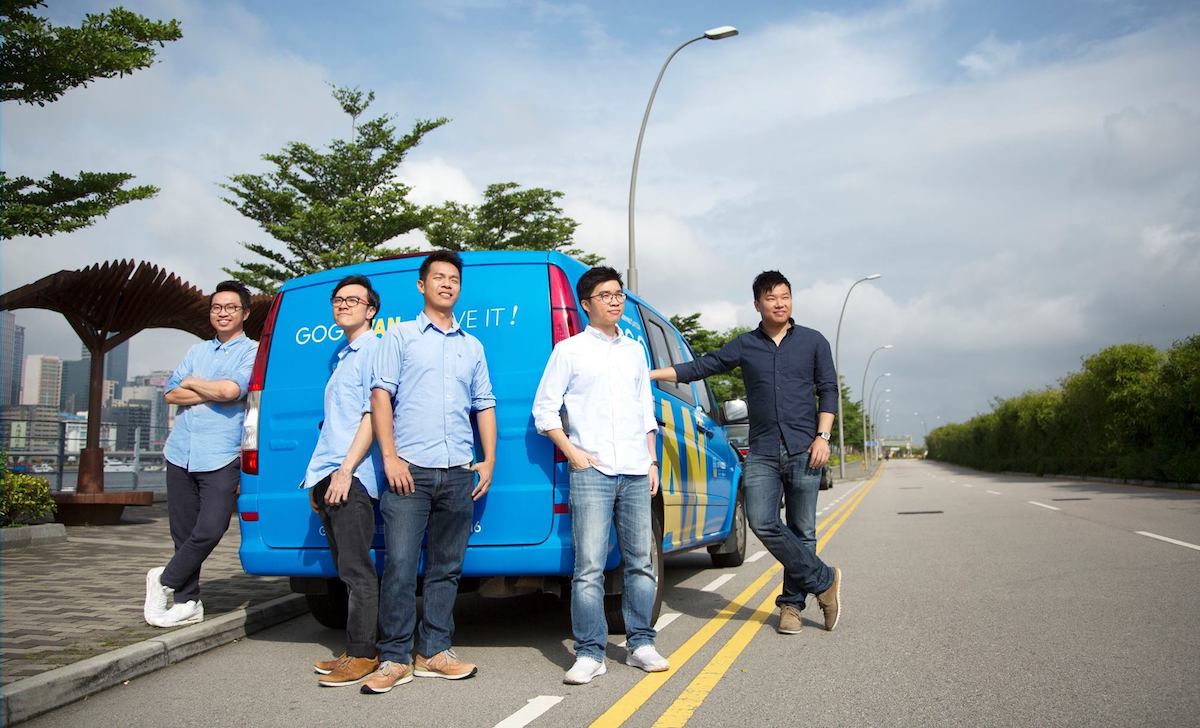
Photo credit: Gogovan.
Hong Kong now has its first startup unicorn. Gogovan, an Uber for deliveries that started up in 2013, has just hit billion-dollar status after this morning announcing a merger with a Chinese logistics company.
While Gogovan and its new buddy, 58 Suyun, did not reveal the terms of the deal, a Hong Kong newspaper reports the new entity is worth more than US$1 billion. Gogovan founder Steven Lam is the CEO of the new business.
Here’s a potted history of Gogovan’s road to unicorn-dom:
July 2013: Fresh hope
When Steven Lam started Gogovan, he was just 26 and out of UC Berkeley Haas School of Business three years prior.

Photo credit: Gogovan.
In an email pitch to Tech in Asia in late 2013, he described the startup as “a mobile application to help Hong Kong people to hire a cargo van for logistic purposes, including moving furniture, goods, and package delivery.”
It later expanded far beyond that remit – both in terms of services and their geographic reach.
The problem Lam wanted to solve was that hiring a van was a pain for consumers, businesses, and actual truck owners, dominated by slow and inefficient middlemen, kind of like taxi dispatch centers. The entrepreneur wanted to make the whole process simpler and quicker, just like how Uber was shaking up city transportation.
By the end of its first year, Gogovan had signed up 4,000 cargo vehicles and their drivers, and was seeing transaction volume double every two weeks
August 2014: Revving up with series A funding
Gogovan soon found itself a formidable rival in the form of Lalamove – or Easyvan, as it was known at the time.
Both startups had pan-Asian ambitions, so the continent was big enough for the both of them.
At this point, Gogovan raised US$6.5 million in its first major investment. It helped with the team’s recent expansion to Singapore, plus its planned move into Taipei, Melbourne, and Sydney.
November 2014: China challenge
January 2015: Uber rolls in
June 2015: Serious momentum
May 2016: Alibaba mamma mia!
May 2016: Recognition
August 2016: Uber waves the white flag
January 2017: Rival hits new heights
August 29, 2017: Crouching tiger, hidden unicorn





Stay updated on the go with our mobile app.
Get latest insights with smoother, more personalized experience through TIA mobile app.