
Summary:
- ArtScience Museum exhibition Another World Is Possible highlights how technology mirrors human values and creativity, emphasizing that tech itself is neither good nor bad but a cultural artifact shaped by the societies that create it.
- By showcasing works like Planet City (2021) and The Great Endeavour (2024), the exhibition demonstrates how visionary art and science fiction by Liam Young can inspire real-world invention and influence how founders design responsible, sustainable technologies.
- Reflecting Singapore’s ethos of deliberate design and long-term planning, the exhibition transforms optimism into action, urging visitors and innovators to actively shape hopeful, sustainable futures rather than accept dystopian inevitability.
- Visit the ArtScience Museum website to learn more about what this exhibition holds in store.
The intersection of art and technology is more ingrained in our lives than we think.
It can range from something as simple as listening to music streamed through Spotify or watching a film on Netflix to losing yourself in immersive exhibitions or art installations that use augmented reality.
It’s even present in something as ubiquitous as your mobile phone. Think about how much ideating and designing went into that small device in your hand before it went into production. Most pieces of technology follow a similar trajectory – they’re developed with an eye towards how people will view and interact with them..
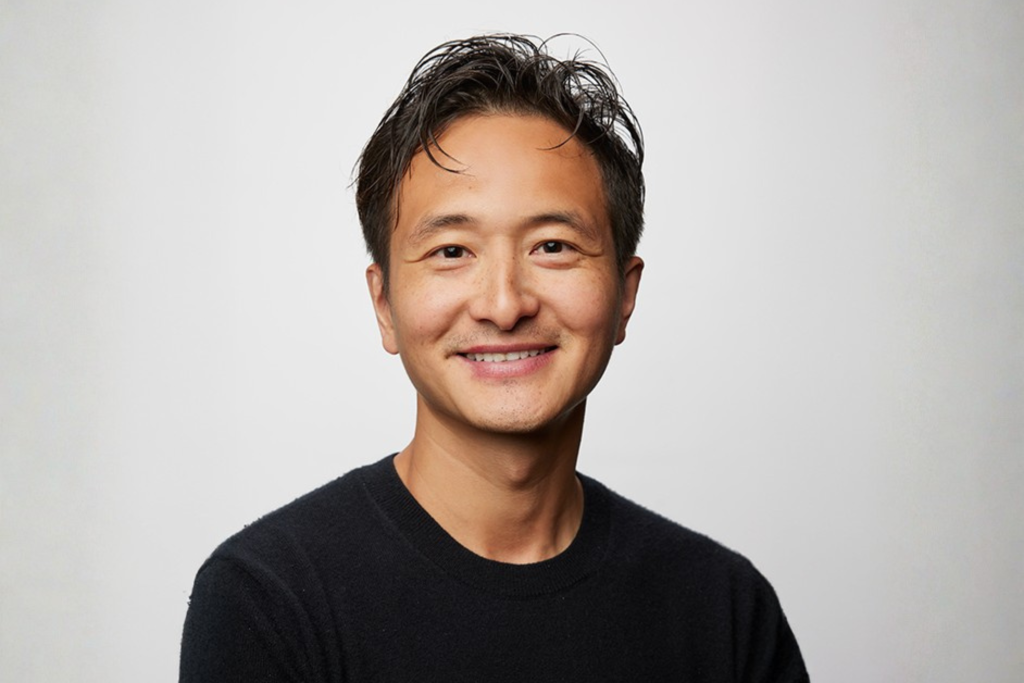
“The futures we imagine really do become the futures we live in,” says Liam Young, a BAFTA-nominated producer who is also a designer and director.
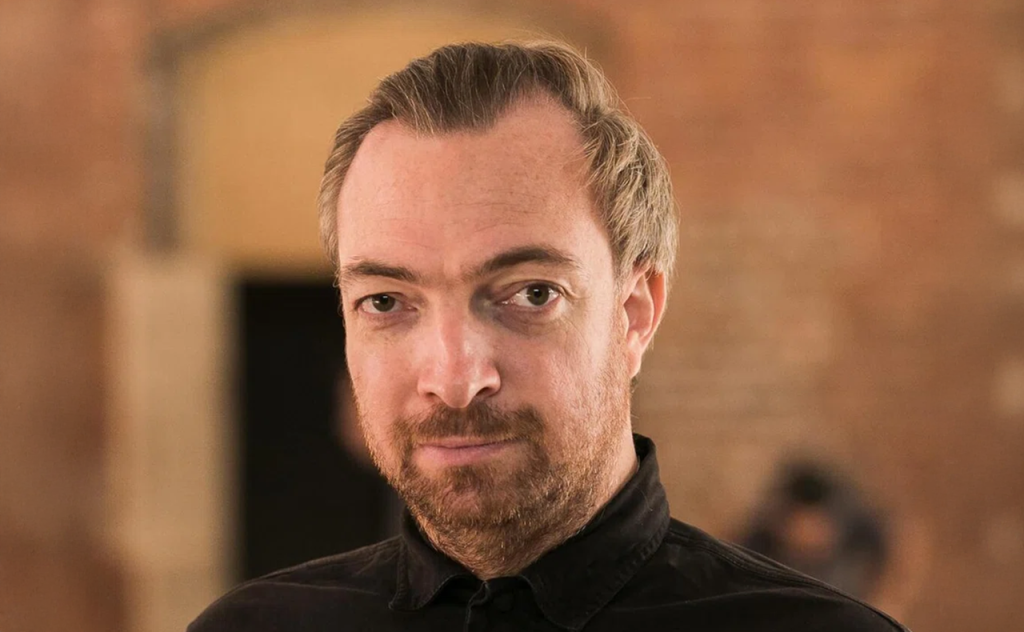
Liam Young, co-curator of the Another World Is Possible exhibition at ArtScience Museum / Photo credit: Liam Young
This joining of two spheres is something that Another World Is Possible, an exhibition at ArtScience Museum, hopes to display in full force.
Tech is an artifact of culture
Running from September 13, 2025 to February 22, 2026, the exhibition explores the practice of world-building through cinema, architecture, and speculative fiction. Co-curated by ArtScience Museum and Young, the showcase is a call to arms for our current times.
“We’re in a very urgent and critical moment, and we exist at this moment when it’s very hard to imagine the world getting better before it gets worse,” he shares. “But I really think this is the project of our generation – to find ways to be hopeful amidst the darkness.”
This philosophy is the exhibition’s core. Instead of leaning into the familiar dystopian narratives that dominate popular culture, it aims to present aspirational and productive visions of the future.
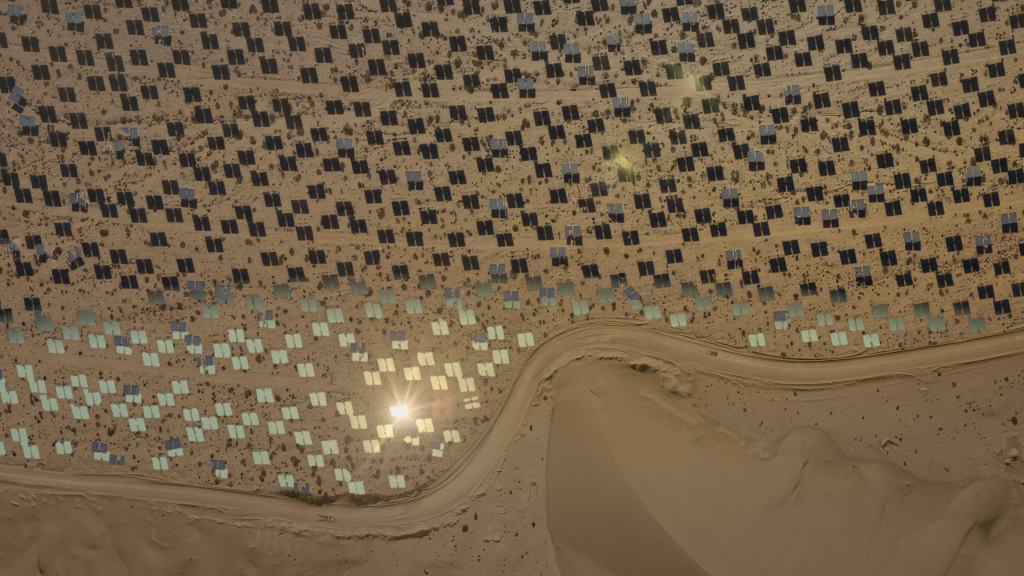
Imagine how much greentech like this could change the world (Great Endeavour, 2024) / Photo credit: ArtScience Museum
Young asserts that technology and culture have always been inextricably linked.
“Tech is an artifact of culture, and it mirrors the culture that produces it,” he explains. “There is no inherently good or evil tech. It is just a reflection of ourselves and our virtues and values.”
The challenge today, he notes, is that much of our defining tech like AI and social media are “before-culture tech,” – i.e., they arrived faster than our cultural understanding of their implications.
Previously, science fiction was about technologies that weren’t here yet, like robot butlers and flying cars. Now, its role has shifted to decoding the tech that’s upon us. For instance, several episodes of the Netflix series Black Mirror explore an alternate present rather than a distant future.
This is where the exhibition finds its purpose: to present stories and ideas that can help us make the right decisions about our collective future.
Blueprints for a better tomorrow
But can an art, culture, and design exhibition inspire the next wave of tech innovation? Young points to the historical relationship between sci-fi and real-world invention.
“The person who invented the first pacemaker used sci-fi as inspiration for his work,” he says, referring to Earl Bakken. Seeing the electric shocks used in the 1931 monster film Frankenstein as a child sparked the inventor’s interest in combining electricity and medicine.
There’s also Neil Stephenson’s 1992 novel, Snow Crash. It gave us the term “metaverse” and became the blueprint for an entire industry.
Learn how the exhibition could give you fresh ideas too
Young argues that for startup founders and technologists, this type of speculative fiction is rich with possibilities. He hopes that visitors will see the works in the show and be inspired to make the “right kinds of technology.”
Several of Young’s own tentpole pieces in the exhibition serve as powerful examples. Planet City (2021), for instance, envisions a hyperdense city that houses the entire global population of 10 billion, powered entirely by existing renewable technologies like solar, wind, and biofuel. It’s not about a magical sci-fi solution; instead it’s about deploying proven tech at an unprecedented scale to solve planetary problems.
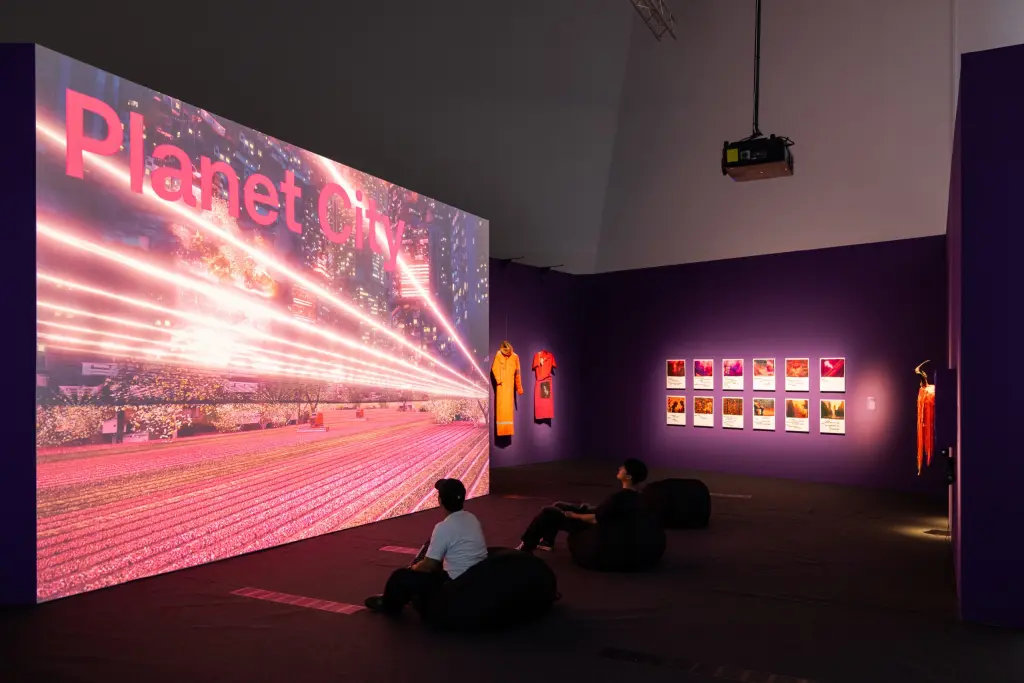
Global problems require planetary scale solutions (Planet City, 2021) / Photo credit: ArtScience Museum
Another of his works, The Great Endeavour (2024), imagines a future where colossal machines remove 300 years of carbon from the atmosphere. While this highlights the potential of green tech, it also serves as a critical commentary on how such technology is currently being used by fossil fuel companies as an excuse to “continue business as usual,” Young says.
These speculative works can directly inform how founders approach product design – it’s a beautiful way of “looking to the future with our feet firmly planted in community and the meaning in the past.,” he adds.
The Singapore model
The exhibition also reflects a distinctly Singaporean approach to the future, one defined by long-term planning, environmental pragmatism, and collective progress.
“In a country like Singapore, we see scales of action and vision that other countries might feel is impossible,” Young observes.
He describes the city-state itself as a “design project,” where everything is intentionally constructed. This forward-thinking mindset, he believes, is essential for tackling generational issues like climate change, especially while other nations “are still squabbling over whether climate change is real.”
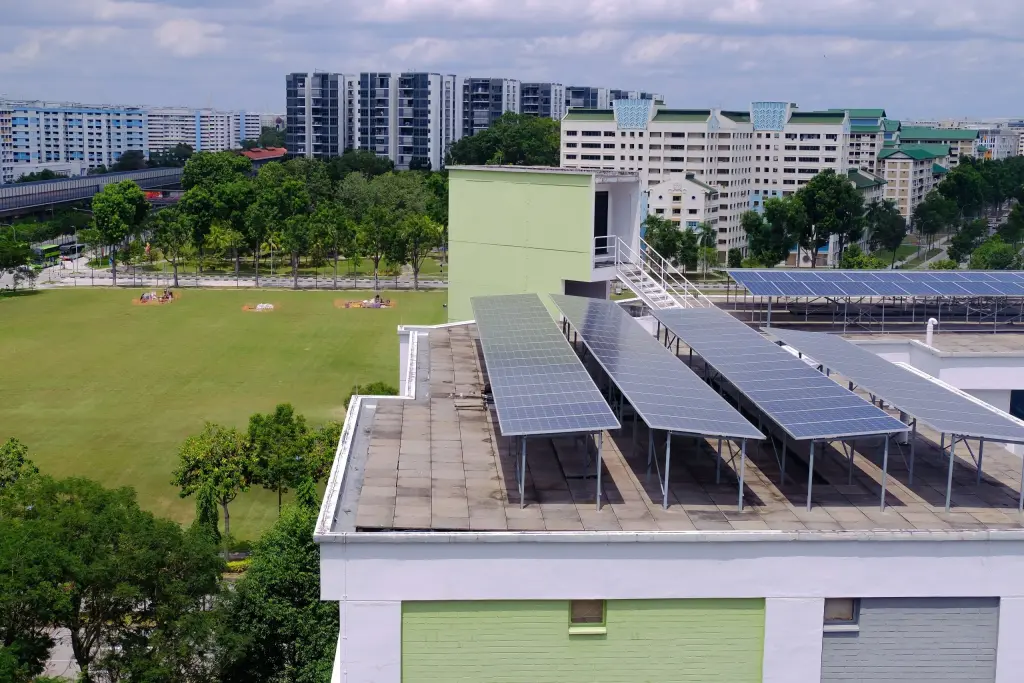
Solar panels installed on the rooftops of public housing estates in Singapore / Photo credit: Shutterstock
This ethos is represented in works that transform Singapore’s iconic elevated highways into vertical gardens or floating farms occupying the freshwater reservoirs around Marina Bay Sands. The exhibition grounds this speculative thinking in reality, with the fact that it’s just a stone’s throw from the Keppel Marina East Desalination Plant desalination plant and Marina Barrage – a testament to the country’s ambitious, long-term engineering.
For startup founders, Singapore’s approach offers a powerful lesson: The future is not something that happens to us; it’s something that can be actively designed and built.
A hopeful call to action
Ultimately, Another World Is Possible is a direct response to the paralysis induced by bleak narratives.
“Most of the images of the future are very dystopian,” Young says. “It’s easier to tell a story in a world that’s broken. But the point of this exhibition is to tell hopeful stories about our future.”
The exhibition provides blueprints for hope. When people see a tangible vision for what could be, they are inspired to act by developing the necessary tech and starting the crucial conversations.
“It’s meant to scare us straight, to force us into action,” Young affirms.
For tech founders and innovators visiting the exhibition, the key takeaway is to think beyond immediate solutions and consider the kind of future their technology is helping to create. It’s a challenge to move past grim fears and instead aim for a brighter and more sustainable world.
The stories within ArtScience Museum’s halls are invitations to build tomorrow.
Explore hopeful visions of tomorrow and get inspired to create a better future at the Another World Is Possible exhibition at ArtScience Museum.
Visit ArtScience Museum’s website for more information.
This content was produced by Tech in Asia Studios, which connects brands with Asia’s tech community. Learn more about partnering with Tech in Asia Studios.
Stay updated on the go with our mobile app.
Get latest insights with smoother, more personalized experience through TIA mobile app.
Recommended reads
 AI hiring heats up in Singapore
 Maybe we’re the ones in a bubble
 Has Southeast Asia reached its AI inflection point or stalled at pilots?
 When AI meets human nature
 ‘A thirty second job’: how AI replaces the family office analyst
 AppLovin CPO on how renting AI can be a waiting game
 An AI interviewer being built on interview data, not CVs
 Seedance takes over the internet
 HubSpot co-founder: stop hiring well-rounded executives
 This startup helps chipmakers stop repeating the same mistakes





Editing by Winston Zhang and Eileen C. Ang
(And yes, we’re serious about ethics and transparency. More information here.)





📅 Upcoming Events
22 October 2026
Payoneer x CSPN Summit 2026