The Covid-19 pandemic may have pummeled ride-hailing businesses globally, but research suggests that super apps such as Southeast Asian players Grab and Gojek may still hit profitability via e-wallets.
“While both ASEAN super apps stated publicly that online food delivery is key to their profitability, we believe the e-wallet could become the most important aspect for a super app to achieve profitability,” Chinese investment bank China Renaissance said in a recent report.
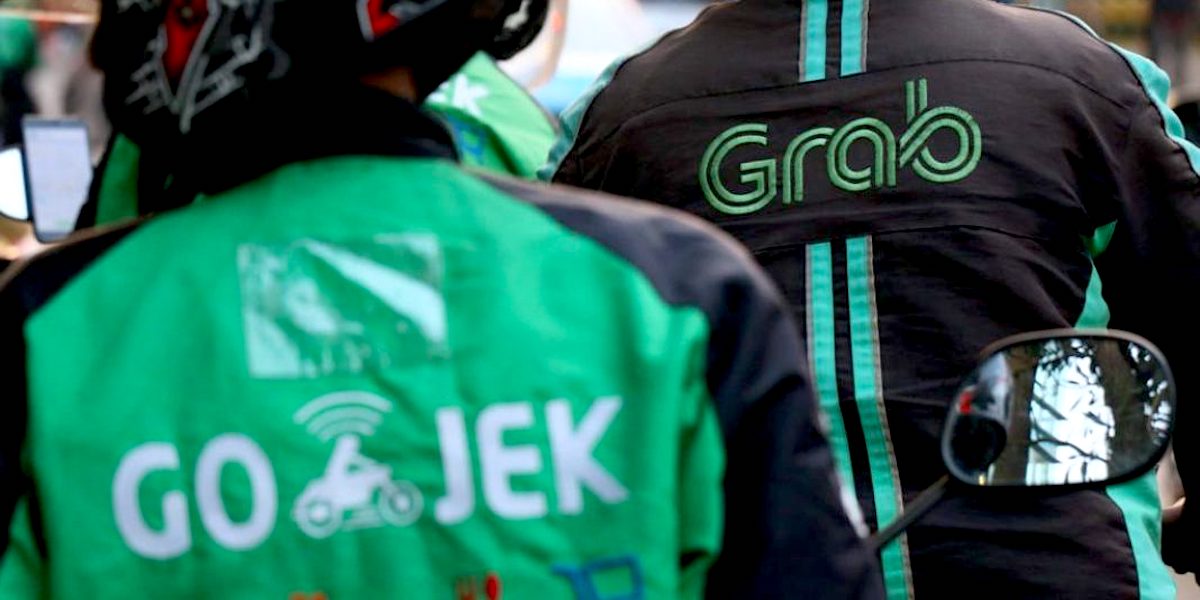
Photo credit: The Low Down
Grab and Gojek, estimated to be valued at US$14 billion and US$10 billion, respectively, as of last year, have both been eyeing profitability as they work towards going public. Gojek previously said it aims to list by 2023 or 2024, while Grab said it will go public once it’s profitable, without giving a specific timeline.
Last year, Gojek said that the company aims to be profitable in its food delivery and e-wallet businesses, adding that its ride-hailing unit, which represents less than 25% of its overall gross merchandise volume, was assumed to only break even.
A senior executive at Grab also noted that the company’s growing food delivery business could drive profitability in the long run. In 2018, its food delivery and payments units generated US$2 billion and US$6.3 billion in annual revenues, respectively, according to the company.
According to China Renaissance, the two regional super apps may take a leaf out of Alipay’s playbook to drive profitability.
Alipay is operated by fintech giant Ant Group, which is 33% owned by Alibaba. The company posted a US$611 million pretax profit in Q1 2020 and accounted for 25% of Alibaba’s reported first-quarter net profit.
“The deposit bases created by Grab and Gojek are unknown, but if they were to replicate the Alipay model, we think both might be able to leverage on their deposit bases to offer loans and potentially generate profit,” the report said.
China Renaissance pointed out that legislation is also evolving. Both Singapore and Malaysia are issuing digital bank licenses as e-wallet deposits rise. Last year, Grab has formed a consortium with Singtel to apply for a digital full bank license in Singapore.
E-wallets for a seamless consumer experience
The report also highlighted that ride-hailing companies such as Grab and Gojek have a key advantage in providing a seamless customer experience with their online food delivery and logistics services.
“Another contributor to the consumer experience is an e-wallet offering,” China Renaissance said in the report. “We note the opportunity for ride-hailing players to leverage existing technology to add to the customer experience, including offering reward points on dollars spent to drive users’ loyalty.”
The company predicts that the total addressable markets for food delivery and ride-hailing in Southeast Asia will grow to US$20 billion and US$25 billion, respectively, by 2025.
Wee Leong Gan, head of equities for ASEAN at China Renaissance, believes that ride-hailing will remain as the “core pillar” for both Gojek and Grab when it comes to retaining users and developing a complete logistics infrastructure post-Covid-19. “The overwhelming food delivery orders during the Covid-19 period had to be met by the existing ride-hailing drivers, which otherwise would have taken time to build up,” he told Tech in Asia.





Stay updated on the go with our mobile app.
Get latest insights with smoother, more personalized experience through TIA mobile app.













📅 Upcoming Events
22 October 2026
Payoneer x CSPN Summit 2026