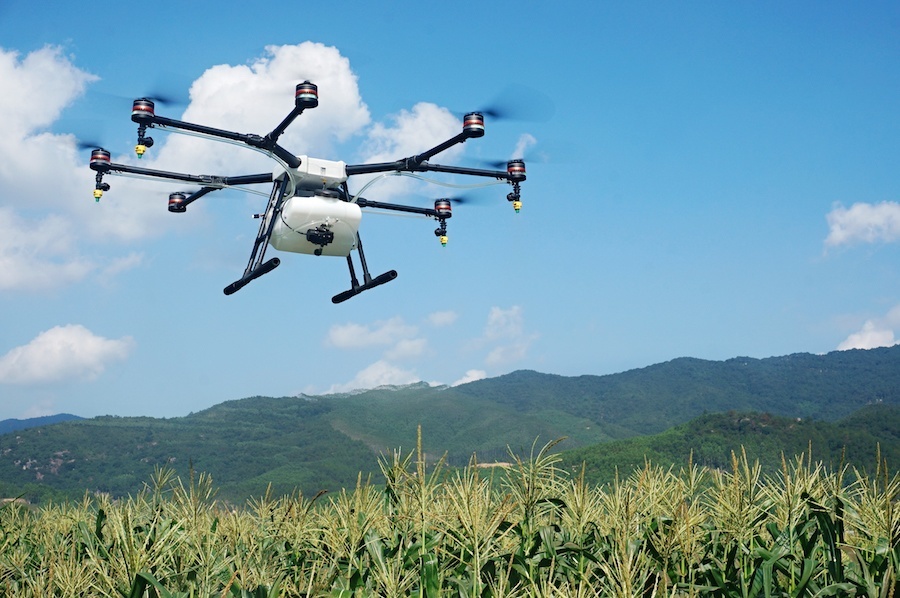
China’s DJI has launched a crop-spraying drone for farmers.
A new breed of entrepreneurs is emerging in Asia. Far from chasing the latest technological fads like blockchains and ICOs, these founders have set their sights on the food supply chain – a sector that remains relatively untouched by the ever-expanding appetite of the software industry.
They are facing resistance, but it is often subtle. “There are not a lot of outright rejections while investors process information and make decisions,” says Praise Phuan, director of Packet Greens, an urban farming startup based in Singapore.
While she got replies along the lines of “we’re interested and willing to consider,” these did not always translate into action. “It can be frustrating at times, as there was no definitive answer,” she adds.
But investors are warming up to food tech. Packet Greens got its money in the end when it raised US$1.5 million from government-related venture capital firm SPRING Seeds Capital and cleantech-focused fund Trirec.
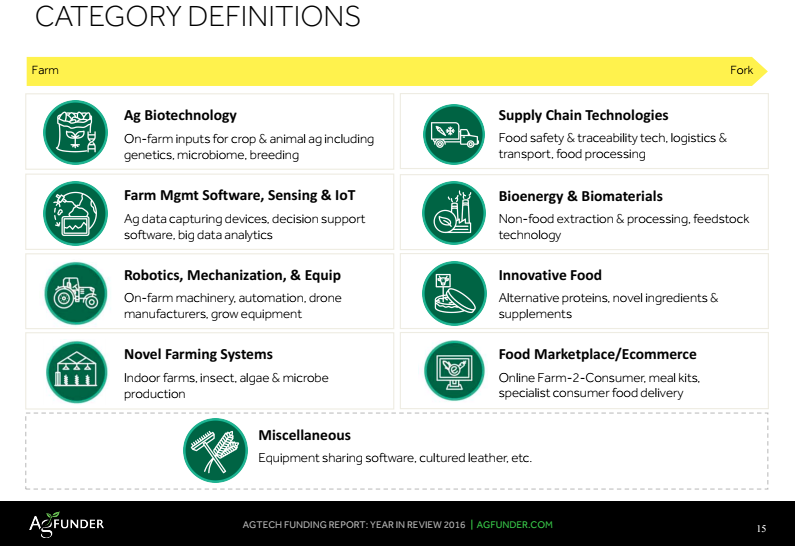
The story across Asia is similar. Think “food tech”, and what typically comes to mind are food-delivery apps like Uber Eats, Foodpanda, and Deliveroo. However, technology companies and investors are increasingly aware of opportunities within the entire supply chain of Asia’s food market, which is the largest in the world. It’s no longer just about reimagining how we order cooked food but upending the entire process from farm to fork.
A new food tech fund
Matthieu Vermersch knows how food is made, and he’s one investor who is seeking opportunities in Asia. The fund manager has invested in food companies and had spent four years researching into ways to improve the industry.
All his efforts culminated in a new Singapore-based venture capital fund called VisVires New Protein (VVNP). It has a specific focus: It does not back technologies to improve farm yields, which it calls agriculture tech (agtech), nor does it invest in consumer products like food-delivery apps. Instead, its investment approach starts off by identifying existing global problems with the value-chain, often within the processing and manufacturing of food, before trawling the world to uncover solutions to address these problems.
It sees three opportunities. The first is sustainable protein. The Guardian reports that “the global livestock industry produces more greenhouse gas emissions than all cars, planes, trains, and ships combined.” To address this, VVNP invested in Ynsect, a startup that replaces fishmeal – which is food made from fish that’s fed to farm fish – with more sustainable insect meal.
Then there’s technology to produce healthy food at low cost. The Asian middle class is set to grow in number and their waistline as they adopt Western fast-food diets en masse. It’s a health crisis in the making, one that could lead to more cases of diabetes, cardiovascular disease, obesity, and cancer.
Finding a way to produce healthy food cheaply is key to solving this problem. Nuritas, an Irish company which VVNP has backed, is one such company that could enable food manufacturers to do just that.
Finally, the fund wants to improve the food supply chain. As more restaurants source ingredients locally, supply chains become more complicated and decentralized. Food-safety systems cannot keep up, which means new processes are needed.
Eager investors
Agtech could take off in India





Stay updated on the go with our mobile app.
Get latest insights with smoother, more personalized experience through TIA mobile app.