- Premium Content It takes our newsroom weeks - if not months - to investigate and produce stories for our premium content. You can’t find them anywhere else.
 Glenn Kaonang · · 5 min read
Bootstrapped AI coding startup profits from AI-human collaboration
Kevin Daniel Pantasdo isn’t convinced that AI can replace human engineers, at least not yet. That’s despite AI models by OpenAI, Anthropic, and Google growing more adept at coding.
“Current coding agents are not full autopilot, but more like cruise-control systems,” Pantasdo tells Tech in Asia, referring to the driving-assistance technology found in most modern cars.
That’s why his four-year-old AI coding startup, QuantumByte, relies on human engineers to step in and fix issues when the AI agents fall short.

Image credit: Arsal Ysfin
But unlike vibe coding tools such as Emergent and Anything, which also target users with no coding experience, QuantumByte earns a substantial share of its revenue from troubleshooting services. This entails employing human engineers to fix AI-generated code for customers.
The Indonesian startup, still bootstrapped, is making an unusual bet: that AI will get good enough to handle most coding tasks, but not all of them. And the hope is that the gap between human and AI coders turns into the revenue engine.
Human engineers still wanted
Pantasdo founded QuantumByte as a traditional software consulting firm in 2021 with an initial capital of 80 million rupiah (US$4,500). Before this, he had gained a reputation for building an app for Indonesia’s Covid-19 task force.
QuantumByte’s first product was a low-code app builder. In November 2023, the company experimented with a version that incorporated third-party AI models and allowed users to code via natural language prompts. It was quickly shelved due to the high costs and subpar code quality at the time.
Now, QuantumByte’s workflow typically begins with an ideation phase, where users describe the problems they want to solve without needing to know the ideal technical solution.
From there, the platform creates the full project documentation, which involves all the written materials that explain the project. The goal is to ensure that any AI-generated code strictly adheres to the specifications in this outline.
This approach, known as spec-driven development, is gaining traction thanks to open-source tools such as GitHub’s Spec Kit, which allows users to apply the method within their preferred development environment.
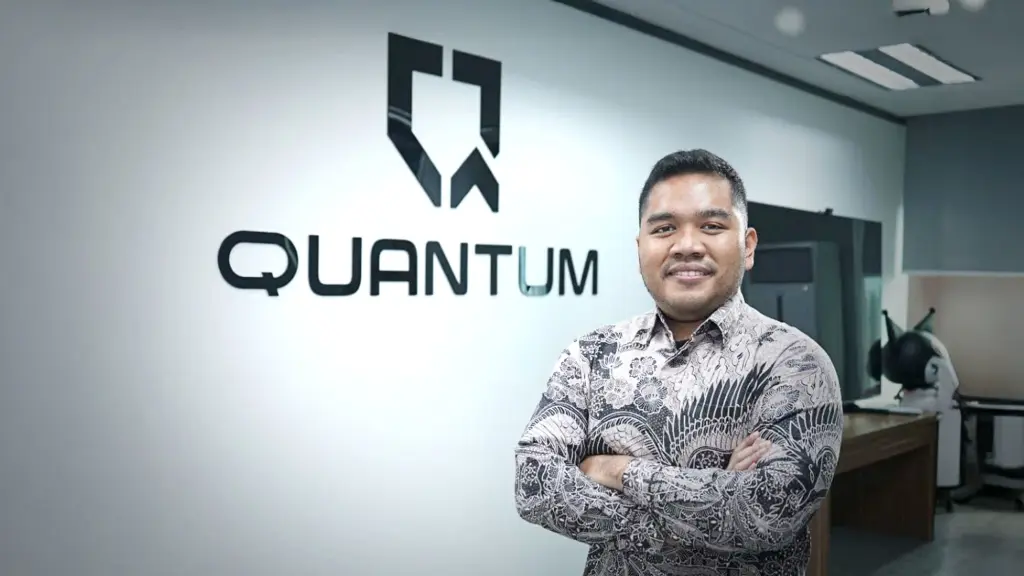
QuantumByte founder and CEO Kevin Daniel Pantasdo / Photo credit: QuantumByte
But even with stricter specifications and better tooling, AI systems will still fall short, QuantumByte believes, and human engineers will need to step in.
The business of fixing AI coders
Stay ahead in Asia’s tech landscape
This is premium content. Subscribe to read the full story.
Unlike most AI coding startups, Indonesia-based QuantumByte admits AI isn’t perfect and loops in human engineers when problems escalate.
We know this is not ideal. ⌛ Sign up in 20 seconds. Cancel anytime.
Our subscriber community includes professionals from these companies:





Stay updated on the go with our mobile app.
Get latest insights with smoother, more personalized experience through TIA mobile app.