Image credit: dimol / 123RF Stock Photo
I was recently in Phnom Penh as part of Startupbootcamp FinTech’s FastTrack tour across Southeast Asia. The opportunities to meet, mentor, and learn from early stage fintech startups in Cambodia were as always insightful, informative, and enjoyable.
Cambodia’s fintech scene is more nascent than some other markets in Southeast Asia. But like many developing ecosystems, the touchpaper has been lit.
Key Strengths
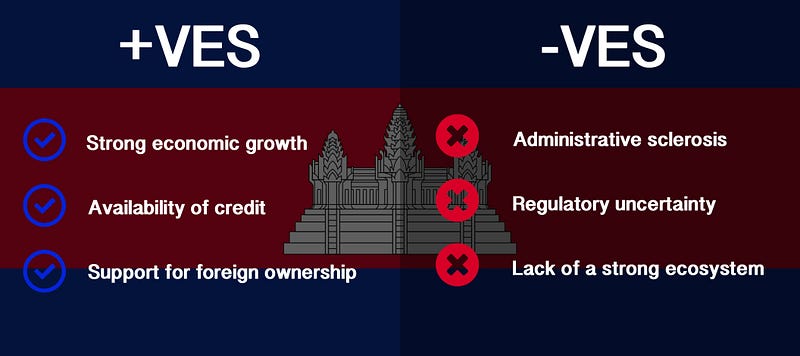
Strong economic growth. Cambodia can now boast more than two decades of growth. In 2015, the country attained lower-middle-income status. With this comes a growing middle class whose spending power and consumer behaviors give rise to a need for new solutions in payments, credit, and mobile technology.
Credit is available for those who want it. While hardly the most active regulator in the region, the National Bank of Cambodia (NBC) supports lending, and banks in Cambodia have continued to make credit available for consumers and companies in the country. When judged in terms of the ease of obtaining credit, Cambodia currently sits in the lofty position of 7th out of 190 economies overall. That placing is much higher than neighboring countries. It should inspire confidence among entrepreneurs to obtain financial means to take their companies forward.
Support is available for investors looking to invest in early-stage tech entrepreneurs. The Cambodian Investment Board (CIB) offers incentives for investors looking to support entrepreneurs that are starting businesses in specific fields: technology, job creation, exports, tourism, environmental conservation, and rural development. These include exemption from taxes, duties, and application costs.
100 percent foreign ownership is allowed. Unlike most of its neighbors, Cambodia allows 100 percent foreign-owned companies. Hopefully, this will incentivize foreign entrepreneurs to venture into the country and spark growth in talent and innovation within financial services.
The Hurdles
Institutional and administrative sclerosis. Overall, the ease of doing business in Cambodia ranks very low: 131st globally. A lot of bureaucracy remains. It’s slow and expensive to set up businesses in the country, and the lack of an established and collaborative fintech ecosystem means that entrepreneurs often feel like they’re going at it alone, which inevitably leads to more busts and fewer breakthrough successes.
Regulatory uncertainty. Unlike other countries in Southeast Asia, the NBC’s regulatory strategy remains relatively disengaged with fintech companies in the country. At this stage, the best characterisation of NBC’s approach is perhaps “learning and observing,” which doesn’t particularly instill confidence in those early-stage innovators struggling to understand the boundaries of their playing field.
As ever, the lack of regulation in multiple areas in Cambodia can be categorized as either an opportunity or a hindrance, depending on your viewpoint. Skeptics will note that while NBC continues to stay on the sidelines, the regulatory grey zones will remain.
For many, the grey zones make taking a chance on an innovative solution unpalatable. They diminish development not just in the case of individual fintech firms, but more worryingly, for the collective ecosystem. This in turn does damage to the development of the financial economy in Cambodia as a whole.
The current situation
Ecommerce is nascent in Cambodia
A fintech ecosystem is coming up
The Future
Forget blockchain





Stay updated on the go with our mobile app.
Get latest insights with smoother, more personalized experience through TIA mobile app.