- Premium Content It takes our newsroom weeks - if not months - to investigate and produce stories for our premium content. You can’t find them anywhere else.
 Jiang Bin · · 7 min read
Alibaba U-turns on Jack Ma’s prophecy
Eight years ago, Jack Ma, the then high-profile and outspoken founder of Alibaba, inadvertently prophesied the tragic demise of its long-time foe JD during a chat with some reporter friends.
The Chinese entrepreneur believed that JD’s direct retailing practice – which he saw to be unsustainable partly because of the humongous in-house logistics costs – would struggle to scale up when orders grow exponentially. Alibaba, on the other hand, mainly worked with third-party courier partners to get customer orders delivered.
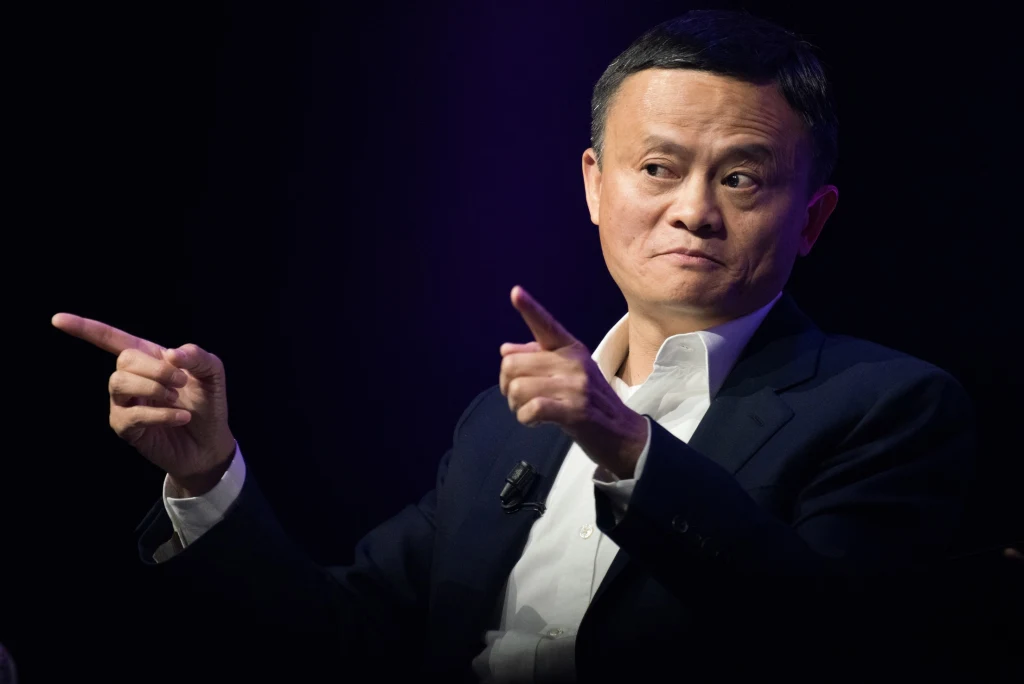
Jack Ma during a conference in Paris, France in 2019/ Photo credit: Shutterstock
Ma didn’t expect that the exchange would later be made public in an instance that would snarl him and his company in a public relations crisis for disparaging a competitor. The episode ended with him issuing apologies to JD on Weibo, the local equivalent of Twitter.
Years down the road, Ma’s firm is walking back on at least part of his assertion and dipping its toes into the direct retailing space. The reasons for doing so? Technology scrutiny headwinds, a still rampant pandemic that’s inhibiting domestic consumption, increasingly heated competition, and a changing business climate.
Direct sales surging
In late February, Alibaba published its worst quarterly report in terms of revenue growth since its 2014 IPO. In the third quarter of fiscal year 2022, the company reported a mere 10% revenue growth, which was the slowest revenue growth in eight years.
What’s worse was that its net income based on generally accepted accounting principles (GAAP) plunged a whopping 75% to 19.2 billion yuan (US$3 billion) year over year. (If we look at its non-GAAP figure, its net income dropped by 25%.) Its shares – which have fallen over 50% in the last year – ended down 0.7% on the day it released the report.
However, all is not bleak for embattled Alibaba. Rather than just knocking down the share price, its gloomiest earnings in years shed light on what’s probably one of the most significant changes in its revenue streams.
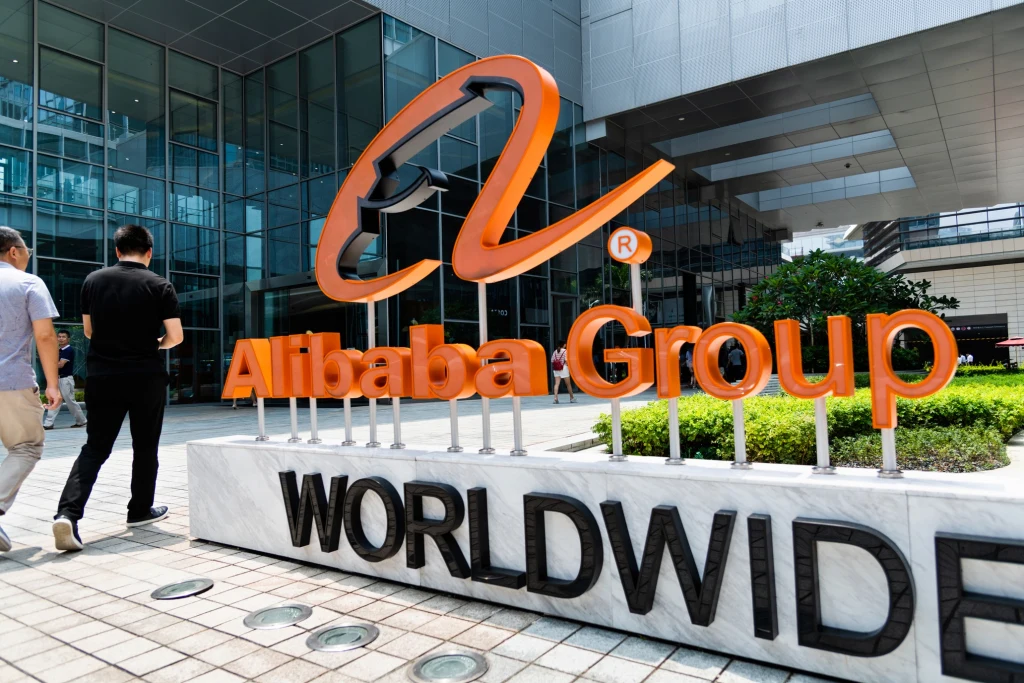
Alibaba Group’s office building in Shenzhen, China/ Photo credit: Shutterstock
According to the Q3 2022 financial report, around 40% of its China commercial retail revenue is now gained from direct sales and the others category, which includes online-to-offline grocer Fresh Hippo, brick-and-mortar retail chain Sun Art, and the online-only Tmall Supermarket, among others. That number represents a whopping 21% jump from a year earlier.
The revenue uptick from selling directly to its customers might help Alibaba make up for its loss in customer management revenue, which was usually the single largest source of its China commerce business, including Taobao and TMall. That revenue stream has been weighed down by a challenging business environment and Chinese consumers tightening their purse strings.
There is no lack of uncertainties and challenges for Alibaba’s direct sales effort.
One of the most imminent questions is how it will manage the conflict between its own direct sales business and the brand merchants on its marketplaces – a fine line that, after selling directly and running a marketplace in parallel for more than 10 years, US ecommerce giant Amazon is still treading carefully.
A mini JD on Tmall
Eating JD’s cake
Stay ahead in Asia’s tech landscape
This is premium content. Subscribe to read the full story.
Alibaba ramps up its direct retailing initiative in competition with JD as its marketplace business becomes saturated and market competition intensifies.
We know this is not ideal. ⌛ Sign up in 20 seconds. Cancel anytime.
Our subscriber community includes professionals from these companies:





Stay updated on the go with our mobile app.
Get latest insights with smoother, more personalized experience through TIA mobile app.