- Premium Content It takes our newsroom weeks - if not months - to investigate and produce stories for our premium content. You can’t find them anywhere else.
 Shihan Fang · · 13 min read
China is embracing Web3 without crypto
Can Web3 flourish in a place that bans cryptocurrencies? Until recently, the answer to that conundrum has been a resounding no.
But it’s 2022, and we’re deep in a crypto winter that has seen mass layoffs, frozen accounts, and a long-overdue admission that much of the bull market last year was driven by speculative activity.
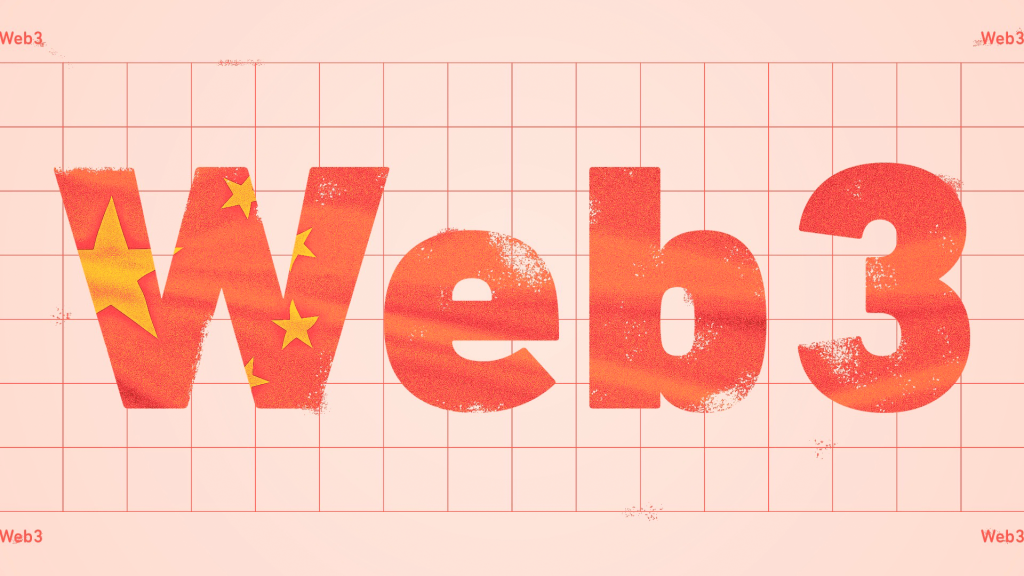
Image credit: Timmy Loen
Enter the catchphrase of this frigid season: Buidl.
Hunker down. Refocus. Build the foundations of Web3. Forget about token prices and instead, revisit the infrastructure that supports crypto.
It’s a stance that China officially began to formulate into policy in 2019, when President Xi Jinping announced a nationwide drive to adopt blockchain technology. China doubled down on its crypto and crypto mining ban last year, creating a cascading effect across all crypto-related activity in the country.
It forced a rebranding of non-fungible tokens into digital collectibles and distributed digital certificates (DDC), which can be loosely described as B2C and B2B uses of NFTs, respectively.
Furthermore, while there is no clear ban on play-to-earn games, state-owned media have been calling them a scam. Just last month, popular move-to-earn game Stepn announced that it would block all users from mainland China.
The country is prepared to promote blockchain adoption at a national scale but is averse to anything related to crypto.
Yet this pickle of a policy has provided fertile ground for an alternative vision of Web3, one that is decidedly more serious and geared toward solving practical challenges. These challenges range from promoting more transparency in school lotteries to tokenizing warehouse storage certificates, providing metaverse interoperability, and even building a system for public data storage.
Some may quibble: Shouldn’t the above fall within the rubric of enterprise blockchain applications, rather than the cornucopia of stellar-inspired coins, NFT-enabled cartoons, and X-to-earn projects that we have come to associate with Web3?
Tech in Asia spoke to a wide range of representatives with direct knowledge of China’s Web3 sector to understand the distinction, and whether the rest of the world will accept the country’s vision of Web3.
China’s latest export: Red Web3
For three years, China has been working on an ambitious nationwide project called Blockchain-based Service Network (BSN). The network is backed by China Union Pay, China Mobile, and the State Information Center of China, and it is driven by its technical architect, Hong Kong-based developer Red Date Technology.
BSN is currently being used in various smart city projects within China, including one in Shenzhen in partnership with the Infocomm Media Development Authority (IMDA), an agency of the Singapore government. It also operates a blockchain-as-a-service platform for the Chinese government.
Keep crypto out of infrastructure
Permission to be permissioned
Decoupling NFTs and metaverse
One web, many systems
Stay ahead in Asia’s tech landscape
This is premium content. Subscribe to read the full story.
China is preparing to export its version of Web3 to the world. But will it gain mainstream acceptance?
We know this is not ideal. ⌛ Sign up in 20 seconds. Cancel anytime.
Our subscriber community includes professionals from these companies:





Stay updated on the go with our mobile app.
Get latest insights with smoother, more personalized experience through TIA mobile app.









📅 Upcoming Events
22 October 2026
Payoneer x CSPN Summit 2026