
Summary:
- Startups are moving away from the “win at home, expand later” playbook, as digital distribution and financial infrastructure make it easier to reach international users from day one.
- Going global early changes how companies are built, especially around payments, fraud prevention, compliance, subscriptions, and revenue management.
- Stripe supports both global-native startups and later-stage expanders by helping them manage cross-border payments, local payment methods, fraud, reconciliation, and global revenue management through a unified platform.
- Join Stripe Tour Singapore on August 25 to learn about AI, global payments, and more.
Startups have long followed a familiar path: win locally, then expand abroad. It was a practical model, shaped by the realities of expansion. Going global was rarely just about expanding beyond domestic markets; it also meant understanding local customer preferences, navigating compliance, managing logistics, and handling the financial complexity of selling across borders.
That sequence is starting to change. Businesses are going global earlier, and the shift is visible in numbers.
According to Stripe, a financial infrastructure platform for global payments, its top 100 SaaS clients in 2018 reached 25 countries in their first year and 50 countries by their third. In comparison, Stripe’s top 100 AI companies in 2025, many of which were founded within the past three years, reached 42 countries in year one and 120 countries by year three.
This reflects how global expansion is no longer limited to large companies, later-stage growth plans, or even obvious markets.

Melina Lee, head of regional business at Stripe / Photo credit: Stripe
“Among Stripe businesses with mostly international revenue, 30% of that revenue comes from outside their home market and outside the top 10 global economies,” says Melina Lee, head of regional business at Stripe.
Why global-by-default is gaining ground
At its core, going global by default is about access.
Instead of relying on a single domestic market, companies can now tap into a long tail of international users almost immediately. Digital distribution removes traditional barriers, such as physical storefronts and local distributors, while modern financial infrastructure lowers the marginal cost of serving customers around the world.
“The benefits outweigh the challenges,” Lee explains. “You get your product in front of more people, you’re on a global stage, and you’re able to generate more revenue.”
Going global early also means companies get to experiment faster.
“You get to test different business models… see what works and what doesn’t, and then double down on the markets that perform,” she adds. “Instead of incremental gains, you can iterate much faster.”
Payments at the forefront
Expanding internationally from day one reshapes how companies are built. This is evident in how businesses approach one of the core fundamentals: payments.
Historically, payments were treated as a back-end utility. For companies built for global demand, it sits much closer to the core of products and customer experience.

Photo credit: AU USAnakul / Shutterstock
In this environment, decisions around currencies and payment methods directly impact conversion and trust. Yes, even when it comes to presenting prices in local currency.
“When you can present the local currency to the end customer, they know exactly how much they’re going to pay. It builds trust – this feels like a business that operates in my market,” says Lee.
Fraud management also becomes a top priority.
“Fraud patterns differ for every country,” Lee notes. “If you have to deal with disputes across multiple markets at once, it becomes a very big challenge, especially for companies that don’t have payments as a core capability.”
This is particularly true for digital-native companies, such as those in AI, which often expand globally from the outset. Unlike larger enterprises or players in sectors such as ecommerce, these companies may not have dedicated payments teams or the time to build deep expertise in compliance, risk, and financial operations.
“For companies going global from day one, they are hit with multiple challenges immediately from day one,” says Lee.
All roads lead to global
Stripe’s approach is to make global expansion feel less like a technical challenge.
“Stripe can handle the entire financial infrastructure, making it seamless to get started from day one,” Lee says.

For companies that are international from the outset, speed is of the essence.
“Founders don’t want to spend time building their own payment stack. They want to spend that time on product development,” shares Lee.
Take WaveSpeed AI, for example. By adopting Stripe early, the B2B AI company was able to integrate payments quickly and focus on scaling its core offering. A single API could support 14 different payment methods across regions, which allowed WaveSpeed AI to monetize across markets almost immediately.
“Competition in our space is intense, so any advantage matters. With Stripe, adding a new payment method takes minutes, not weeks,” explains Zeyi Cheng, CEO of WaveSpeed AI.
Castlery, a furniture store which began in Singapore before expanding beyond its home market, faced a different set of challenges when it became increasingly complex to manage payments across both online and offline channels.
To address this, Castlery integrated solutions like Stripe Terminal to unify in-store and online payments on a single platform. All transaction data is available on Stripe Dashboard, allowing Castlery to maintain oversight of sales across channels. At the same time, Stripe Radar, the firm’s fraud prevention tool, detects and blocks suspicious transactions using AI models trained on Stripe’s massive global payments network.
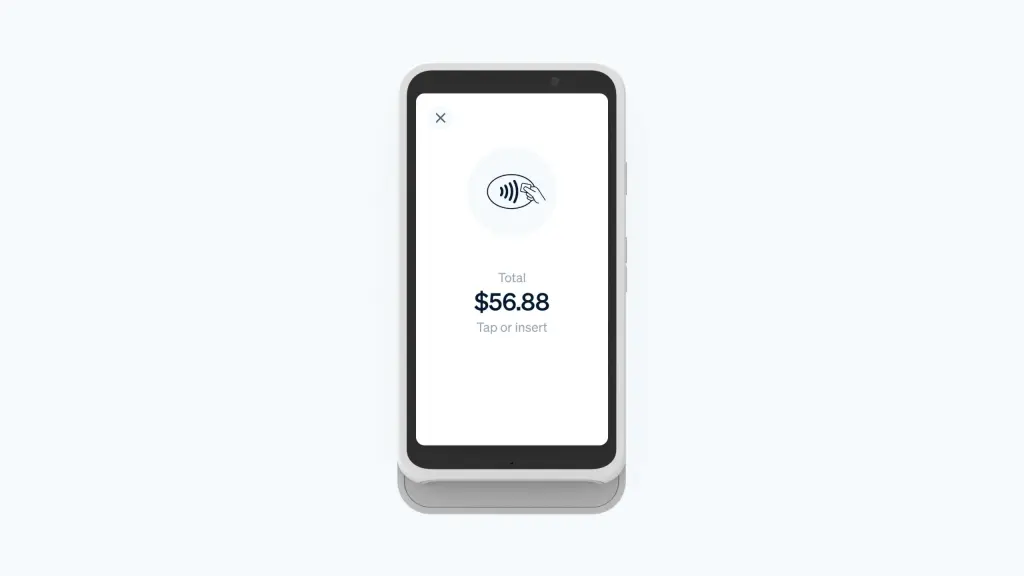
Stripe’s terminal / Photo credit: Stripe
“Manual reconciliation across separate payment channels is completely removed, which is a major challenge for many retail businesses,” says Lee.
Castlery’s co-founder and senior vice president of sales, Travers Tan, seconds this: “With Stripe, it’s a seamless process – customers just tap their card in store, and our systems are instantly updated.”
The next payments frontier
Stripe has gone beyond payments to help businesses manage subscriptions, taxes, and compliance. In some cases, the company acts as the merchant of record, taking over the entire payments layer.
“With smarter systems, such as intelligent retries for failed payments, businesses can see higher conversion rates compared to building these systems themselves,” Lee shares.
The shift toward the global-by-default approach is still unfolding, and new technologies are continuing to lower the barriers in the payments space.
“Stablecoins are one area where we’re seeing growing adoption,” Lee says. “They allow businesses to target markets with more volatile currencies while still providing a stable payment experience.”
At the same time, the integration of payments into AI-driven experiences opens up new possibilities. Stripe’s recent partnerships with Google, OpenAI, Microsoft, and Meta point to a future where consumers can authorize AI agents to execute and complete transactions entirely on their behalf.
For startups, the implications are clear. In a borderless economy, the companies that win may very well be the ones that were ready for international expansion from the start.
“Companies that go global from day one – the internet is their home market,” Lee says. “The world is their oyster.”
A leading programmable financial services provider, Stripe processed over US$1.9 trillion of payments in 2025, equivalent to 1.6% of global GDP. Stripe users include top AI companies, 90% of the Dow Jones Industrial Average, and 86% of the Forbes AI 50.
Through its scale and investments in R&D – particularly artificial intelligence and stablecoins – Stripe accelerates the utility of frontier technology in the global economy. Learn about AI, global payments, and more at Stripe Tour Singapore on August 25.
This content was produced by Tech in Asia Studios, which connects brands with Asia’s tech community. Learn more about partnering with Tech in Asia Studios.
Stay updated on the go with our mobile app.
Get latest insights with smoother, more personalized experience through TIA mobile app.
Recommended reads
 Rules, red tape, and the unexpected moat behind Razorpay growth
 Automating advertising decisions for modern D2C brands
 Making mandatory e-invoicing simple for Vietnam’s SMEs
 Cube bags $3.7m to better track ecommerce shelves, go global
 A startup aiming to make ESG reporting as easy as a bank transfer
 Why AI isn’t crushing SaaS in SEA
 Fixing fragmented ecommerce with one unified system
 Don’t surrender to the machine, says the man who built the iPod
 The startup putting robo-eyes on wind turbines and retail shelves
 Osome’s AI-powered reshuffle





Editing by Stefanie Yeo and Jaclyn Tiu
(And yes, we’re serious about ethics and transparency. More information here.)









📅 Upcoming Events
22 October 2026
Payoneer x CSPN Summit 2026