- Insights This article was written by a TIA community member. Insights pieces undergo the same rigorous editorial process that newsroom-produced articles have.
 Carlo Chen-Delantar · · 6 min read
Typhoons to tech: a new climate future for the Philippines
In November 2013, I huddled with my family in the dark as Super Typhoon Yolanda (Haiyan) ravaged the Visayas – an island group in the central Philippines that sits directly in the path of the Pacific’s most powerful storms.
Together, we felt Yolanda’s fury as violent gusts tore through structures and left us bracing for the worst. It was so terrifying that to this day, I can still hear the wind ripping through the roofs and the sound of the nearby trees snapping in half.
When the storm passed, the world I knew had been flattened. While my hometown of Cebu City was spared the worst, northern Cebu was devastated. Entire communities were cut off, homes were destroyed, and roads were rendered impassable.
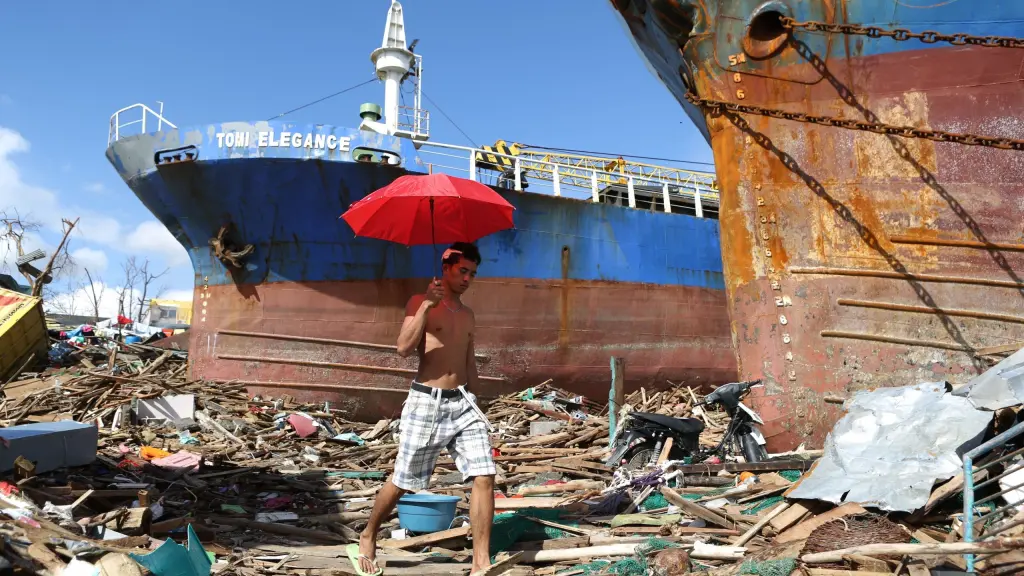
Super Typhoon Haiyan struck the Philippines in November 2013, killing more than 6,300 people./Photo credit: ymphotos/Shutterstock
That experience made me realize that climate change is not a far-off threat when you’re in the Philippines. Instead, it is an everyday reality that shapes how people live, farm, build, and even dream.
Equipped with years of experience as a social entrepreneur and as the current head of the ESG (environmental, social, and governance) and circular divisions at Gobi Partners, I can say that more needs to be done to overcome the impact of the climate crisis in my home country.
The Philippines’ climate paradox
The existing data is sobering. Our country ranked first globally for disaster exposure and vulnerability, according to the 2024 World Risk Index.
It’s also consistently among the top 10 nations in the Climate Risk Index. We endure an annual gauntlet of typhoons, flooding, and rising temperatures.
At the same time, our archipelago of 7,641 islands offers vast potential: abundant sunlight for solar power, rich geothermal reserves, and a young, resilient population. The Philippines even holds some of the world’s largest nickel and cobalt deposits – critical for the clean energy transition.
See also: SEA’s climate tech landscape: Energy solutions are making it rain
But despite this abundance, our climate tech sector lags behind those of its peers in the Association of Southeast Asian Nations. Our renewable energy generation is growing but remains short of national targets.
Climate tech startups face formidable headwinds – a reality that must change if we are to lead.
Issues that demand solutions
We need to tackle several barriers head-on to unlock the Philippines’ potential as a climate innovation hub.
Regulatory red tape is one of them. Renewable energy developers, for instance, often face permitting delays of six months or more. Issues like this are reportedly “stunting the growth of startups” in the country.
Where the Philippines can lead by 2030
Building for the frontlines
Stay ahead in Asia’s tech landscape
This is premium content. Subscribe to read the full story.
After surviving a deadly typhoon, a Filipino social entrepreneur shares how his country can tackle the climate crisis.
We know this is not ideal. ⌛ Sign up in 20 seconds. Cancel anytime.
Our subscriber community includes professionals from these companies:





Stay updated on the go with our mobile app.
Get latest insights with smoother, more personalized experience through TIA mobile app.








📅 Upcoming Events
22 October 2026
Payoneer x CSPN Summit 2026