Osman Husain · · 4 min read
There is potential in Pakistan’s online grocery market. Unfortunately, no one’s grabbing it

There is considerable opportunity for disruption in Pakistan’s retail market, a discerning observer might conclude. Estimates in 2013 suggested the size of the market to be US$42 billion, growing at a solid five percent per year. The average Pakistani also spends up to 42 percent of his income on food and food-related items, implying a healthy, vibrant market for startups looking to target this space.
Surprisingly, Pakistanis have yet to alter their shopping habits to the point where they feel comfortable purchasing groceries and perishable items online. There are a slew of ecommerce startups, touting an array of fashion, lifestyle, and electronic goods. Some of these startups are also VC-funded, meaning massive marketing budgets are spent to acquire new customers and sell additional products to existing ones. There are also consumer-to-consumer marketplaces, and the volume of deals suggests consumers in the country are now fairly amenable towards transacting online.
Grocery shopping? Meh.
However, there have only been a few half-hearted attempts so far toward building an online grocery marketplace in the country. This is strange for a few reasons.
First, an online grocery marketplace offers the notoriously price-fickle Pakistani consumer an option of cost-saving and convenience. Mushrooming growth of large ‘hypermarkets’ in urban centers across the country reflects consumer demand and willingness of major retailers to invest hefty amounts of capital to meet these preferences. This is yet to be translated into an online shopping experience. To the best of my knowledge, no hypermarket chain in Pakistan has an online marketplace or offers consumers delivery options.
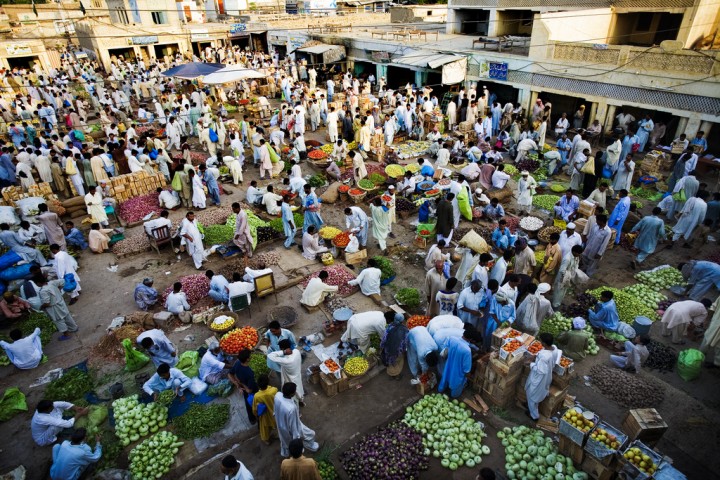
Typical vegetable market in Pakistan
The second reason why I am mystified by a lack of will to take on this opportunity is the fact that shopping at a large supermarket is a truly horrific experience. If you are unlucky, and find yourself doing groceries at the beginning of the month, be prepared for large, teeming crowds, who will jostle with you for the last can of discounted diet coke. Checkout lines are another nightmare: the wait time can be up to an hour long. Also be prepared to heckle at those who try to cut the line, otherwise they will steal your spot. Finally, as you make your tired, weary, and fatigued legs towards the parking area, there are high chances of an illegally-parked car blocking your route. All in all, not an experience one would want to repeat on a regular basis.
There is clear need. Where are the startups?
So when I found out about the launch of Tazamart, an online grocery store currently catering to consumers in Karachi, I looked forward to the opportunity of skipping this experience altogether. The startup claims it is a “premium grocery store”, and delivers “in the fastest time possible, at the most cost effective pricing.” However, I was quickly disappointed.
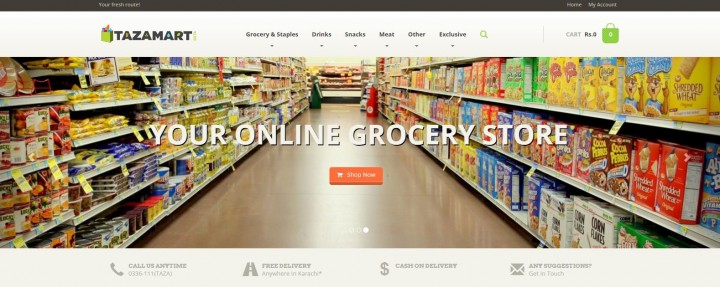
Currently, their portal is woefully understocked and has very little products. Consumers in Pakistan are used to seeing well-stocked supermarkets, with a vast array of both local and imported products to choose from. Tazamart offered only a couple of items in each category, and didn’t include things like detergent, shampoo, toothpaste, deodorant, and the like. Many of the items listed were simply not available; the site would stubbornly refuse to add them to my cart, despite clicking on them furiously. Definitely an underwhelming experience.





Stay updated on the go with our mobile app.
Get latest insights with smoother, more personalized experience through TIA mobile app.