Jennifer Katanyoutanant · · 5 min read
Singapore-based VR studio says ‘stop denigrating’ SEA markets for VR

The making of Warrior9’s The PhoenixIX episode one. Photo credit: Warrior9 Twitter page.
The team behind Warrior9, the first and only virtual reality animation studio in Southeast Asia, knew early on that they wanted to do animation over live action, as live action is expensive and they thought the tech involved wasn’t ready yet. So, they went all in on VR animation and created a new method that produces 10 minutes of content per month—a commendable feat even in the 2D space.
The company’s chief creative director, Abhi Kumar, had The PhoenIX, an animated nine-part sci-fi series, in his back pocket for a while before deciding VR animation would be the perfect way to tell the story. According to him:
“My background is in filmmaking, so I didn’t come in with an animator mindset at all. I came in thinking ‘I don’t want to spend US$30,000 doing motion capture with this rig that has 24 cameras, getting terabytes of data.’ Is there an easier way?”
The series’ first episode was done on the X-box Kinnect to test if it would work. Although Kumar says it’s not 100 percent, it is up and running. Episode two, on the other hand, is going to be “more complicated.” The team is planning to use motion capture suits, but Kumar says they’re “always checking out what’s out there—what’s better.”
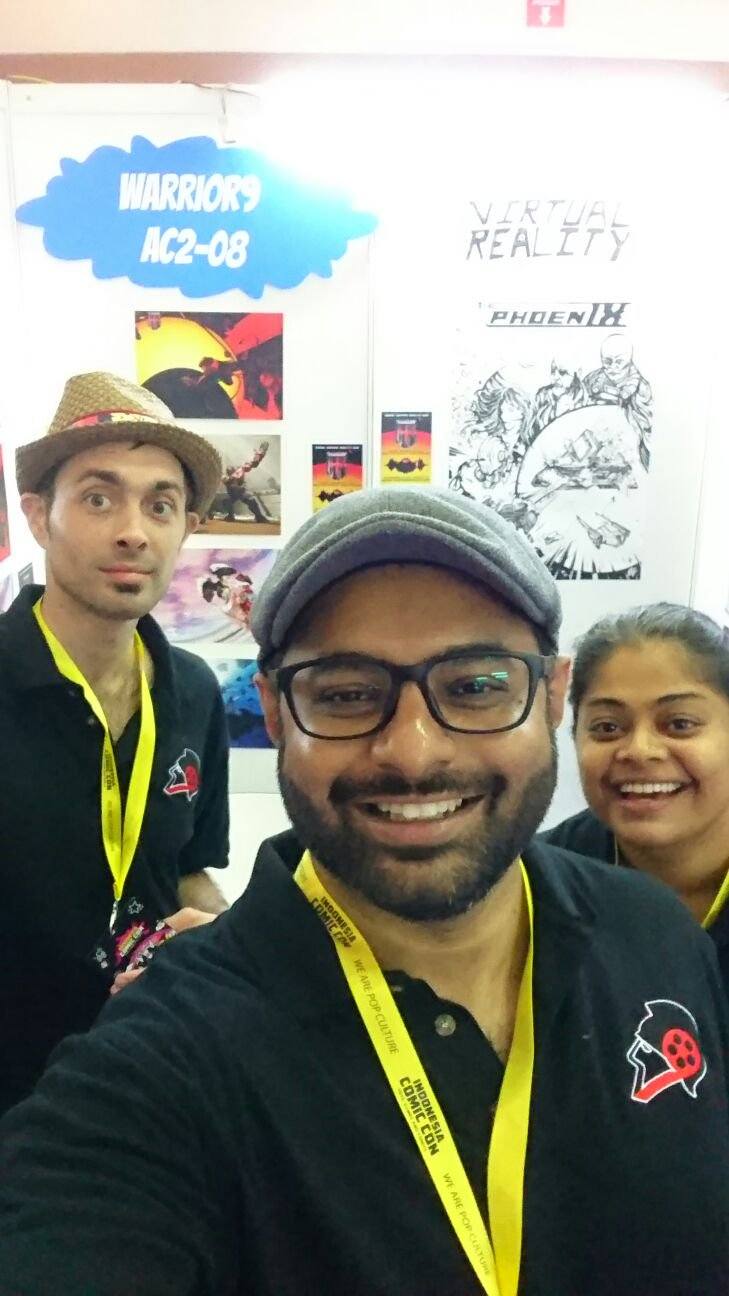
In the middle is Warrior9 CCD Abhi Kumar and on the right is CEO Ashima Thomas. Photo credit: Warrior9 Twitter page.
Last year, the three-person team of ex-bankers, documentary filmmakers, and TV producers, took their first project to Cannes, where they shared an audience with studios like Baobab Studios, a California-based VR startup with a total of US$31 million in funding.
Not bad for their first try.
The state of VR in SEA
Southeast Asia is made up of 11 distinct countries, all with different levels of technological development. But all of these countries have one thing in common: They were born into a rapidly advanced stage of technological development. Unlike Western countries, which went from the block phone, dial-up modem, to iPhone 7, Southeast Asia’s population is relatively young (the median age is 29). Most people in the region skipped desktops and went straight to smartphones, a trait they share with China, a country slated to become the first to hit VR mass adoption.
VR isn’t mainstream in SEA yet, but signs are positive. Kumar discussed his experience showcasing Warrior9 in the Indonesia Comic Con:
“In Indonesia, they were like ‘What is this thing (VR)? We want to know more about it.’ Even though VR hasn’t taken off in Indonesia at all—I think they sold less than 20 HTC Vives last year—the feedback was overwhelmingly positive.”
Singapore, on the other hand, is the hotbed of regional VR activity, and things there are moving fast. In Kumar’s experience, no other industry has advanced so quickly within the span of a year. “In 2016, when we first started showing the teaser in Singapore, nobody knew what VR was,” he said. “In 2017, we went back to the same conference and it was standard. Of course, everyone knew what VR was. In one year, the whole mindset had changed.”
SEA media companies aren’t all-in just yet
Asians are underdogs in VR
It’s never too early





Stay updated on the go with our mobile app.
Get latest insights with smoother, more personalized experience through TIA mobile app.