Michael Tegos · · 4 min read
A startup from Singapore is building a smart cooking assistant
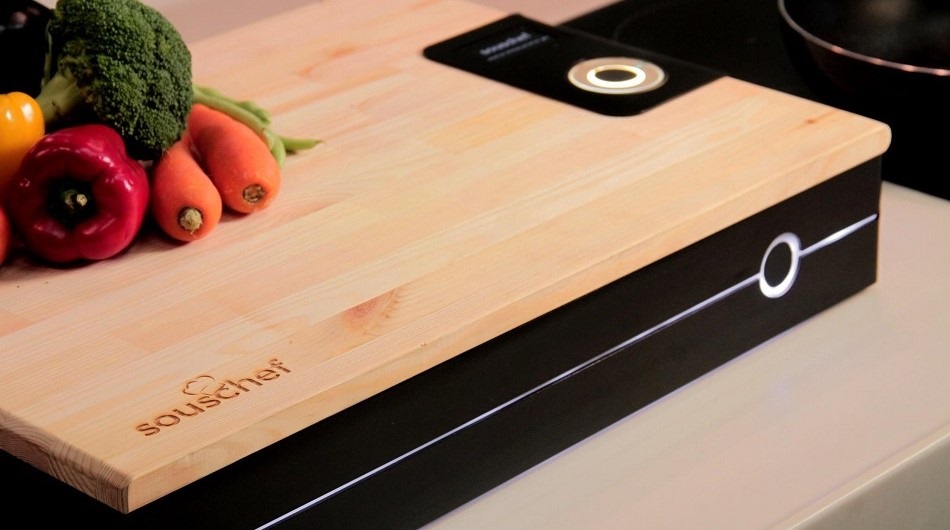
Photo credit: Souschef.
Some of us straight up don’t know how to cook (and aren’t particularly interested to learn), while others just don’t know where to start. Sure, you can find dozens of recipes for tasty dishes online, but they’re not much good if you forgot to get onions or you don’t know what oregano is.
Some startups try to solve that problem by sending you ready-to-cook ingredient packs, like Blue Apron or Indonesia’s Black Garlic. Others try to solve the problem by introducing smart technology to your kitchen. Singapore-based startup Souschef is one of them.
The device dispenses the ingredients you need in the correct measurements for your recipe.
Souschef is building a gizmo that’s part ingredient dispenser, part recipe assistant, part cutting board. You input the recipe and the number of servings you want and the device dispenses the ingredients from its belly in the correct measurements. It can store up to 12 dry ingredients like salt and dried herbs.
The ingredient jars are removable and washable, so you can refill them or swap out ingredients as you see fit. Just make sure to let the system know what’s in each jar through the user interface. You wouldn’t want to to get sichuan pepper when the dispenser thought it was giving you thyme – that would be terrible.
The gadget also works as a food scale to let you measure those precise portions for your recipe (for those ingredients that can’t be stored in the built-in jars).
The version I see at the team’s headquarters is the almost completed second iteration of the prototype. It looks close to a finished product – it’s not exactly at the point where you wouldn’t notice it’s not final, but it’s mostly there. This one features a touch screen that displays the interface the team has built for the device.
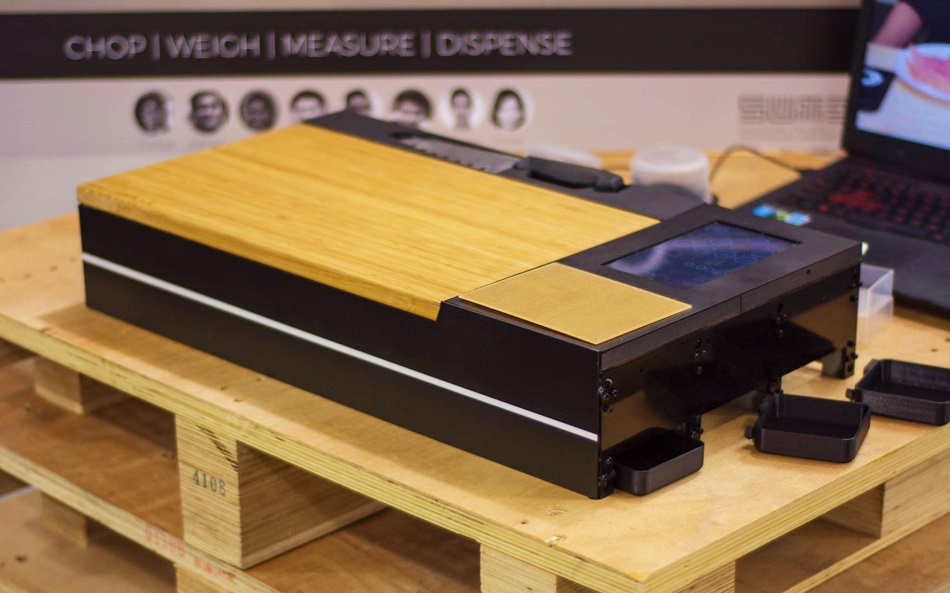
The second prototype of the device includes a touch screen. Photo credit: Souschef.
Automated cooking
Co-founder and CEO Tushar Mohan’s vision is to achieve automated cooking – meal preparation with little human involvement. All you would have to do is buy the ingredients and put them in the device.
The continuous iteration and polish that needs to go into a physical product consumes both time and funds.
“If you notice in Singapore, [people tend to] eat out or use delivery startups,” he tells Tech in Asia. “No one is cooking their meals, people are not eating healthy, and organic food is too expensive.”
Tushar has a robotics and electronics background – and unsurprisingly, he likes to cook. Combining that with his expertise creating prototypes to solve specific types of problems seemed natural, so he and his team started exploring automated cooking.
Recipe for success





Stay updated on the go with our mobile app.
Get latest insights with smoother, more personalized experience through TIA mobile app.