Tech in Asia · · 4 min read
Evernote loves Japan. Here’s how the country influences its philosophy and products
Daylon Soh is a freelance photojournalist and is the editor of OpenBrief, an online publication about creativity and culture in Asia.

Libin at the Dublin Web Summit. Photo: Daylon Soh
There are many things in Japan that make Evernote CEO Phil Libin tick. These include Enji, his favourite lunch spot in Tokyo, and Rakuten CEO Hiroshi Mikitani, who Libin considers a business mentor. Japan has shaped some of Evernote’s features and the entire company’s managing philosophy.
In an interview with Tech in Asia at this year’s Dublin Web Summit, Libin reiterates Evernote’s quest to become a 100-year-old startup. It’s a movement inspired by the Uchida Yoko Group in Japan, a publicly listed company that mainly provides business equipment and services to enhance workplace productivity.
“The Uchida Yoko Group is one of the 21,000 companies in Japan that has been around more than 100 years but it doesn’t feel like an old company as they have been innovating very actively.”
Libin leans in closer and says, “The whole idea of building a 100-year startup is something deeply inspired by Japan while I was there. It combines the best of Japanese long-term management planning and Silicon Valley’s culture of rapid innovation. That has influenced how we built products, how we raise money and how we set the culture in Evernote.”
Evernote was founded in 2007 and now hires more than 400 employees around the world. In essence, the bigger Evernote grows, the better they understand the type of tools needed to manage complexity in large companies and the solutions to help them stay nimble.
“When a company is small with less than 10 people, it’s at a level of hyper productivity as everyone knows what everyone else is doing. Evernote is built to help big companies feel small.”
Libin recalls several features directly influenced by Japanese culture, one of which is the prevalent business practice of exchanging business cards. That was the reason why Evernote got serious about developing its namecard scanning feature.
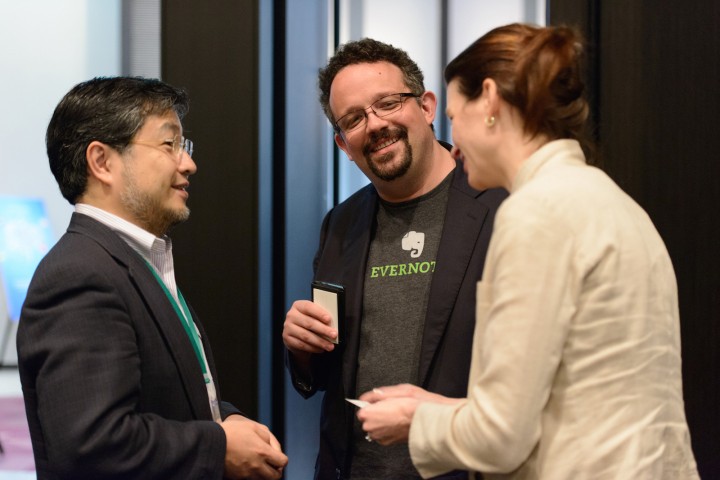
Exchanging business cards at the Japanese office. Photo: Evernote Japan
The love affair goes both ways. “Japan is our second biggest market by revenue. It is our third biggest market by number of users. It’s our biggest market in terms of partnerships as we tie up with companies like NTT DoCoMo, Fujitsu, and Sony. The user base in Japan is the most active and engaged. We get the most feedback from users in Japan.”
Japan isn’t the only country Evernote is fixated on though. “Asia is overall the fastest growing region for Evernote with China being the fastest growing market,” says Libin.
“We don’t segment the world into markets or make a different version of Evernote for Asia. The reason why we invest in Asia with great teams in places like Beijing, Tokyo, Singapore, Seoul and soon India is because that’s where the talent is. We want the best people there to help us build Evernote for the world. Evernote has Optical Character Recognition (OCR) built-in for Japanese and Chinese Characters and we’re improving it further.”





Stay updated on the go with our mobile app.
Get latest insights with smoother, more personalized experience through TIA mobile app.