- Premium Content It takes our newsroom weeks - if not months - to investigate and produce stories for our premium content. You can’t find them anywhere else.
 Jofie Yordan · · 6 min read
How Evermos helps Shariah-compliant brands reach lower-tier cities through social commerce
Indonesian social commerce platform Evermos has one quality that distinguishes it from other players: its focus on Shariah-compliant products.
The Bandung-based company runs a reseller model, where local partner brands contribute to an online catalog of items that merchants can purchase from and resell.
It offers various types of products, such as fashion, lifestyle, home and living, household appliances, as well as food and beverage goods. Products sold via the platform adhere to Shariah principles, which means that the products are made from ingredients and processes that observe Islamic regulations. This includes halal-certified products as well as those without certification but are Shariah-compliant.
To ensure its products adhere to Islamic law, Evermos implements a curation system and requires brand partners to send samples for inspection before their wares are included in the platform.
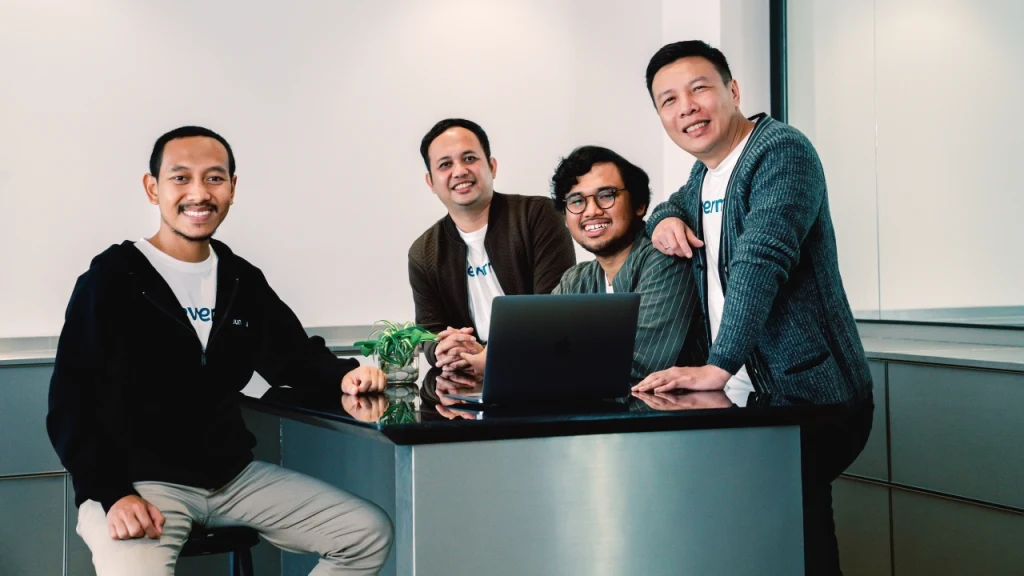
(From left) Evermos co-founders Ghufron Mustaqim, Ilham Taufiq, Iqbal Muslimin, and Arip Tirta / Photo credit: Evermos
Merchants that join Evermos can start selling without an upfront investment by sharing catalog links with potential consumers.
This advantage is done through dropshipping, where items are ordered in advance and shipped directly to consumers from partner brands. In addition, resellers also have the option to purchase the products in advance and then resell these to consumers themselves.
These retailers earn up to 35% commission from each product sold, though the percentage depends on the item.
Ghufron Mustaqim, Evermos’ CEO and co-founder, emphasizes that with the model, the company aims to support local brands to become household names.
“The barrier for local brands to expand their market across Indonesia is very high, both in terms of capital to distribute inventory and high logistics costs,” Mustaqim tells Tech in Asia.
In Indonesia, brands with nationwide reach are typically backed by conglomerates or multinational companies, as these organizations have substantial financial resources available for investment, he observes.
By enabling brands to sell without holding inventory, Evermos assists MSMEs in achieving a countrywide presence, while keeping expansion costs low.
“We are building a self-distribution network for brands through resellers across Indonesia,” Mustaqim adds.
17x GMV growth during the pandemic
Indonesia is home to the largest Muslim population in the world – think 231 million people.
Tapping into lower-tier cities
“Very close” to profitability
Stay ahead in Asia’s tech landscape
This is premium content. Subscribe to read the full story.
The firm sees Shariah as an important aspect in penetrating lower-tier cities in the country.
We know this is not ideal. ⌛ Sign up in 20 seconds. Cancel anytime.
Our subscriber community includes professionals from these companies:





Stay updated on the go with our mobile app.
Get latest insights with smoother, more personalized experience through TIA mobile app.