 Osman Husain · · 3 min read
What two entrepreneurs learned in bringing their startup to Japan
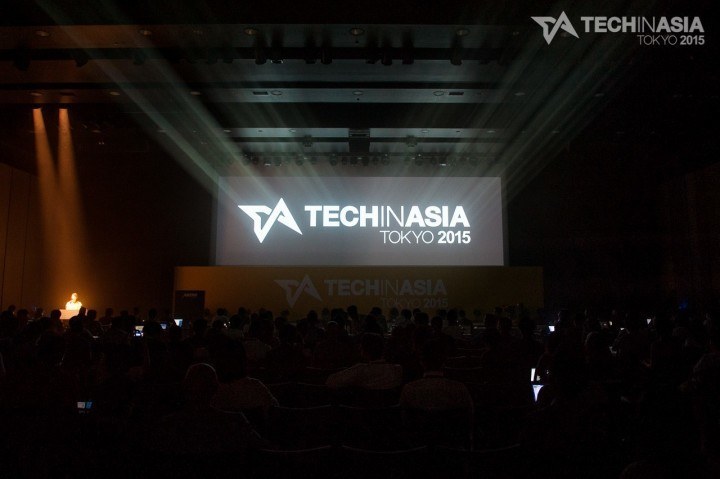
Speaking at Kickstart stage today at Tech in Asia Tokyo 2015 were Ray Grieselhuber, CEO Ginzametrics, and Matthew Romaine, co-founder of Gengo. The talk, moderated by Brandon Hill, focused on the challenges of building diverse teams, differences in business practices between the US and Japan, and strategies on how to crack the local market.
Ray, whose company provides marketing insights, search, and SEO services, stated that his team is spread across Japan and Silicon Valley. This works in their favor and helps them retain a competitive advantage. Matt echoed this view, and outlined how his startup, a crowdsourced translation service, started off in Tokyo purely for business reasons. “There’s a real challenge in Japan [to assist with translation], and the upcoming 2020 Tokyo Olympics means there’s an opportunity. It made sense for us to stay here,” he explained.
As for the benefits of maintaining a multi-ethnic team, Matt said this particular structure helps them cater to a multi-cultural customer base. The varied cultural backgrounds also make for “interesting conversations.” Ray spoke about how startups can take advantage of wage differentials in order to reduce costs and overhead. “[In remote teams] communication issues can be tricky because of different time zones, but if you figure it out then it’s not so bad,” he said. However, both stressed the need for employees to have a strong grasp of the English language.
For companies looking to scale their solutions in Japan, Matt and Ray offered some invaluable words of advice. They stressed the importance of understanding the cultural differences of doing business in the East Asian country and the necessity of being patient and committed. “In Japan, there’s a lot more investment in relationship building. Spend time communicating with your customers and understanding them,” said Matt.
Ray was more specific. He revealed that it took his company almost 3 years to build solid traction, despite having a local team and a product designed specifically for Japan. “It definitely takes time, be patient,” he stressed.
Encouragingly, Matt claimed the time invested in building business relationships ultimately does pay off. “Japanese customers are very loyal. Once they’re onboard, they’ll stick with you,” he said.

Brandon (left), Matt (center), Ray (right)
Attracting clients
Both founders stressed the need to understand Japanese culture and adapt to the Japanese style of business. Hiring local sales and marketing teams and hosting events are a “good way to get people interested” said Ray.
Matt drove home the fact that there’s a lot more paperwork in Japan, and businesses are keen to examine case studies and past examples before they agree to a deal. “In the US, you have a good chance if you’re able to deliver a solid pitch, but Japan works differently,” he explained.
However, if founders commit to learning Japanese and communicate with local clients in their language, it will “mean a lot to them”, claimed Matt. “It shows you value their country and culture, and can go a long way.”
It’s also important for companies to understand why they want to be in the country. Just because you’re successful in other markets doesn’t mean you will be in Japan. “If you want to do it, make sure you do your research beforehand,” stressed Ray.
Matt and Ray also encouraged Japanese companies to adopt some of the traits commonly found in Silicon Valley startups. “Be willing to experiment and don’t be scared of failure,” said Ray.
“Make work fun. Do something interesting to keep your team motivated, such as a hackathon,” smiled Matt.
This is part of the ongoing coverage of Tech in Asia Tokyo 2015, our annual conference taking place on September 8 and 9
Ginzametrics Inc.
Ginzametrics offers powerful enterprise-grade SEO to accelerate marketing strategy.
- Location
- United States
- Founded
- 2010
- Employees
- 11 – 50
- Website
- www.ginzametrics.jp
- Latest Funding
- Seed
- Hiring
- 0 positions
Stay updated on the go with our mobile app.
Get latest insights with smoother, more personalized experience through TIA mobile app.
Recommended reads
 Indonesian AI startup goes global
 Forrest Li on scaling Sea, building smarter bots, and founder grit
 An AI assistant that joins sales calls and scores team skills
 SGX’s CEO says it doesn’t need a unicorn to win
 SMEs want AI too, but not the kind Big Tech is selling
 Oatside’s alt-milk rise hits a profitable gear
 Alibaba’s financial health in 12 charts
 Asia’s telcos bundle AI into mobile plans. Will it pay off?
 M-Daq chases bigger clients as revenue falls, losses grow
 VC tracker: Accel raises US$3.5b, including US$550m for India





Editing by Erik Crouch and Judith Balea
(And yes, we’re serious about ethics and transparency. More information here.)




