Ran Poliakine · · 5 min read
The turbulent journey to startup hub: here’s what’s next for Israel
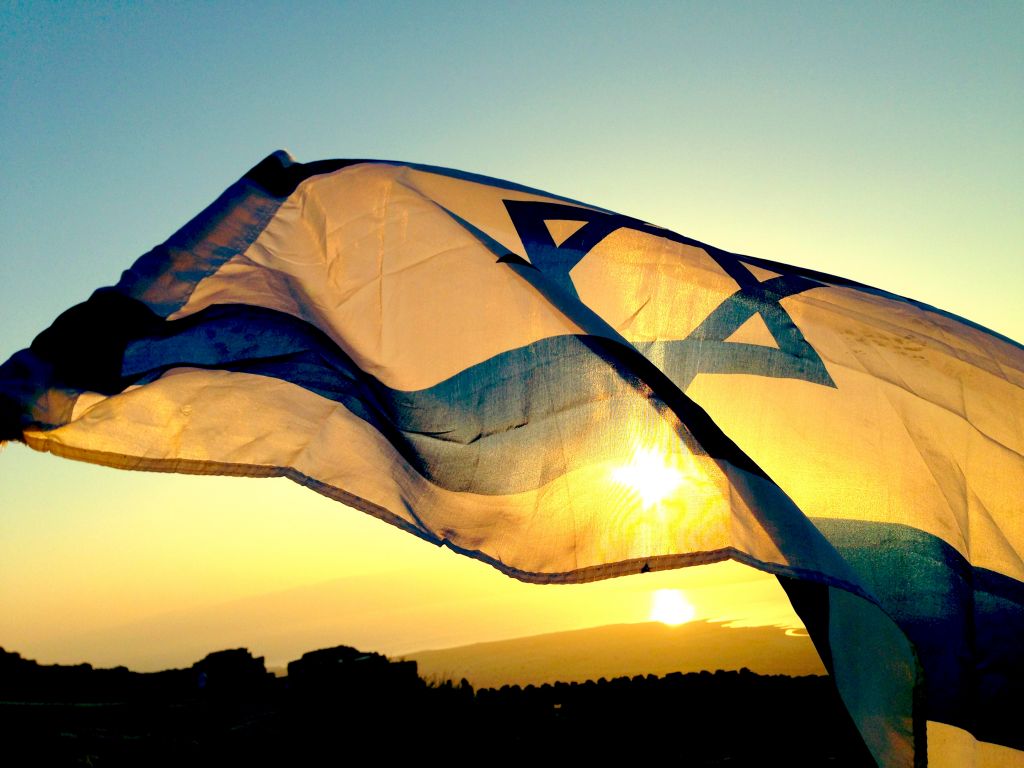
Photo credit: Laurel Dunay
This year, the modern State of Israel is celebrating its 68th birthday. Like any 68 year old, Israel has had its ups and downs. Israel is wiser, more opinionated and more sure of itself and its mission than at any previous time in its modern history. The “shiny newness” of Israel’s beauty has faded into a more elegant charm that comes with age, confidence, and experience. But like any aging beauty queen, the country is starting to show the telltale signs of growing older.
Our sparkling façade is giving way to the realities of political wrinkles. As a country, we are a little less tolerant than we used to be, a little less innocent, and a little more opinionated. Some say that we have lost faith in the possibility that there are other ways to get things done.
Here are the stages of progression that have accompanied Israel’s growth.
Israel 1.0: The building years
In November of 1947, the United Nations General Assembly recommended a Partition Plan for what was then known as Palestine. This UN plan specified borders for new Arab and Jewish states and also specified an area of Jerusalem which was to be administered by the UN under an international regime. The end of the British Mandate for Palestine was set for midnight on May 14, 1948.
On May 14, when David Ben-Gurion, the Executive Head of the Zionist Organization and president of the Jewish Agency for Palestine, declared “the establishment of a Jewish state in Eretz Yisroel, to be known as the State of Israel”, the journey started.
Neighboring Arab armies invaded the next day. Israel has since fought several wars with these Arab states, taking the West Bank, Sinai Peninsula, part of South Lebanon, the Gaza Strip and the Golan Heights. Israel then extended its laws to the Golan Heights and East Jerusalem, but that is a subject fit for another post.
From the time Israel could crawl, she was forced to run and learn the art of self-preservation.
From the time Israel could crawl, she was forced to run and learn the art of self-preservation.
By all accounts, the early years of Israel’s growth were not an easy time. Many of the characteristics that people attribute to Israelis even to this day were born out of those early years and our sheer necessity to carve out a country and a stable life even while surrounded by enemies on all sides. The tenacity (bordering on rudeness), the manic drive to succeed, the 24/7 vigilance are all born of necessity and an innate need for self-preservation.
The modern State of Israel was built on the ashes of many cultures and people that came before us. Yet, build it we did.
Those years were about setting the foundation. They were difficult but necessary. I call those years Israel 1.0 because it was all about infrastructure which, to an industrial designer like myself, is key.
Israel 2.0: Startup nation
One of my American friends asked me the other day, “Does everyone in Israel have their own company?” I have to say, at the time I thought it was an odd question — until I really gave it some thought. The short answer is “Of course not.”
But the more I thought about it, the more I realized that Israel truly is a startup nation. The impression that my friend had, thinking that all Israelis are entrepreneurial is, to a great extent, true. While not every Israeli has his or her own company, just about every Israeli knows the value of self-starting to make a buck.
Israel 3.0: Keeping it relevant





Stay updated on the go with our mobile app.
Get latest insights with smoother, more personalized experience through TIA mobile app.