- Premium Content It takes our newsroom weeks - if not months - to investigate and produce stories for our premium content. You can’t find them anywhere else.
 Collin Furtado · · 4 min read
Ninja Van sees 3x rise in revenue in FYE 2019, but a tough fight lies ahead
Singapore-based logistics startup Ninja Van’s revenue grew by over 3x in the financial year ending June 2019 from a year earlier, while its operating loss more than doubled during the same period, according to its latest regulatory filings made available on VentureCap Insights.
These numbers, however, reflect pre-Covid-19 market conditions. Since then, ecommerce has seen a post-pandemic bump, which could drive up Ninja Van’s earnings.
That said, competition in last-mile logistics has intensified, and this could put pressure on the company’s bottom line. Ninja Van’s rivals are upping the stakes, with J&T Express raising a monster US$2 billion round and Indonesia’s SiCepat Ekspres hauling in US$170 million. Ecommerce marketplaces themselves are bolstering their in-house delivery capabilities, forcing third-party players to find more ways to add value.
See also: The key ecommerce logistics players and enablers in Southeast Asia
Ninja Van has been diversifying its products, but those efforts were nascent in 2019.
The company told Tech in Asia that it does not comment on its financials, but its co-founder and CEO, Lai Chang Wen, previously said that Ninja Van has “never failed to more than double its revenue” every year. The startup also said that it’s the second-largest regional logistics player in 2020, according to a China Renaissance report.
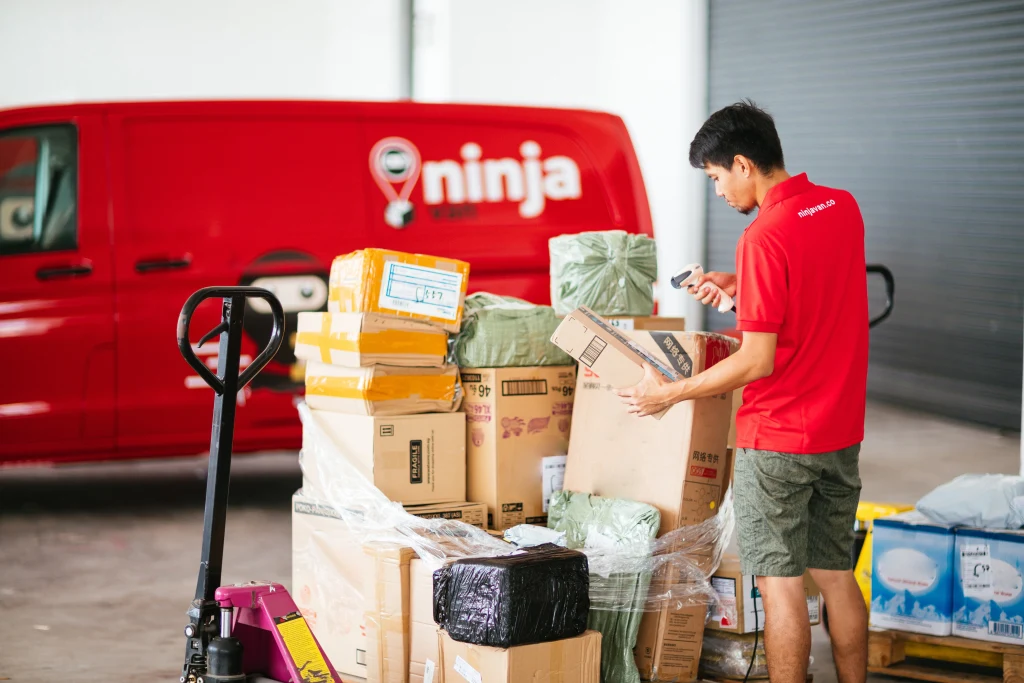
A Ninja Van delivery executive / Photo credit: Ninja Van
Ninja Van has seen its revenue grow exponentially since 2016, when it began raising significant money.
A major reason for the revenue jump in FYE 2018 and FYE 2019 is the collection of delivery service fees and handling fees for its logistics services. Some of the company’s top clients include Southeast Asian ecommerce players Shopee, Lazada, and Tokopedia. Ninja Van also has a strategic partnership with regional super app Grab.
Both of these revenue sources grew by over 3x in FYE 2019. While Ninja Van’s delivery service fees rose to US$153.5 million during the year from US$48.3 million in FYE 2018, “handling fees and others” surged to US$10.5 million in FYE 2019 from US$3.3 million a year earlier.
The startup also recorded US$139,000 as a new source of revenue from the trading of goods in FYE 2019. This could refer to revenue from cross-border shipping services, which Ninja Van introduced that year, along with overseas procurement and escrow services.
However, a larger percentage of its revenue was eaten up by sales discounts, which soared 8x to US$12.5 million in FYE 2019.
Not yet profitable
Improving gross profit margin
Rising admin expenses
Stay ahead in Asia’s tech landscape
This is premium content. Subscribe to read the full story.
Its operating loss, meanwhile, more than doubled during the same period.
We know this is not ideal. ⌛ Sign up in 20 seconds. Cancel anytime.
Our subscriber community includes professionals from these companies:





Stay updated on the go with our mobile app.
Get latest insights with smoother, more personalized experience through TIA mobile app.