- Premium Content It takes our newsroom weeks - if not months - to investigate and produce stories for our premium content. You can’t find them anywhere else.
 Nikita Puri · · 7 min read
Does the dawn of in-house ecommerce delivery threaten third-party logistics firms?
For Yesota Kreshna Pillai, work days usually start at 7 a.m. and see her clocking in many kilometers to deliver an average of 120 packages a day – a number that has gone up twofold during the pandemic.
The 31-year-old is the lone woman among the delivery drivers at her designated hub in Klang Valley, Malaysia. But Pillai’s employer isn’t a logistics firm like Ninja Van, DHL, or Pos Malaysia; instead, it’s Alibaba-backed ecommerce giant Lazada.
While prominent ecommerce players have been solely dependent on a considerable number of third-party logistics players (3PLs), the likes of Lazada and Shopee in Southeast Asia are warming up to the idea of in-house logistics.
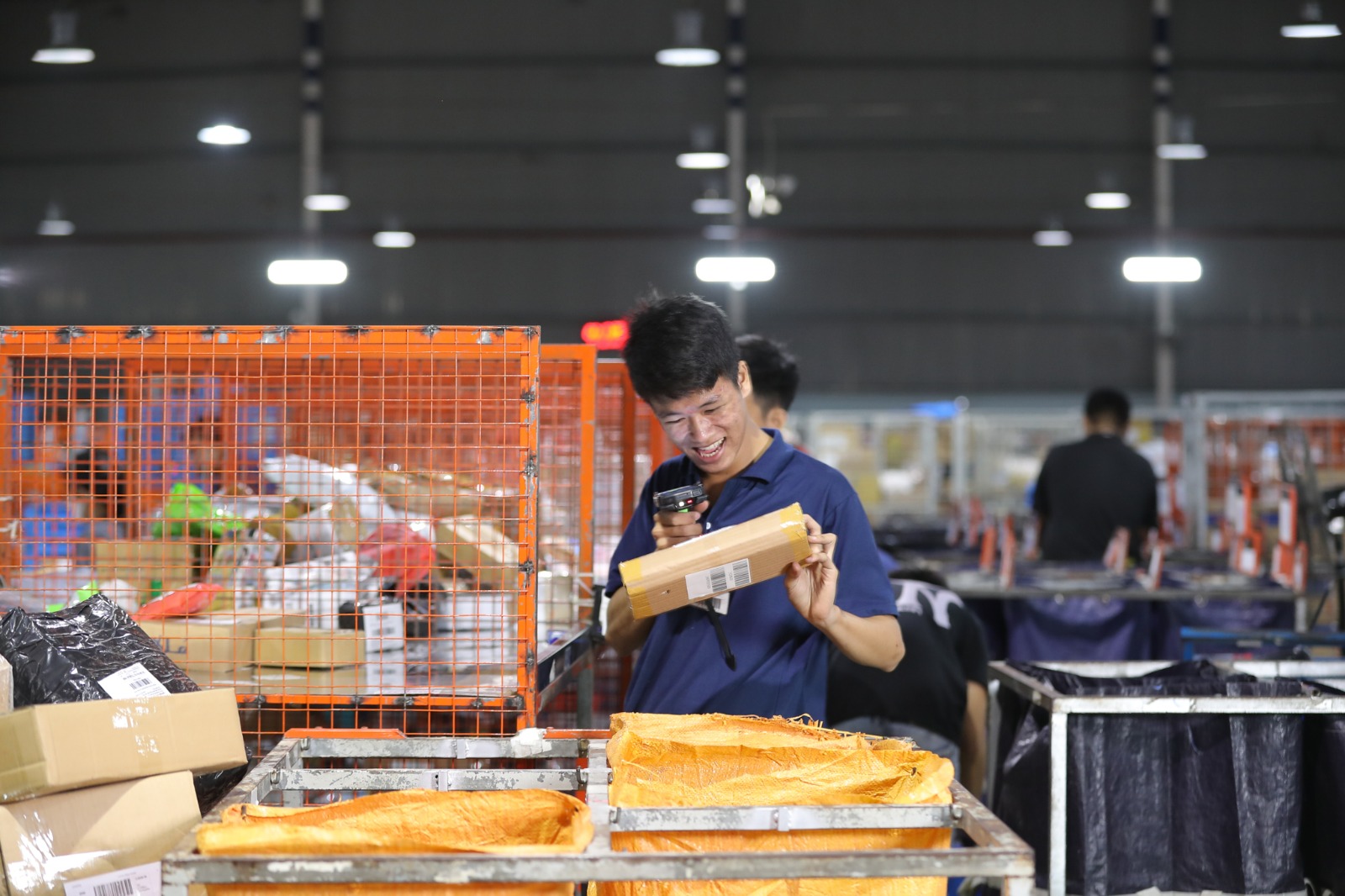
One of Lazada’s sortation centers in Vietnam / Photo credit: Lazada
In-house logistics – or “captive” logistics in industry parlance – grew by 35% in volume in Indonesia last year while Vietnam saw an increase of 32% during the same period, according to RedSeer’s August report, though some claim more conservative estimates.
While 3PLs continue to dominate the market, an in-house logistics operation offers numerous perks. That said, setting up such a system and being completely independent of 3PLs are separate games altogether.
Keeping it in the family
Opting for in-house logistics is not a new practice for ecommerce companies. Amazon, for instance, studied the shipping routes of its partners and assessed factors such as population density in urban markets before deciding whether to use its own delivery fleet or traditional couriers like the United Parcel Service in the US.
But the rise of captive logistics was observed in Southeast Asia only in recent years. Roshan Raj Behera, a partner at RedSeer, says the firm has been monitoring the trend since 2017.
“When you look at countries such as Indonesia and Vietnam where logistics can be an issue, having in-house logistics can be a major differentiating factor,” he says.
Besides Lazada, Singapore-based Sea’s Shopee also deploys captive logistics, though it only scaled it up with Shopee Xpress last year, according to a person familiar with the company’s operations.
Lazada, which was founded in 2012 as an online retailer and evolved into a marketplace, says it has “invested heavily in logistics infrastructure from the get-go.” In comparison, Shopee was launched only in 2015.
Lazada’s fulfilment centers occupy over 300,000 square meters of land in six Southeast Asian countries. It also has 15 sortation centres and close to 400 first-mile pickups and last-mile delivery hubs.
“More than 85% of total parcels delivered are sorted by Lazada’s proprietary network,” says a company spokesperson. Having in-house logistics capabilities “has been a competitive advantage” and it will continue to differentiate Lazada from its peers, the spokesperson adds.
According to a report by Parcel Perform and iPrice Group, Covid-19 lockdowns increased delivery times in Malaysia by 119%.
Why logistics is a formidable mission
Steadfast alliances
Stay ahead in Asia’s tech landscape
This is premium content. Subscribe to read the full story.
Ecommerce firms in Southeast Asia are warming up to in-house logistics. But with 3PLs going strong, the sector is still far from being divvied up.
We know this is not ideal. ⌛ Sign up in 20 seconds. Cancel anytime.
Our subscriber community includes professionals from these companies:





Stay updated on the go with our mobile app.
Get latest insights with smoother, more personalized experience through TIA mobile app.













📅 Upcoming Events
22 October 2026
Payoneer x CSPN Summit 2026