 Nadine Freischlad · · 5 min read
Thousands of public transport drivers in Indonesia protest against Go-Jek, Uber
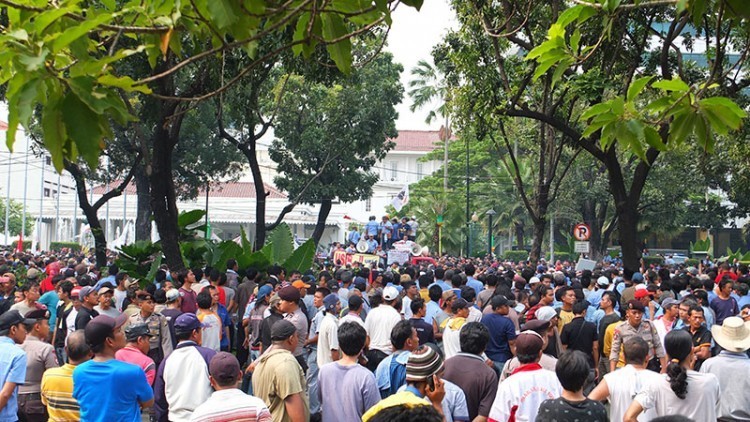
About 1,500 protesters had showed up in front of the city hall. By the time I left, more people were joining the crowd.
Transportation apps like Grab and Go-Jek have changed Indonesia’s capital. Most would say for the better. Rides are readily available and come right to your doorstep. You can choose to hop on the back of a motorcycle to beat traffic or get into a comfortable car.
It’s cheap, too. Using Grab or Uber’s cars usually comes out well below a regular taxi fare in Jakarta. Motorcycle rides, such as with Go-Jek or GrabBike, come with a very low fare because the startups are subsidizing them to win customers.
Still, there are people who feel excluded and claim they’ve actually been hurt by the changes. Drivers of public transportation vehicles like mini buses, three-wheeled bajajs, and regular taxis say their incomes have decreased ever since they started competing against the ride apps run by well-funded startups.
Today, thousands of public transportation drivers took to the streets of Jakarta in protest. The demonstration started at 8 am in front of City Hall and later marched toward the presidential palace. Between 9 and 11am, about 1,500 people had showed up, according to an estimate of police on the scene. The crowd was still swelling by the time I left.
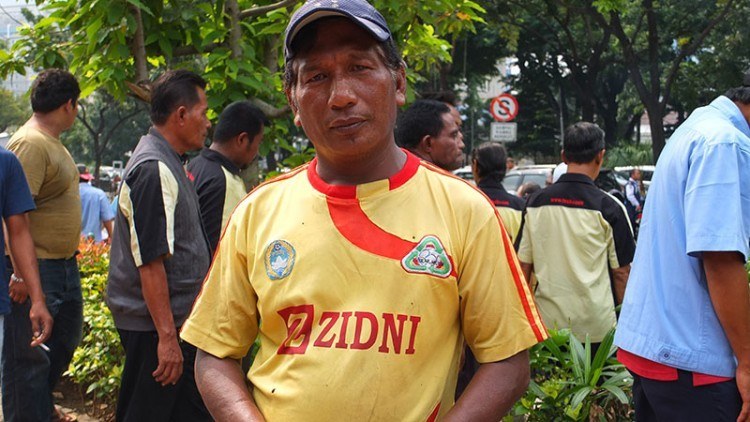
Suwito is a Bajaj driver in Jakarta.
Suwito, a three-wheeler driver, said his income had decreased in the past month to the point where he often does not make enough to pay back the owner of his vehicle. He thinks it’s unfair GrabBike and Go-Jek charge so little for their motorbike rides.
“Usually I would pick up passengers from train stations or bus stations. Now, they order through the app. There is a long line of Bajajs who are not able to get customers,” said Suwito.
The complaints of other protesters sound similar. They think the low prices startups use to lure new customers are unfair and that a standard price should be set. They demand that transportation startups register all their vehicles as public transportation vehicles, with the corresponding official yellow license plates. They also ask the city be more strict with these startups and forbid them from operating while their legal status is still pending.
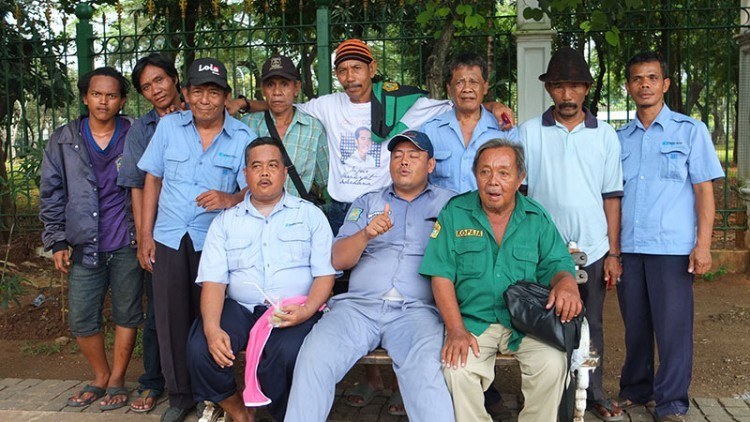
A group of bus drivers and taxi drivers at the demonstration. The Kopaja bus driver quoted in the article is the one sitting in the center.
“They must get yellow license plates, pay for an operating license, pay taxes, then we can say we are in fair competition,” exclaimed a bus driver working for bus company Kopaja who did not want to share his name.
“I am a Bajaj owner, I own about 10 vehicles,” said Agus, who attended the demo with some of the drivers who work for him. All were bringing home less income lately, Agus said.
Contradictory forces





Stay updated on the go with our mobile app.
Get latest insights with smoother, more personalized experience through TIA mobile app.









📅 Upcoming Events
22 October 2026
Payoneer x CSPN Summit 2026