Michael Tegos · · 6 min read
Eduardo Saverin changed the world with Facebook. Now he wants to help you do it
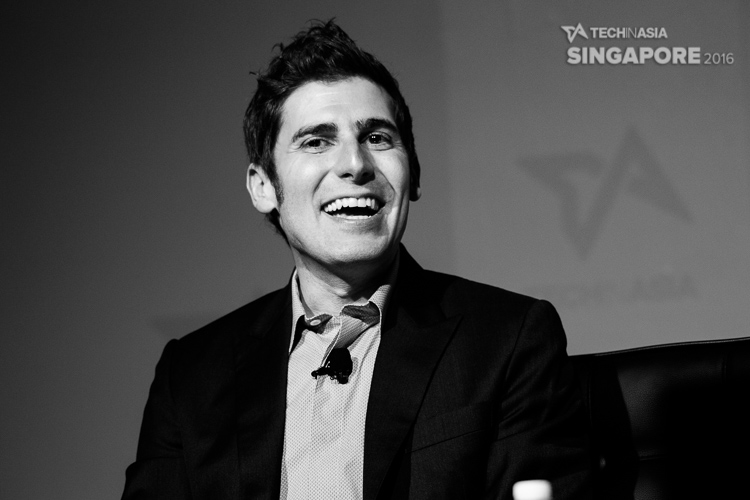
To people outside the startup world, Eduardo Saverin’s name isn’t as instantly recognizable as Mark Zuckerberg’s. And that’s to be expected; Facebook’s other famous co-founder doesn’t monopolize the headlines in quite the same way his former teammate does. In fact, it’s safe to say that most people learned Eduardo’s name through his portrayal by Andrew Garfield in director David Fincher’s The Social Network.
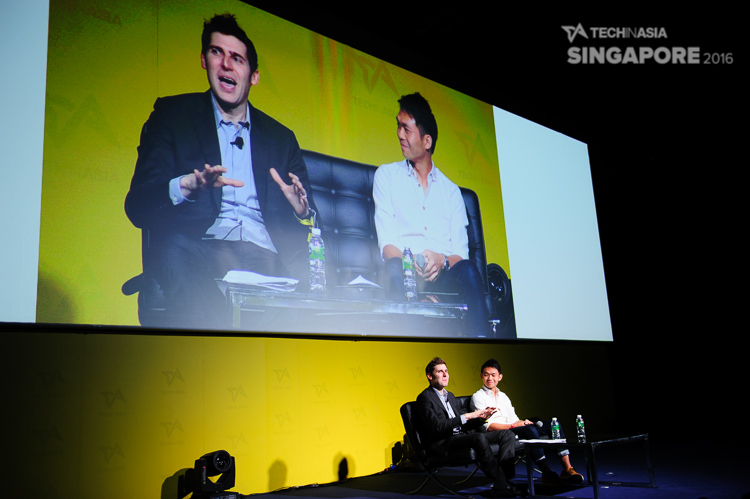
Eduardo made a rare appearance on stage at Tech in Asia Singapore 2016, where he talked about the calling he found as an investor and mentor to startups.
(Disclosure: Eduardo Saverin is also an investor in Tech in Asia. Please see our ethics page for details.)
While admitting he grew up “quite nerdy,” Eduardo said he always wanted to change the world around him. “I have an optimistic view of the world,” he mused, which informs the way he is as an investor. “I want to find solutions to things I’m frustrated about, either by myself or by investing into entrepreneurs who can do it.”
Getting to work
Eduardo outlined three core themes he has in mind when investing:
First, it has to be an idea with a global perspective. “You can’t restrict yourself to one city or even one country,” he said. He noted that might not be a thesis that’s widely adopted by investors because of the complexities inherent in taking an idea global.
Second, he likes to be hands-on with the companies he invests in. “I want to roll up my sleeves and be supportive to entrepreneurs,” he said. As capital is now becoming largely a commodity, the value lies in what you bring to the table for a founder, he explained.
“I try not to invest in a business if I can’t help the entrepreneur in the form of mentorship and advice,” he continued. The CEO’s position can be very lonely, he explained, and sometimes you need to have someone who’s been there before, who can talk about strategizing, getting along with your co-founders, building your team, raising funding, and so on.

Finally, he pays attention to the increasing crossover between startups and bigger players. “It will be critical to invest in entrepreneurs who are willing to partner with large corporates, to accelerate their path to market,” he said.
It’s very important that the entrepreneur has real passion for what they’re doing, Eduardo added. “It’s a tough job, and through that passion you’re armed with the ability to listen and to adapt as you fall and get up again.”
As capital is now becoming largely a commodity, the value lies in what you bring to the table for a founder.
Eduardo didn’t share a lot of details about any deals he regrets not going into, but said he likes to build a relationship with entrepreneurs even before they consider raising funding. That way, you can build a rapport over time that tells you a lot more about the entrepreneur, their potential, and their compatibility with you. It’s worth it even if you sometimes pass on the next big thing, which he’s done in the past and probably will again, he concluded.
Asked about why he chose to invest in Tech in Asia, he replied he thinks it’s critical to have Singapore be a contributor to technological innovation in the world. A big part of achieving that depends on establishing a healthy, thriving ecosystem, and content creators and community builders are vital for this. “My investment is in the ecosystem,” he said.
The opportunity in Asia
Eduardo moved to Singapore in 2009, giving up his US citizenship in 2011. “I was always impassioned with travelling and not staying in one place,” he said. Southeast Asia interested him because during Facebook’s early days, the second largest community on the social network was Indonesia. When a friend of his set up a company in Singapore, he came over temporarily to help advise the business. “Temporarily” became “permanently.”
“I was finally able to enter a real-life Sim City, which was my favorite game growing up,” he said. Singapore’s strategic position in the region, its technological advancement, and proximity to some of the most densely populated markets in the world, were big incentives.
South and Southeast Asia’s emerging middle class is also exciting to Eduardo, as well as its mobile-first environment. “Soon a young girl in rural Indonesia will have more information at her fingertips than I had when I started at Harvard,” he said.
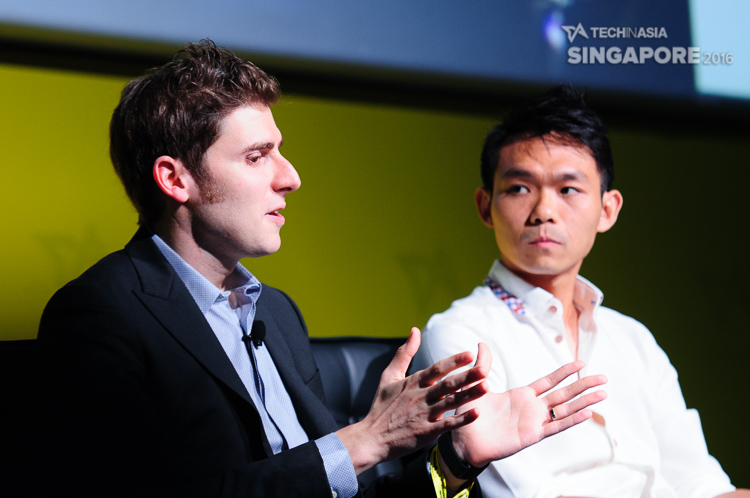
He sees the lack of infrastructure in a lot of markets in the region as an opportunity, not a hindrance. “It’s forcing entrepreneurs to innovate and think out of the box,” he explained. It doesn’t hurt either that governments across the region support entrepreneurship – nor the fact that it’s a less crowded environment for investors than, say, Silicon Valley.
When it comes to interesting verticals in the region, Eduardo points to things that are either sorely needed or are in need of a shakeup, like logistics and insurance. Without naming any names, he said he is in talks with entrepreneurs from spaces including healthcare, last-mile logistics, and big data around ecommerce.
The big blue
Facebook was a long time ago for the former co-founder, but he said he’s still humbled by where the company is today and the impact it has made in the world. “We could never have imagined, in our dorm rooms, where it could go. We were college students making a product for ourselves.”
He attributes the social network’s success to the team listening to the users from the outset, when the users were the team themselves, all the way to the public through data analytics, fast iteration, and a lot of A/B testing.
A key decision was to open the platform up to third-party app developers, instead of trying to do everything themselves. Facebook’s basic structure and function was in place, but a lot of the more inspired ways of using it came from outside apps. “Our users could get the most benefit if everyone in the world could deploy their own app [on the platform],” he said.
The coming winter
Eduardo thinks winter is drawing closer, if winter is defined by shrinking valuations. But that’s not necessarily a bad thing. “Cycles like this present an incredibly unique opportunity for us to enter some good businesses that stand the test of time in spite of those cycles,” he said. His advice to entrepreneurs with sustainable businesses in times like these is to keep growing their company while others hunker down.
Regardless of season, though, investors don’t have it as easy as people think. “You’re in a position where you have to say no all the time to entrepreneurs who are building amazing companies,” Eduardo said. “But you also have to be focused on helping companies you can be of help to.”
In times like these, entrepreneurs with sustainable businesses should keep growing their company while others hunker down.
As an investor, you have to speak up when you think the entrepreneur is heading in a direction that’s counter to the company’s best interests, because that creates an open dialogue and allows you to build a relationship that lasts, he explained. But you have to recognize you are not in control of the company. “You need to navigate how best to influence and provide advice to the entrepreneur, which is a very challenging dynamic you learn through time,” he said.
As for getting back into the entrepreneurship game himself? “I’ve asked myself and continue to do so on a daily basis,” he said. When it comes to serving the ecosystem, there’s a lot that needs to be done so he thinks about whether he’s best doing that by founding businesses or by helping other companies grow.
“I don’t want to change the world myself,” he said. He prefers to continue guiding entrepreneurs in their own quest to do that, which is still a learning experience for him. “You should never stop learning,” he concluded.
Stay updated on the go with our mobile app.
Get latest insights with smoother, more personalized experience through TIA mobile app.
Recommended reads
 A startup’s guide to establishing an efficient remote-working culture
 3 tips from Monk’s Hill Ventures’ Susli Lie on finding the right co-founder
 A VC asked me not to use the ‘N-word.’ He meant nipple
 Mass firing, less hiring: Can Indonesia see hope in a grim job market?
 For our loved ones who are never mentioned in our pitch decks
 3 pieces of advice for the aspiring founder from Unravel Carbon’s Grace Sai
 The six crucial components of a pitch deck
 Being a founder is hard, but you don’t have to be heartless
 Malaysia can be a global SaaS leader, says this VC





Editing by C. Custer and Kylee McIntyre
(And yes, we’re serious about ethics and transparency. More information here.)