Sign up for the Daily Newsletter, sent exclusively to our premium subscribers. We break down the big and messy topics of Asia’s tech and startup community. Get the newsletter in your inbox everyday with a premium subscription.
Hello reader,
Do you have trouble falling asleep? I’m always tossing and turning before I finally doze off, and it gets worse when I’m stressed- not only does the moving around reach epic proportions, but the quality of my sleep also suffers.
I’ve tried various techniques to help my mind settle down faster in hopes of better sleep – meditating, journaling, drinking hot cocoa, playing a soothing playlist, eliminating screen time 30 minutes before bed, etc. The list goes on, and some methods work better than others.
I’m not alone in this, which is why the market for sleep-improvement products has great potential. People spend some US$430 billion on sleep aids worldwide and the global sleep economy could reach US$585 billion by next year, according to Statista. It’s no surprise that startups are getting in on this action – we take a closer look at one in our premium story.
Today we look at:
- A deeptech startup that wants to help you sleep better
- A manufacturing startup that’s just raised its seed round
- Other newsy highlights such as Zomato’s hiring plans and Microsoft’s investment into ChatGPT’s maker
Premium summary
Hello, Startup Sandman
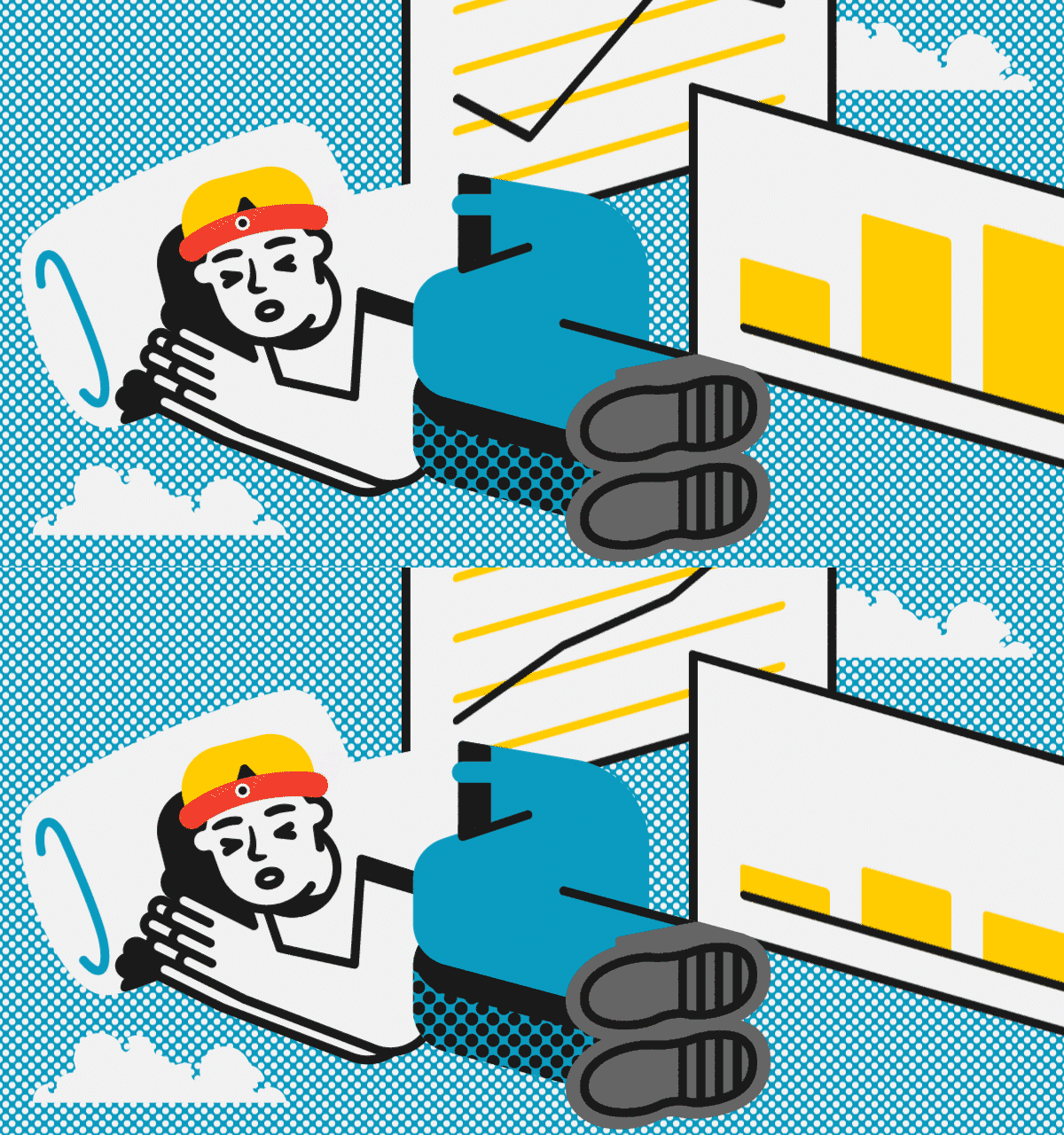
Image credit: Timmy Loen
Imagine a device that can keep tabs on your slumber and help you get better rest. Earable Neuroscience claims to offer just that with Frenz Brainband, an AI-powered device that can track and stimulate brain activity to improve users’ sleep quality, focus, and relaxation.
- The science of sleep: Based in Vietnam and the US, Earable Neuroscience was founded by Tam Vu, a Vietnamese scientist and a former associate professor at Oxford University. The startup has raised US$10 million so far, including a US$6.8 million pre-series A round co-led by Peter Thiel’s Founders Fund.
- In the brain: Frenz Brainband has three core features: personalization, closed loop, and real-time stimulation. Through bone-conduction speakers, the headband can track sleep almost as precisely as in-lab medical devices and use clinically proven content – such as sound, music, or cognitive behavioral therapies – to coach the user to sleep.
- It’s in the results: The company has tested its product on more than 1,000 people, and 86% reported that they had fallen asleep 10 minutes to 60 minutes faster. Meanwhile, 89% of users said that their quality of sleep improved. But only time will tell if this business will really take off.
Read more: The Peter Thiel-backed sleep startup on a quest to solve restless nights
News spotlight
Planting some seeds for manufacturing
Quick bytes





Stay updated on the go with our mobile app.
Get latest insights with smoother, more personalized experience through TIA mobile app.