Harsimran Julka · · 5 min read
I got my hands on that $4 smartphone everyone’s talking about. Here’s what I think
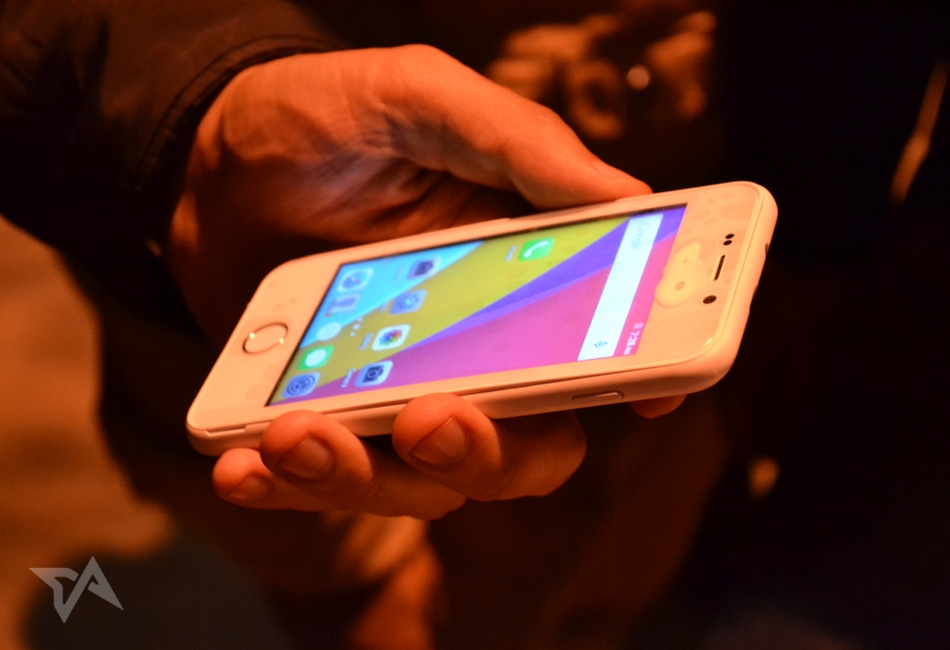
Here’s the Freedom 251, a smartphone that costs just four bucks, launched by Ringing Bells in India. Notice the white paint on top of the imported model to hide the original brand. Actual phones will be shipped by June. Photo credit: Harsimran Julia.
Driving back from the launch of Freedom 251, the US$4 smartphone launched by Indian company Ringing Bells Private Limited, I couldn’t help but wonder whether it was a repeat of the US$35 tablet scam. A low cost tablet was launched in India with much fanfare in 2011 that flopped due to poor quality.
Or, even worse, was it like the US$10 computer India promised that turned out to be a pen drive?
First things first: it’s a real phone. I laid my hands on an imported version provided by the company. It had white paint over the brand, because the phone was imported from Taiwan, although the final version ‘supposedly’ won’t be.
“These are not the real devices. The actual devices will be assembled in our factories soon. We will set up two plants at a cost of US$36.5 million each to assemble them,” Ashok Chadha, the president of Ringing Bells, said. The company admits that 70 percent of the phone will be made in Taiwan, though. “We will import the chipsets. But will assemble it in India, with its parts such as the body, speaker, et al.”
How well they can really pull a technology innovation is still an open question. The company’s owners come from an agri-commodity business background. They have been in the business of trading sugar, spices and dry fruits for three generations, and their sales experience shows. It carried full page ads in newspapers promoting the launch. The company’s owners were mobbed by TV cameras at the launch event. The phones will go on sale via the company’s website on February 18 at 6 a.m., and are expected to sell out within a few days.
The first orders will be delivered by June. That’s when we will see whether or not the company’s India-based factories can really assemble a usable US$4 smartphone.
The specs
From the sample I laid my hands on (which, remember, was not assembled in India) and the spec sheet, here are the phone’s features.
It’s a 3G dual-SIM phone with a 4-inch HD IPS touchscreen and a 1.3 GHz quad core processor running Android Lollipop 5.1. It has 8GB of internal memory, 1GB of RAM and a 3.2 MP camera with a battery of 1450 mAH. Not too bad for a phone that costs around US$3.60.
Orders will open on its website on February 18, but if you want one, you’ll need to act fast. The company says it will close orders after it hits the 200,000 to 250,000 order mark, probably to cut the losses it must be taking per phone.
How come it’s priced so low?
The company says that a normal-priced phone with these specs typically falls in the range of US$36 to US$43. But with state governments waiving off duties (which it is expecting), it thinks it can lower that cost by 20-30 percent.
It is also expecting a nearly 35 percent cost reduction by selling only on the internet through its own channel – just like the flopped Aakash tablet did.
Finally, the company expects a duty waiver of 13.8 percent by the upcoming goods and services tax waiver, through make-in-India and startup schemes. The rest of the cost reduction will be achieved through ‘economies of scale,’ according to the company.
Still, cutting corners now based on future cost reductions can be difficult. Datawind, the manufacturer of the aforementioned US$35 tablet,took between six months and a year to ship products to customers – after it finally managed to raise cash from various sources. It also faced lawsuits in Indian courts as a result of the delays.
The US$4 trick
What it’s really like





Stay updated on the go with our mobile app.
Get latest insights with smoother, more personalized experience through TIA mobile app.