- Premium Content It takes our newsroom weeks - if not months - to investigate and produce stories for our premium content. You can’t find them anywhere else.
 Glenn Kaonang · · 6 min read
Singapore’s Sapiens AI bets on homegrown models, raises $20m
For many AI app developers, success comes with a catch: the more users they attract, the more money they shell out to the model providers powering their apps.
Sapiens AI, the Singapore startup behind the Agnes AI platform, has spent the past year building its way out of that trap, according to co-founder and CEO Bruce Yang. The firm has just raised US$20 million to prove that it’s possible for an application layer company to build almost everything in-house in a cost effective way.
The company’s initial funding round, Yang tells Tech in Asia, values it at US$100 million. An undisclosed Singapore-based family office led the round, according to Yang. The first US$10 million tranche has already been disbursed and the second, also from undisclosed investors, is expected to be drawn down in March.
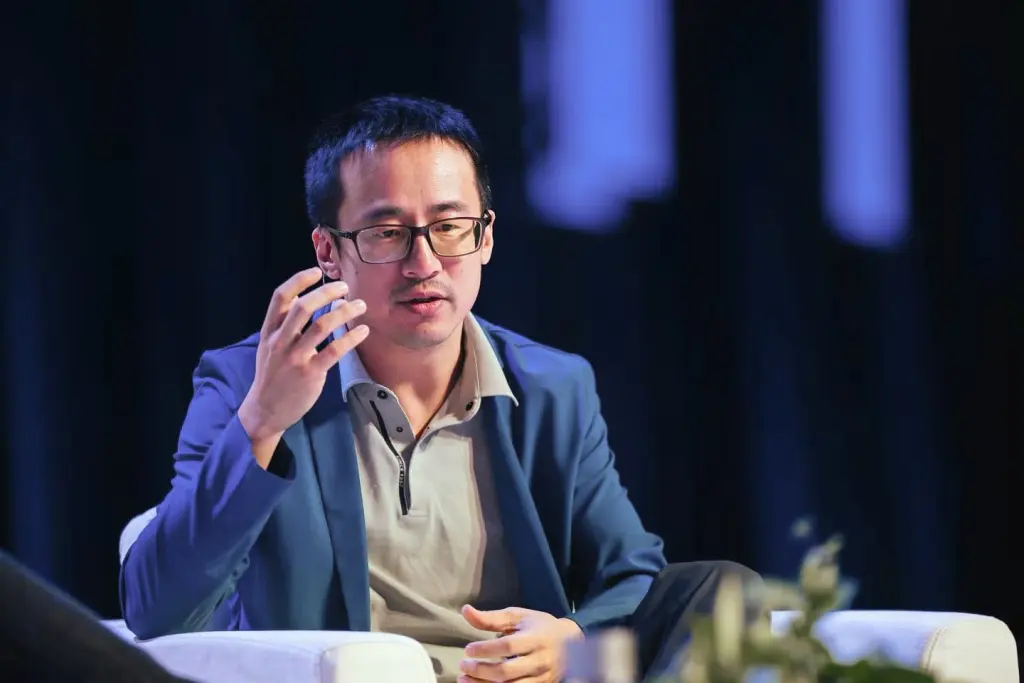
Sapiens AI co-founder and CEO Bruce Yang / Photo credit: Sapiens AI
The raise might seem modest in comparison to today’s record-setting deals, but it’s in line with Sapiens’ ambition to control costs. Rather than routing user queries to frontier models through an API, the company has trained a fleet of around 20 proprietary models, each optimized for specific tasks such as research, spreadsheets, image generation, and companion chat, among others.
“If we run our application on the best models from Google or Anthropic, [the cost is] going to be at least three to five times higher than what we are doing right now with our own models,” Yang claims.
The company’s effort at controlling costs is what makes the rest of its strategy viable, Yang says. Agnes AI targets consumers in markets like Indonesia, the Philippines, Brazil, and parts of the Middle East – places where ChatGPT and other AI apps are available but often built without fluency in local languages.
Yang argues that mainstream AI products haven’t been optimized for users in these regions, leaving room for a homegrown alternative with competitive pricing to gain ground before the bigger players move further into the region.
Efforts to close the language gap do exist outside of Big Tech. AI Singapore’s Sea-Lion is one example, but its products are designed as infrastructure that other companies can build on, not a consumer app. Yang believes that owning both the model and the product built on top of it is what gives his company a competitive advantage.
Owning the stack
Training proprietary models is a costly yet necessary effort, Yang claims. A Ph.D. candidate at the National University of Singapore’s School of Computing, Yang argues that any application-layer company that doesn’t own its models is structurally disadvantaged.
However, he adds that startups don’t have to start from scratch. For smaller models below 10 billion parameters, Sapiens pretrained using data “assembled” from online sources, with a focus on Southeast Asian minority languages. But for larger ones like an image generation model, the team post-trained from open-source foundations – DeepSeek and Qwen chief among them – and specialized them for Agnes’ specific use cases.
See also: Vietnam’s AI Hay pits local brains against ChatGPT’s brawn
The key to making this work, Yang says, is an evaluation system that works to automatically improve a model’s outputs. Think of it as a panel of judges, where different AI agents each provide a different score.
For an image output, one agent assesses composition, another checks for visual anomalies, another looks at color, and a final judge produces an overall verdict.
Growth at all costs
Stay ahead in Asia’s tech landscape
This is premium content. Subscribe to read the full story.
Can AI companies build their own models in a hyper-competitive market? Sapiens AI believes it’s found a way – and it now has the funding to back it.
We know this is not ideal. ⌛ Sign up in 20 seconds. Cancel anytime.
Our subscriber community includes professionals from these companies:





Stay updated on the go with our mobile app.
Get latest insights with smoother, more personalized experience through TIA mobile app.









📅 Upcoming Events
22 October 2026
Payoneer x CSPN Summit 2026