- Premium Content It takes our newsroom weeks - if not months - to investigate and produce stories for our premium content. You can’t find them anywhere else.
 Apoorva Dutt · · 5 min read
Why doesn’t Starbucks have a serious competitor in China?
One thing you can always count on in China: A successful international company will inspire serious domestic competitors. So why doesn’t Starbucks have a serious competitor in China? Here are four theories.
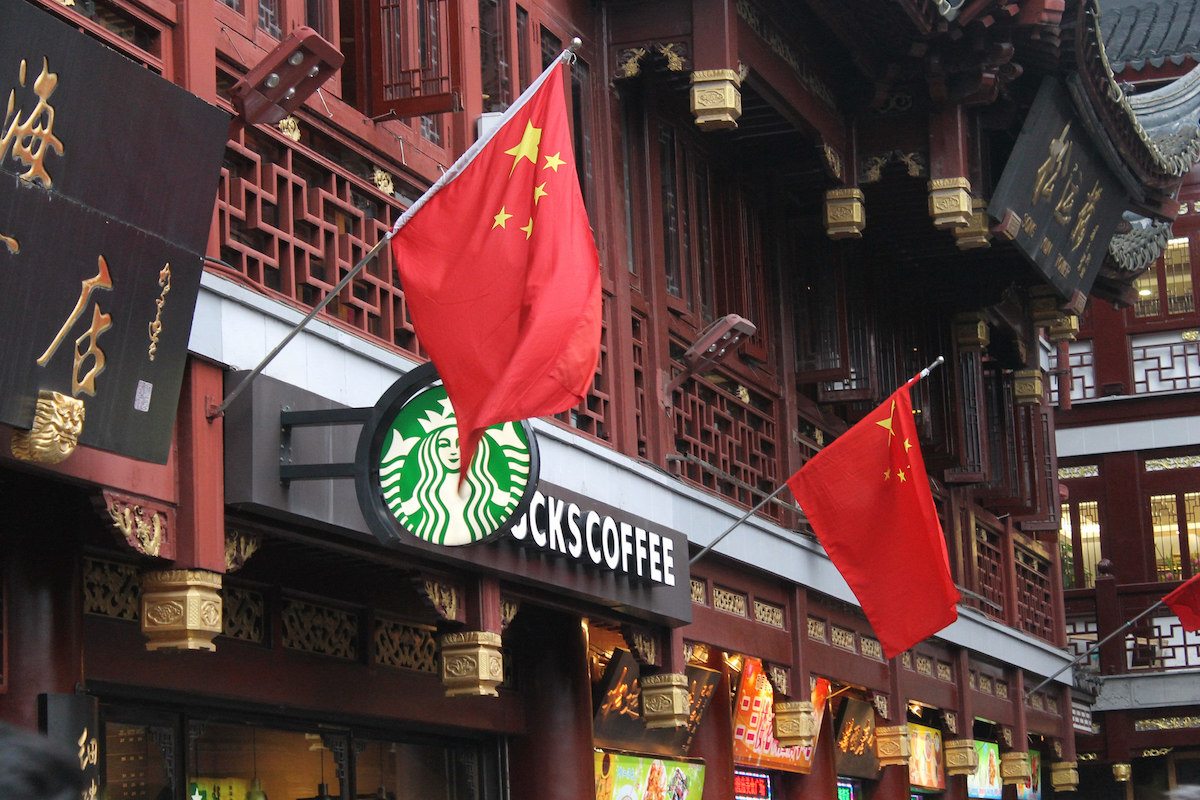
Photo credit: Connie Ma
The following is an edited excerpt from The One Hour China Contrarian Book: Four Things Everyone Is Getting Wrong About China Business (Volume 3) by Jeffrey Towson, Jonathan Woetzel and Thijs Boevink. You can buy a copy here.
Dalian Wanda is openly challenging Disney. Uber spent $2 billion fighting with China’s Didi Chuxing. Adidas has been fighting Chinese Li-Ning and Anta for decades. And Apple is now struggling against multiple rising Chinese competitors – Xiaomi, Huawei, Oppo, etc. One thing you can always count on in China: A successful international company will inspire serious domestic competitors.
So why doesn’t Starbucks have a serious competitor in China?
I’ve been asking people this for months and I still can’t get a good answer. It’s weird. Starbucks has been in China since 1999 and currently has about 2,400 outlets. They have likely had the majority of the China retail coffee market for years. And CEO Howard Schultz has recently announced plans to open 500 new outlets per year. That will get them to 5,000 China stores by 2020.
Also, during an earnings call on November 3, 2016, Schultz said, “Our newest class of Starbucks stores in China is delivering the highest AUVs, ROI and profitability of any store class in our history in the market.” So Starbucks in China has big market share, rapid growth and apparently attractive economics. Although they are breaking the #1 rule of doing business in China as a foreigner: If you are doing really well, keep it quiet.
Starbucks does have some smaller competitors in China. There is Costa Coffee from the UK. Costa is planning to have 900 China stores by 2020. There is CaffeeBebe from South Korea and Coffee Bean from Los Angeles. Both are fairly small in China. There is UBC Coffee (originally from Taiwan), but this is really more of a restaurant. And there is Pacific Coffee of Hong Kong, which has been majority acquired by China Resources. You could also consider convenience stores like Family Mart and 7-11 as competitors. Certainly lots of coffee is sold there, and they both have huge operational footprints. Also, there’s McDonalds, which has its McCafes.
But these are a stretch as direct competitors, I think. Overall, I just can’t point to any serious Chinese competitor for Starbucks. I don’t see a China Mobile, Alibaba, Suning or Wanda-type company fighting them for their customers. I’ve been asking around about this, and here are the answers I have gotten so far:
Explanation 1: Starbucks was the first mover
Nestle entered China in 1990. Starbucks entered in 1999. But even as late as 2007 or so, it was not totally clear that Chinese consumers were going to drink coffee. I can remember being told over and over “You are waiguo. You don’t understand China. We like tea, not coffee”. It took a long time for coffee to catch on in China. And even today coffee drinking is still somewhat rare. In 2013, the average Chinese consumed about 4 cups annually. That compares to 441 annually in the USA and over 1,000 cups in Norway (which I also don’t understand).
Drinking coffee has been slow to develop in China thus far. It also took a long time for Chinese consumers to rise enough in disposable income to afford Starbucks-type retail coffee. Even today, the prices in China (about 30 RMB for a latte) are much more expensive than in the US on a purchasing power basis. So Starbucks getting to the market first and having the long-term commitment to build in a slow-to-emerge market was important. Most companies were not prepared for such a long haul. This was not a rapid consumer success story, like we have seen with Pepsi, Tingyi, Apple and others.
Explanation 2: Starbucks’ brand and scale give them an advantage
Winning in retail coffee hinges on getting the right locations. While customers are somewhat brand loyal, they generally won’t walk five extra blocks to go to Starbucks if a Costa is across the street. Getting high-profile and high-traffic locations is critical. Starbucks is now significantly larger than their competitors in many Chinese cities, which means they have more outlets, more customers and greater brand recognition.
I think these scale advantages do give them an advantage in getting the best locations. They are probably offered the best locations (perhaps at a special price?) and can definitely outspend their smaller competitors on real estate because they have more cash, more customers and more brand power.
They can open in the nice shopping mall rather than on the side street. They can be at the entrance of the mall rather than on the third floor. It’s just much harder for a smaller company to acquire and afford these higher-profile, higher-traffic and higher-priced locations. In theory, having the higher-traffic and higher-profile locations results in greater increases in sales and brand awareness – which then further increases their scale advantage. So it could be a virtuous cycle (in theory).
Explanation 3: Senior Chinese businesses have a blindspot
Final explanation: It could still be a fad
Stay ahead in Asia’s tech landscape
This is premium content. Subscribe to read the full story.
One thing you can always count on in China: A successful international company will inspire serious domestic competitors.
We know this is not ideal. ⌛ Sign up in 20 seconds. Cancel anytime.
Our subscriber community includes professionals from these companies:





Stay updated on the go with our mobile app.
Get latest insights with smoother, more personalized experience through TIA mobile app.