Jonathan Chew · · 5 min read
How Kia’s charging up its EV game for the modern consumer

Electric vehicles (EVs) have shifted into high gear in Asia Pacific over the last few years.
The region accounted for almost two thirds of global EV sales as of 2022, with significant jumps in both plug-in hybrid EV and battery EV sales.
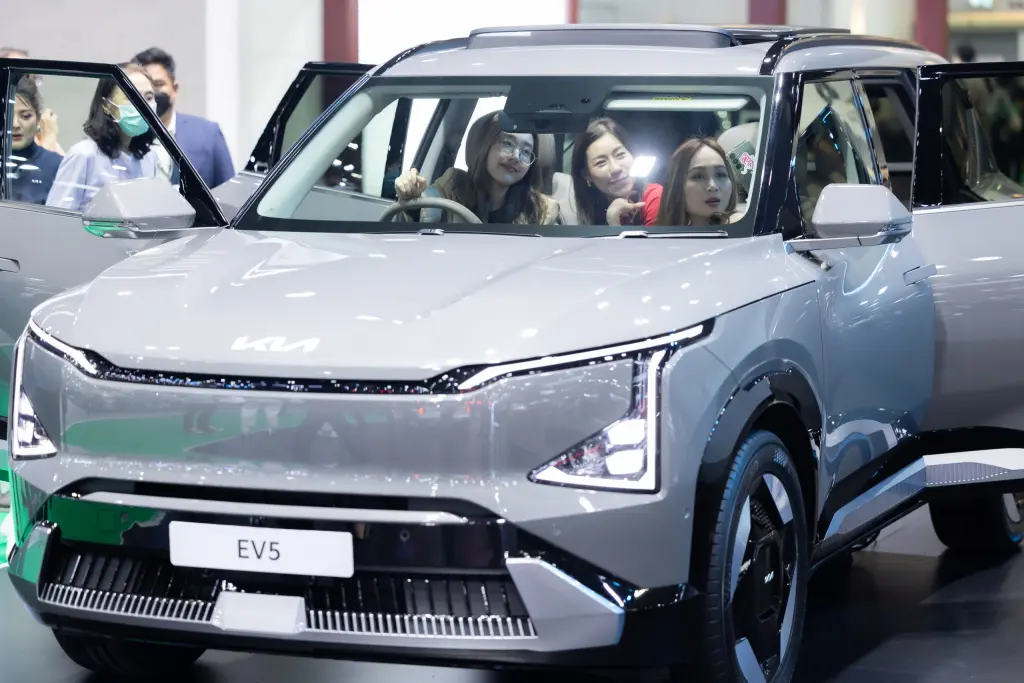
Photo credit: Kia
Unsurprisingly, even traditional vehicle manufacturers like Kia Corporation have joined the fray. The South Korea-based company is not only introducing new EVs, but it’s also ensuring that these additions meet the needs of the modern customer.
“By responding effectively to changes in the mobility market and efficiently implementing mid-to-long-term strategies, Kia is strengthening its brand commitment to the wellbeing of customers, communities, the global society, and the environment,” Ho Sung Song, president and CEO of Kia, said in a statement.
The more, the merrier
In 2020, Kia announced a strategy called Plan S. It has three main pillars: transitioning the company’s product lines toward EVs, strengthening its EV business, and expanding mobility-related services.
Recent developments in the region’s EV market, however, could affect these goals. For one, subsidies for EV purchases provided by countries such as China and Thailand are winding down. With monetary incentives fading out, EV manufacturers need to improve and expand their offerings to continue gaining customers.
Accordingly, Kia announced that it would be upgrading Plan S earlier this year. Instead of the original aim of rolling out 11 EV models by 2025, the company plans to launch 15 by 2027, including nine plug-in hybrid EVs by 2028.
Kia is strengthening its brand commitment to the wellbeing of customers, communities, the global society, and the environment
The company is also expanding its physical presence across several Asia Pacific markets to better meet customers where they are.
In Thailand, it established a new sales unit in January and introduced the EV5 model – for the first time in Southeast Asia – at the Bangkok International Motorshow 2024. These moves shouldn’t come as a surprise, given that Thailand is a powerhouse in the region’s automotive industry and the growing adoption of EVs in the country over the last few years.
S is for supercharged
Apart from its Plan S strategy, Kia has taken several steps to improve the capabilities of its EVs to meet customers’ needs.
“Kia is keenly focused on providing solutions to the concerns that continue to cause hesitation when it comes to making an EV purchase,” said the Kia president. “We want to make the entire customer journey as effortless and enjoyable as possible.”
One of the hurdles is how long it takes to charge EVs, which often depends on the charging outlet being used. Wall chargers, which are typically used at home, require waiting several hours before batteries are recharged. In comparison, purpose-built charging stations can pump out a full charge in under an hour.
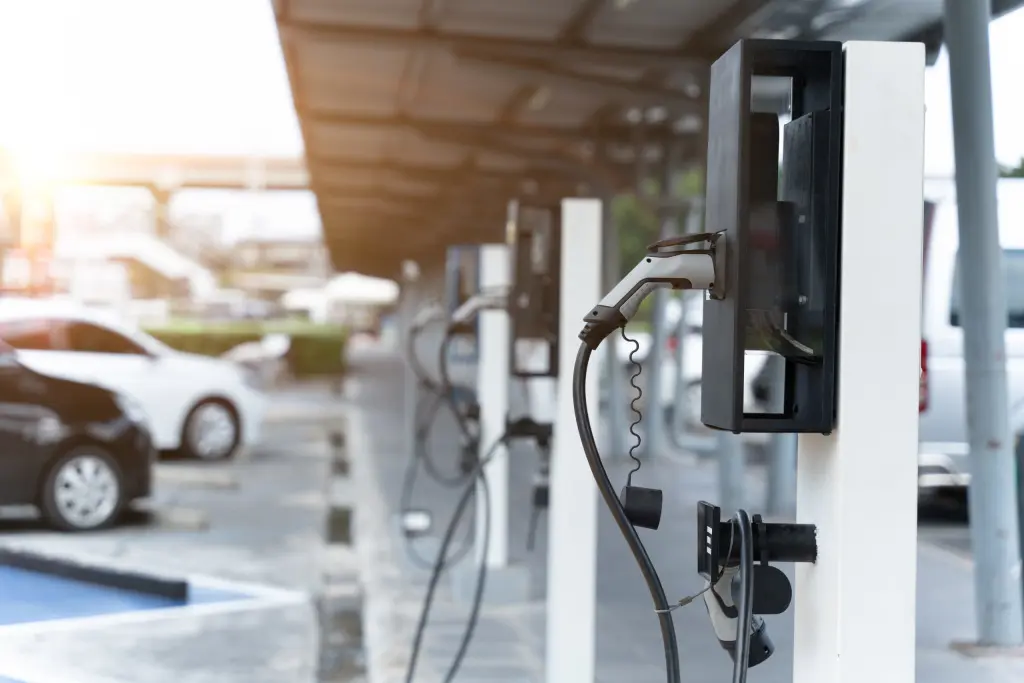
Photo credit: Shutterstock
However, there’s another critical factor at play: how quickly the car and its battery can accept a charge.
To that end, Kia has developed a platform that incorporates fast charging technology into the vehicle and battery, bringing charging times down to as little as 18 minutes for an 80% charge for its EV6 model.
The Kia Electric-Global Modular Platform and its fast-charging capabilities are included in several of the company’s latest EV models, including the EV9 and EV5 which were unveiled for international markets in March 2023 and October 2023 respectively.
Kia is also looking to drive sustainable practices in EV production across the board to zero in on the goal of reducing the carbon footprint. After all, the production and the eventual disposal of vehicles can have a huge impact on the environment.
For example, more vehicles are being made with plastic components instead of metal, and so are more than a third of the car parts used in today’s models. While this is great for fuel efficiency – the less metal used, the lighter the car – many commonly used plastics, such as polyethylene, aren’t biodegradable on their own.
To keep its cars as green as possible, Kia developed a design sustainability strategy that lays out ten environmentally friendly materials to use in vehicle production. This includes bioplastics and recycled polyester fabric as well as other recycled and biodegradable materials.
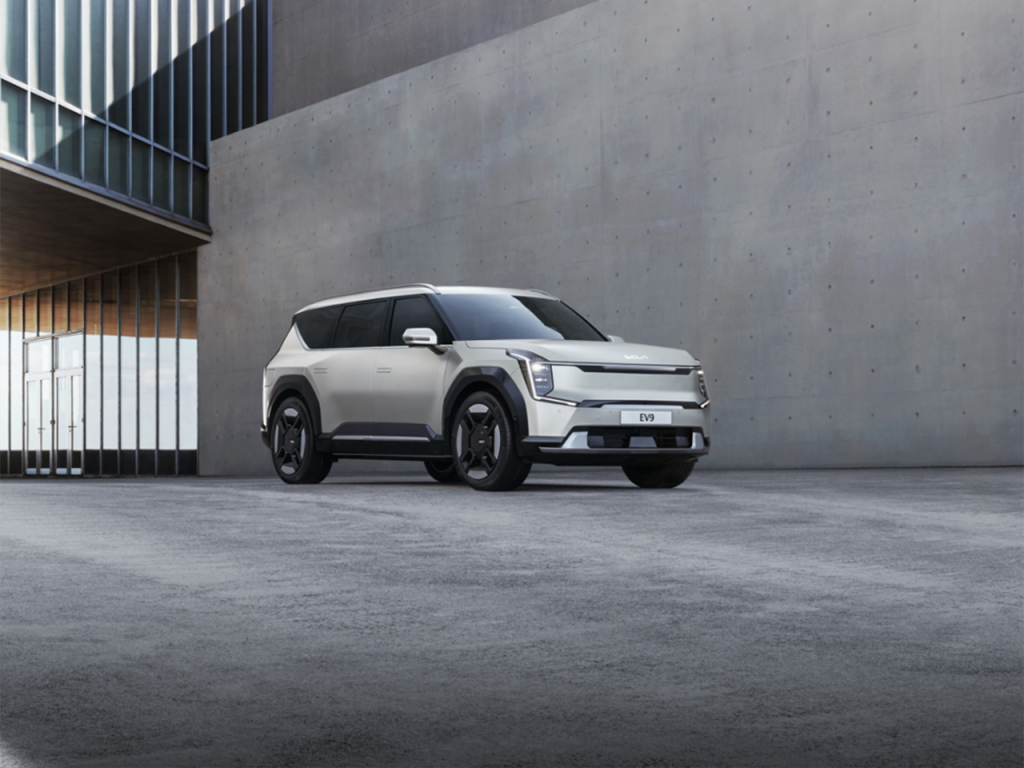
The Kia EV9, Kia’s first EV to be fully developed with the design sustainability strategy in mind / Photo credit: Kia
“In order to become a sustainable mobility solutions provider, Kia needs to continue its efforts to establish an innovative and customer-centric business model,” said the president.
As such, it launched the EV9 model in Southeast Asia earlier this year, a three-row SUV that is the first vehicle to fully embrace the design sustainability strategy. The model has bagged several awards, such as World Car of the Year and World Electric Vehicle at the 2024 World Car Awards, solidifying Kia’s accomplishments in developing new technological capabilities.
“We want our brand to provide environmentally responsible mobility for all and to be a symbol of innovation and progressive solutions,” said Karim Habib, who serves as head of global design and is an executive vice president at Kia.
The road ahead
With many of its models already on the road, Kia is gearing up to develop other areas and improve its offerings.
The company is working on AI tech to boost convenience and safety for drivers as well as to strengthen its sustainability push. For instance, it aims to replace all electricity demands at its workplaces globally with renewable energy, with goals of 66% by 2030 and 100% by 2040.
“Kia is enhancing its global business strategy to further the establishment of an innovative EV line-up and accelerate the company’s transition to a sustainable mobility solutions provider,” said the president.
Founded in 1944, Kia has been a major player in the automotive industry for several decades. The company continues to evolve to meet today’s changing needs and demands, moving beyond being a traditional manufacturer to become a mobility brand. To find out more, visit its site.
This content was produced by Tech in Asia Studios, which connects brands with Asia’s tech community. Learn more about partnering with Tech in Asia Studios.
Stay updated on the go with our mobile app.
Get latest insights with smoother, more personalized experience through TIA mobile app.
Recommended reads
 Indonesian AI startup goes global
 Forrest Li on scaling Sea, building smarter bots, and founder grit
 An AI assistant that joins sales calls and scores team skills
 SGX’s CEO says it doesn’t need a unicorn to win
 SMEs want AI too, but not the kind Big Tech is selling
 Oatside’s alt-milk rise hits a profitable gear
 Alibaba’s financial health in 12 charts
 Asia’s telcos bundle AI into mobile plans. Will it pay off?
 M-Daq chases bigger clients as revenue falls, losses grow
 VC tracker: Accel raises US$3.5b, including US$550m for India





Editing by Stefanie Yeo, Winston Zhang, and Eileen C. Ang
(And yes, we’re serious about ethics and transparency. More information here.)