Daniel Tay · · 5 min read
From Pakistan to the UN, this entrepreneur is harnessing technology to fight terrorism
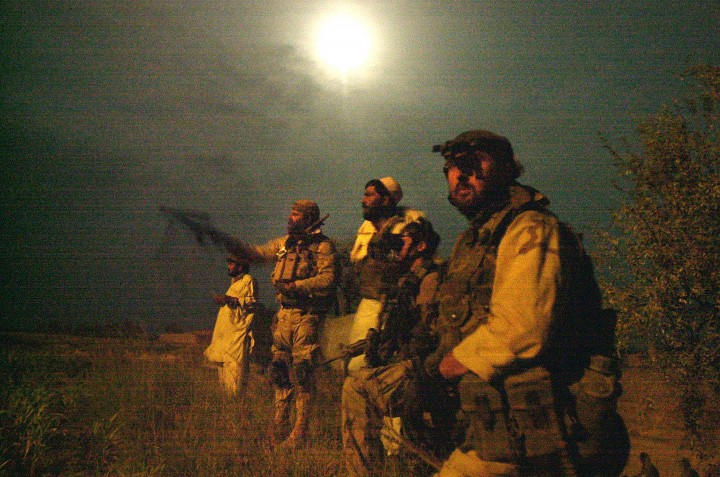
Poverty. Natural disasters. Terrorism. These are problems that many acknowledge to be in dire need of solutions, but few actually dare to tackle, even at the highest levels of society. Dr. Zeeshan-ul-Hassan Usmani experienced this firsthand as a Pakistani scholar who managed to make his way to the US in the early 2000s, culminating in a PhD in computer science.
Usmani’s work building a personalized recommendation engine for customers, as part of his PhD, received international acclaim, and was featured in publications such as The Economist and MIT Tech Review. He spent the next few years working for companies such as Citibank and Discover Financials.
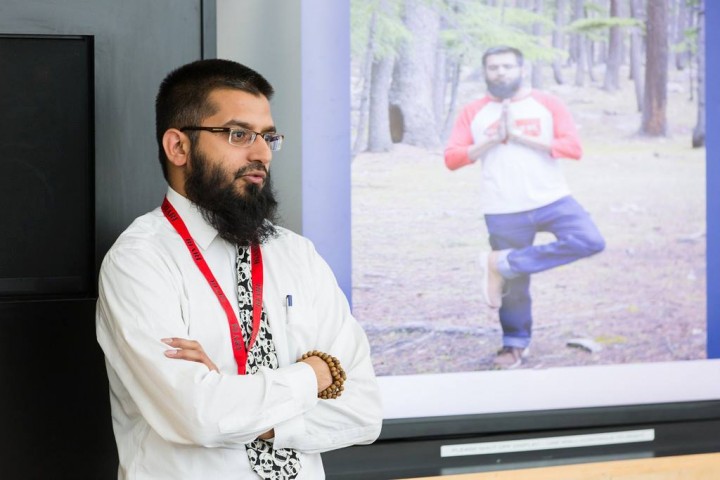
It wasn’t enough for him, though. “Having worked in both academia and industries, I always felt that there was something more that I could do, but was not able to because of corporate or academic policies, restrictions, red tape, bureaucracy, and the overall speed of things happening,” he recounts.
Then in 2012, Usmani applied for and received the Eisenhower Fellowship, a program that takes its participants across the US to meet experts and specialists, and ultimately refocus their professional and leadership skills for the betterment of society. It was the perfect opportunity for him to find out how to color outside the box.
Not long after the fellowship was over, Usmani resigned from his corporate job and returned to Pakistan to form a company called GoFig Solutions, aiming to harness technology to tackle terrorism – an especially vexatious issue in his homeland, to say the least.
Gaining traction
This wasn’t the first time that Usmani has tried to mitigate this problem. During the course of his PhD, he had developed algorithms that could measure and quantify the impact of a blast in public spaces, creating a set of recommendations that would save lives and minimize injuries.
“GoFig is short for Go Figure It Out. I wanted to work on the problems that are holding us back as a society, and whose solutions can be found using technology,” he explains. “These are the problems that everybody talks and complains about, cries over, but no one takes the extra step trying to solve them […] For me, humans are and should be the ‘goal’ of technology, and not the profit, or money, or fame, or anything else for that matter.”
What GoFig does is to create software-based counter-terrorism solutions. One of its flagship products was the Blast Sim, which simulates and models suicide bombings for risk mitigation and planning. However, Usmani recounts that the first six months were fairly uneventful for the team.
“We [Usmani and his wife] had to think of creative ways to fund the operations and staff […] We had to sell our car, gold, extra appliances, laptops, and anything we could get our hands on to get some money,” he says.





Stay updated on the go with our mobile app.
Get latest insights with smoother, more personalized experience through TIA mobile app.