Jonathan Chew · · 6 min read
How digital solutions are unlocking Singapore’s tourism rebound

Guess who’s back, back again?
The answer: Singapore’s tourism sector.
Business is booming and recovery has been extremely strong, giving the city-state an “unprecedented opportunity to strengthen our position as a premier business and leisure destination,” says Wong Ming Fai, chief technology officer of Singapore Tourism Board (STB).

Wong Ming Fai, chief technology officer of Singapore Tourism Board / Photo credit STB
International visitor arrivals are expected to hit between 12 million and 14 million this year, Wong says. Tourism receipts are also predicted to jump from S$14 billion (US$10.6 billion) in 2022 to between S$18 billion (US$13.6 billion) and S$21 billion (US$15.8 billion).
“By 2024, we expect tourism to fully recover,” he adds.
Despite the progress, some hurdles from the last few years remain. As such, firms looking to fully capitalize on the sector’s rebound must expand their capabilities even further – and digital solutions provide the avenue to do just that.
It’s (not) raining men
Ironically, one of the biggest challenges the tourism sector’s facing is caused by the resurgent travel demand. With more tourists coming back in, there’s a pressing need for human resources across different verticals, given that the pandemic took a heavy toll on the sector’s workforce.
However, since many companies are working to recover their headcounts as quickly as possible, competition heats up and it takes time to scout for and rehire enough people.

Subsequently, being understaffed can lead to a vicious cycle as more pressure is placed on current employees, leading to things like burnout and high turnover rates.
STB is helping in this area by partnering with stakeholders to attract jobseekers and upskill those who are already holding positions. In the meantime, employing digital solutions could serve as the next step forward in overcoming this hurdle.
Man to machine
Instead of having to hire more workers, it’s a lot easier for businesses to automate certain processes and reduce the amount of manual workload.
For instance, in 2021, Holiday Inn Singapore Atrium (HISA) used STB’s Tourism Information and Services Hub (TIH) to save about 200 person-hours. TIH is an online platform developed by STB that provides firms with destination and media content as well as application programming interfaces (APIs) that can be integrated into various channels such as websites or apps.
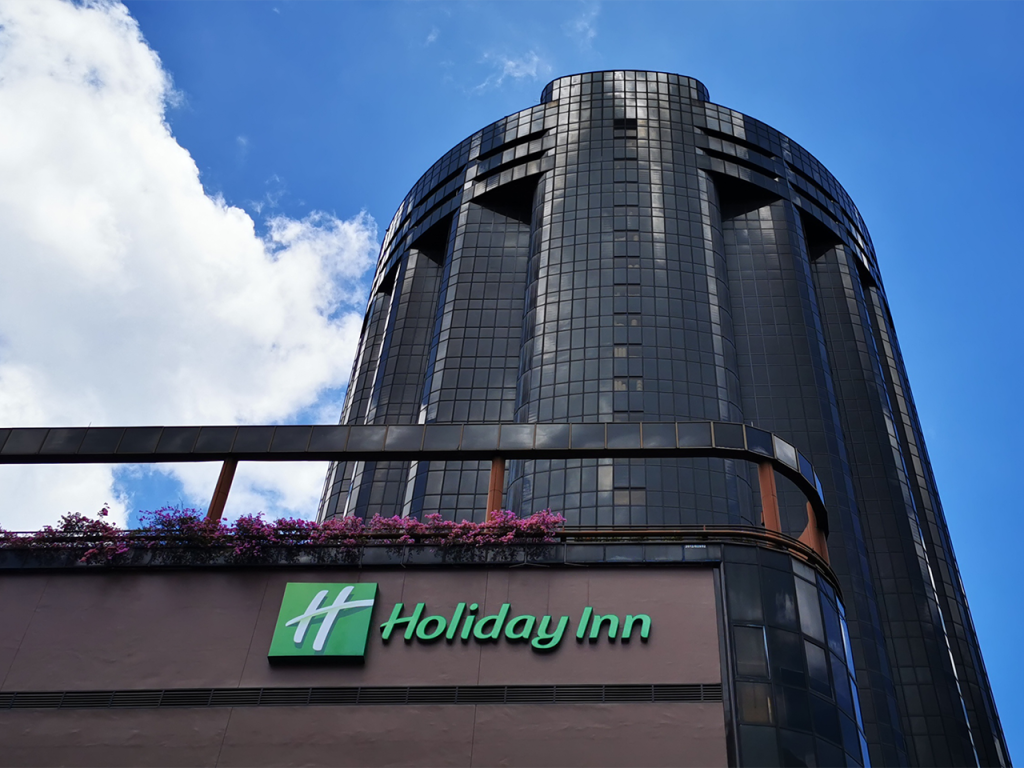
Holiday Inn Singapore Atrium, located along Outram Road / Photo credit: TIH
Previously, the hotel would usually task someone to extract information on nearby tourism-related services or facilities and use such data to update the company’s website. After integrating TIH’s APIs into its website, HISA cut the need for manual work as updates would automatically be reflected.
“Integrating technology into operations is crucial because it can enhance customers’ experiences, increase efficiency in meeting their needs, and drive revenue growth,” says Wong.
The potential of using digital solutions to alleviate staffing concerns also extends beyond getting information or automatically updating media files.
A firm may face challenges when it wants to add new features or services. Without the right technology, developing and integrating them into existing platforms can be a time-consuming and labor-intensive process.
At the same time, additional personnel may be required to conduct research on the content itself and curate it for users.
For example, Singapore Airlines wanted to offer overseas customers a wider perspective of what the country is like as a leisure and business destination, says Bryan Koh, divisional vice president of ecommerce and distribution at Singapore Airlines. To that end, its goal was to incorporate information and images about places of interest in the city-state into its platforms: the SingaporeAir and Kris+ apps.

Places of interest include attractions like Jewel Changi Airport, a popular destination for tourists / Photo credit: TIH
However, its main challenge was not only building this feature but also finding providers of reliable and useful content for tourists. The airline needed an easier and more efficient way to get this data without manual processes, and that’s where TIH came in.
“Using TIH, Singapore Airlines has been able to provide a library of rich and up-to-date information on tourism offerings like local attractions and hotel accommodations,” explains Koh.
“Further, customers can also find out more about an attraction and what’s nearby just by uploading an image of that place, which they might have seen on channels like social media for instance,” he continues.
A few words to take home
For companies aiming to take their digitalization efforts further or even looking to just start, the CTO has advice on how to make it a smooth journey.
Firstly, it’s critical that businesses prioritize what they want to achieve by integrating new technologies – in other words, they can’t digitalize their operations for no specific reason. Only when the goal is clear can firms evaluate and identify the right solution to meet their needs.
Subsequently, it’s important to start small rather than adopting a “go big or go home” mindset.
“It ensures that things are manageable before trying to scale up,” Wong explains.
Should the entire sector recognize the potential of digital solutions, the benefits are clear: Not only can automation cut back on hiring, it also gives companies a chance to meet customers wherever they are, given that more tourists are relying on digital channels for their travel plans and looking for new and immersive experiences.
In this area, new tech such as virtual reality and augmented reality will be key in helping enterprises enhance their products and offer a much more immersive experience to tourists, Wong adds.

Photo credit: silverkblack / 123RF
Digital tools such as TIH help tourism firms pass the heavy lifting in developing these capabilities onto someone else – that “someone” being technology.
“That means companies can channel more time and resources into expanding to other key business areas,” he shares.
As such, STB is focusing its efforts on diversifying the range of assets it provides through the TIH platform and growing the number of events in the city-state to attract more tourists.
“Ultimately, we hope to meet the evolving needs of even more tourism businesses across every sector,” Wong says.
As a content platform, the Tourism Information and Services Hub (TIH) has destination and media content, ready-to-use APIs, along with high-fidelity 3D models of Singapore’s cultural symbols, heritage sites, and iconic buildings.
If you’re looking to incorporate all these into what your firm can offer and more, sign up for an account on TIH here.

This content was produced by Tech in Asia Studios, which connects brands with Asia’s tech community. Learn more about partnering with Tech in Asia Studios.
Stay updated on the go with our mobile app.
Get latest insights with smoother, more personalized experience through TIA mobile app.
Recommended reads
 Indonesian AI startup goes global
 Forrest Li on scaling Sea, building smarter bots, and founder grit
 An AI assistant that joins sales calls and scores team skills
 SGX’s CEO says it doesn’t need a unicorn to win
 SMEs want AI too, but not the kind Big Tech is selling
 Oatside’s alt-milk rise hits a profitable gear
 Alibaba’s financial health in 12 charts
 Asia’s telcos bundle AI into mobile plans. Will it pay off?
 M-Daq chases bigger clients as revenue falls, losses grow
 VC tracker: Accel raises US$3.5b, including US$550m for India





Stefanie Yeo and Dhania Putri Sarahtika
(And yes, we’re serious about ethics and transparency. More information here.)