Winston Zhang · · 5 min read
A closer look at Grab’s efforts to serve up the ideal food delivery ecosystem

Remember when “food delivery” meant ordering a pizza over the phone? The industry has come a long way since then, with mobile apps offering more convenient ways to order, and from much larger menus.
The growth of the food delivery scene in Southeast Asia has been exponential. These apps were once used by 10% to 20% of people in urban locations across the region, but that has since risen to over 50% and is expected to keep increasing.
The secret sauce
This growth is driven by innovation and technology at companies like Grab, for instance. At the tech firm’s GrabFood arm, a combination of factors like data analytics, artificial intelligence, and cloud kitchens are driving localization, food variety, and personalization efforts.
All of that is in service to a larger vision.
“We are building an integrated food ecosystem that delivers the greatest choice and convenience to consumers and provides sustainable revenue opportunities for delivery and merchant partners,” says Suthen Thomas, chief technology officer of deliveries at Grab.
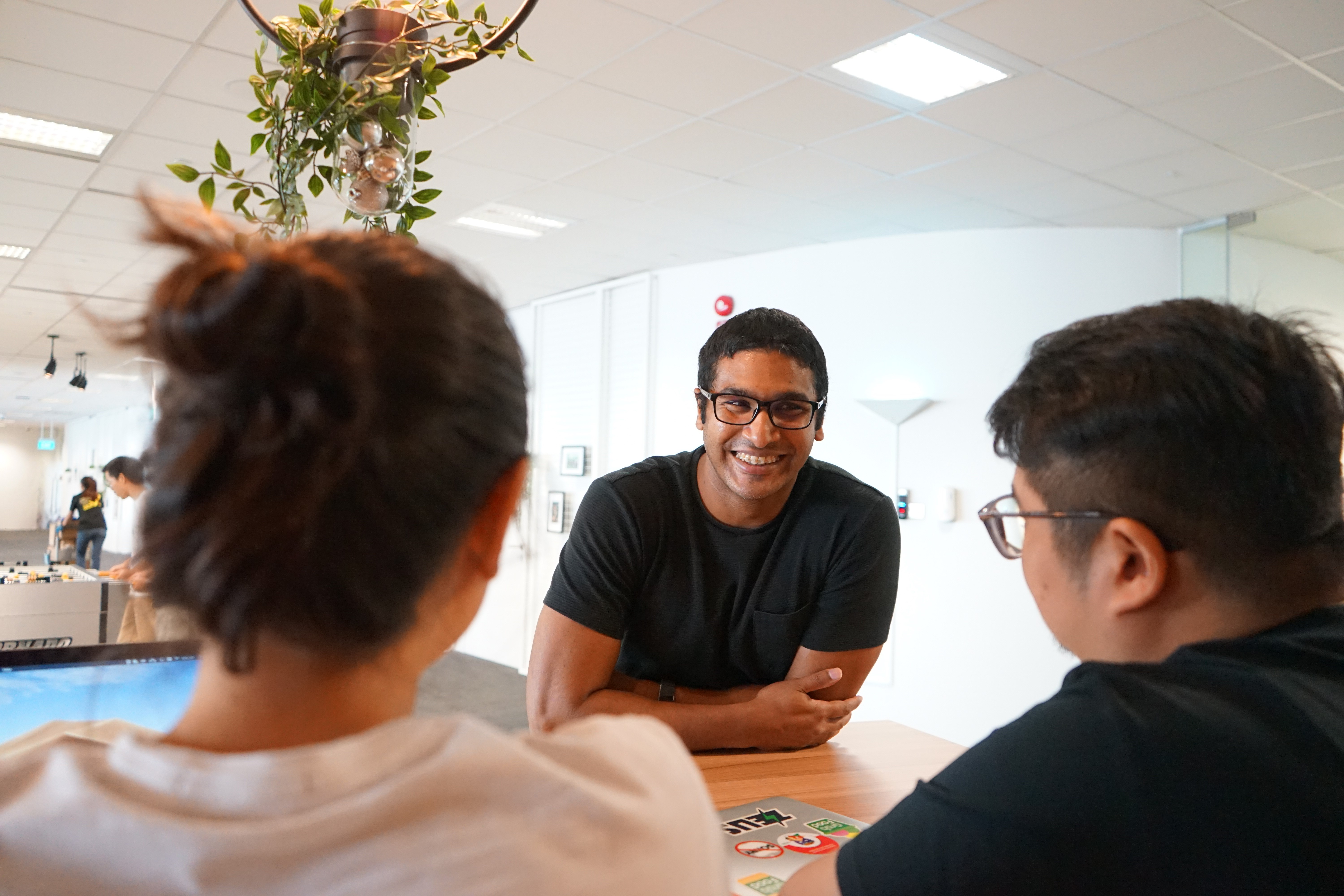
Suthen Thomas, chief technology officer of deliveries at Grab / Photo credit: Grab
The company strives for the “perfect experience”: Users’ orders are placed in seconds, delivery partners step into restaurants just as the food is served, and the meal reaches consumers in the best condition.
To this end, GrabFood’s tech teams have rolled out over 130 front-end and back-end tech enhancements over the past year. The company’s back-end analyzes millions of attributes to give more personalized recommendations and reduce inefficiencies from order to delivery.
Thomas gives the example of optimizing the delivery process. “We’ve built a model that allows us to assign orders that are suited to different delivery modes,” he explains. “Orders that can be completed faster on footpaths are allocated to cyclists, while routes that are mostly on flat roads and with proper footpaths are prioritized for wheelchair-bound partners.”
It also predicts which delivery partners can deliver orders in the fastest time based on location, food preparation time estimation, real-time and historical traffic data, delivery distance, and more, Thomas says.
Delivery partners are then guided to take the most efficient routes and go to the right drop-off points. “For the consumer, we want to get food to them fast, and for our delivery partners, our goal is to reduce any idle time and allow them to earn more,” he adds.
It’s an approach that takes every step of the process into consideration and optimizes it – in fact, this has helped Grab’s delivery partners perform 60% more orders per hour, says Thomas.
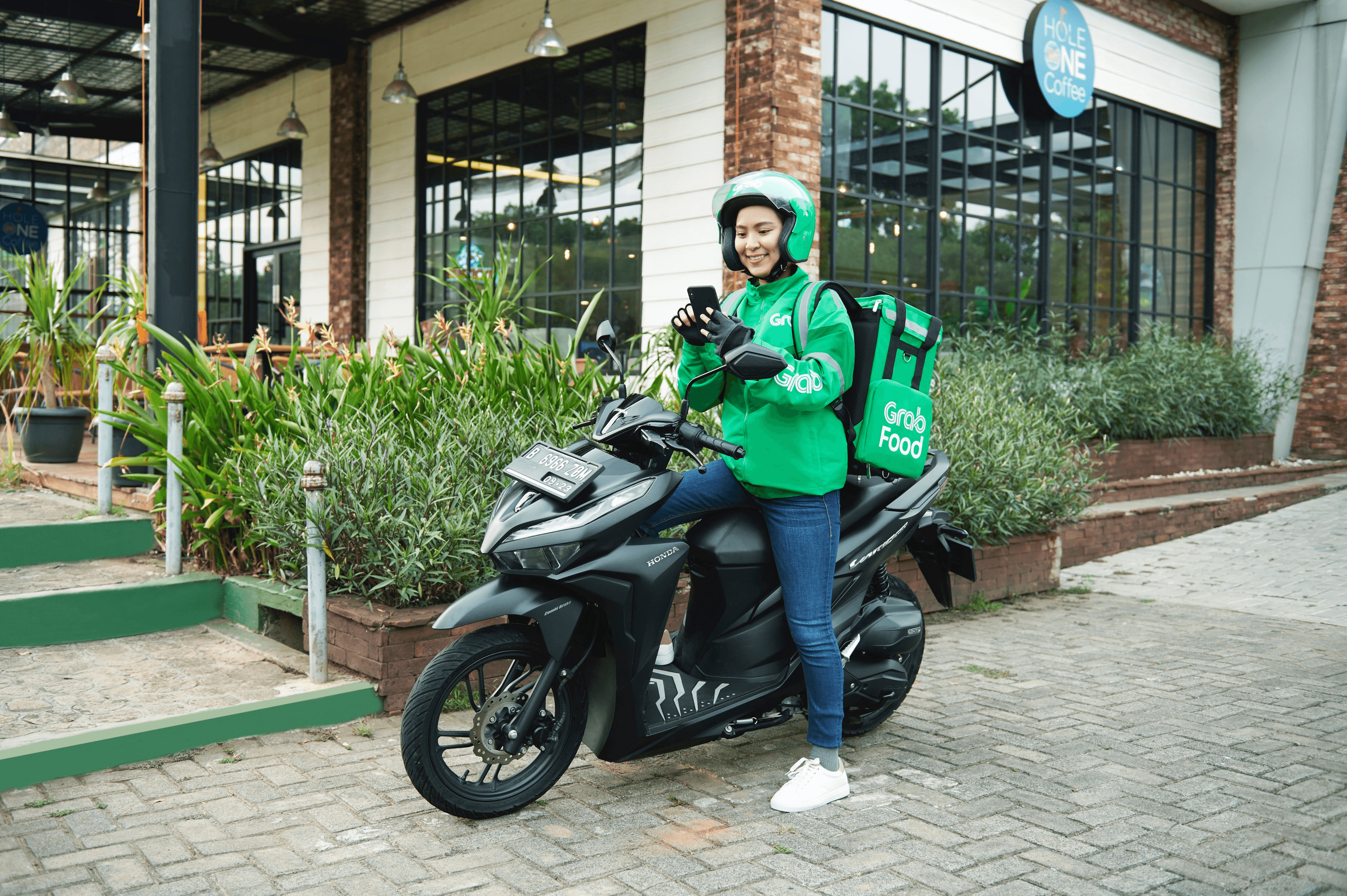
Photo credit: Grab
Beyond fundamentals
The insights that Grab gleans go towards improving the user experience in other ways.
“By looking at the types of food and drinks consumers order and search for frequently, we come to understand trends and preferences,” says Thomas. “With these insights, we co-create innovative and exclusive menu items with merchant partners and offer them exclusively to GrabFood users – it’s about finding unique ways to add value to consumers and merchants.”
He points out that these efforts are also put into analyzing food demand gaps that exist in the cities the firm operates in, and then closing them by establishing and expanding cloud kitchen networks. This gives consumers access to more cuisine options and helps merchants extend their reach.
This is made possible by Grab’s machine learning and AI models, which enable the company to understand consumer preferences at scale. “We want to provide personalized restaurant recommendations and relevant deals to consumers,” says Thomas.
The improved discovery and recommendations on the app has made it twice as likely for consumers to find something they like.
The GrabFood team keeps working to perfect the fundamental factors of delivery times and menu expansions and introducing functions that can boost convenience. Beyond food delivery, Grab is also planning to bring GrabMart and Self Pick-up, its digital takeaway service, to more locations.
“Self Pick-up enables consumers to beat the queue by placing their orders through GrabFood first and picking them up when ready for collection,” says Thomas. “We’re also building a group ordering feature that will enable different people to directly add their orders to a shared basket.”
These initiatives are aimed at addressing evolving consumer preferences, providing the convenience that many in the region seek. The idea is to make the entire food experience as seamless as possible.
Adapting to a diverse region
With differing levels of digital capability and adoption across Southeast Asia, building the food delivery ecosystem isn’t a straightforward task. To address this, Grab uses different models in certain markets to cater to merchants who are in the early stages of digitizing their operations as well as those that are already active participants of the digital economy.
In Singapore, all its merchants are on the integrated delivery model, which allows them to manage their online storefront on the app. But in markets such as Indonesia, where small businesses may not be as digitally ready, Grab also offers the concierge model, where the GrabFood order goes directly to the delivery partner, who goes to the restaurant and manually makes the order.
The concierge model, however, is not without its drawbacks. It’s not as efficient as the integrated model, and there are inconveniences such as finding out the item is sold out only when the delivery partner arrives at the store. That said, it still plays an important role as an entry point into the digital economy for many small businesses that are new to tech, Thomas observes.
As it works with merchants both big and small, Grab also customizes its solutions according to the needs and operations of its partners. “Larger chains tend to have more established processes and come to us for more specific needs. For example, we directly integrate with the systems of large merchants so that the orders go straight to their point-of-sale as well as kitchen management systems,” Thomas describes.
He adds, “Some chains may already have their own delivery fleet but want to reach more customers through our app, while others need help with delivery.”
Thomas thinks that customization is the way to go in a region as diverse as Southeast Asia. “We have to localize technology and tailor our solutions to make it accessible for people and businesses.”
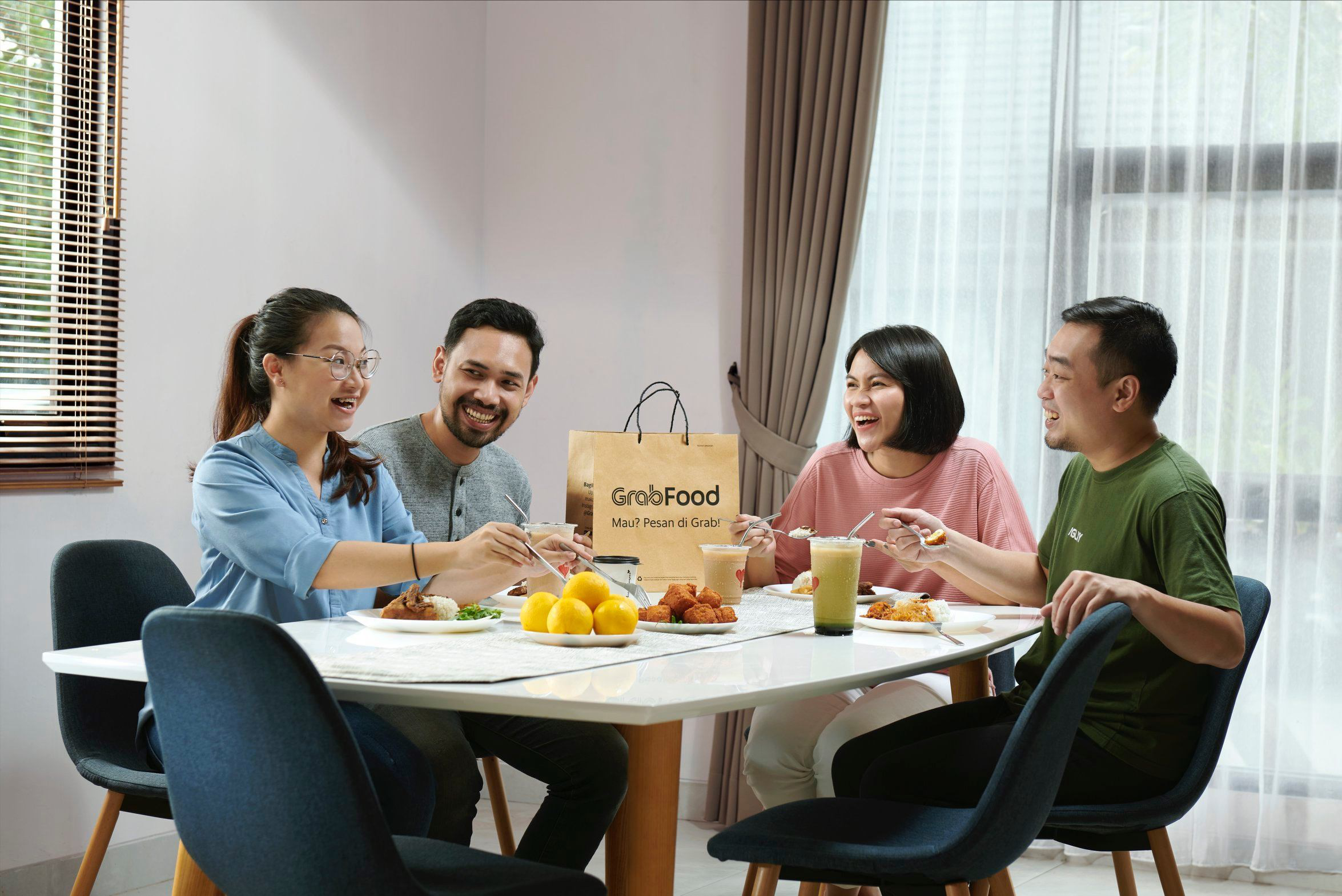
Photo credit: Grab
Adjusting to extraordinary times
As the Covid-19 pandemic continues, limiting exposure is a concern for many. Addressing this, GrabFood has introduced a contactless delivery option where customers can have their food dropped off outside their door instead of receiving it directly. It’s also working with merchants to set up contactless takeaway stations to ensure delivery partners do not come into close contact with merchants.
With more cities going into lockdown, the offline traffic for food businesses has taken a hit. “SMEs are the backbone of Southeast Asia and we see it as our responsibility to help them tide over this difficult time,” says Thomas. “We’re working hard to take their businesses online so that they can continue to earn a living and take care of their families.”
Interested to find out more about the tech that powers Grab’s services? Read about them on the company’s tech blog.
Stay updated on the go with our mobile app.
Get latest insights with smoother, more personalized experience through TIA mobile app.
Recommended reads
 Indonesian AI startup goes global
 Forrest Li on scaling Sea, building smarter bots, and founder grit
 An AI assistant that joins sales calls and scores team skills
 SGX’s CEO says it doesn’t need a unicorn to win
 SMEs want AI too, but not the kind Big Tech is selling
 Oatside’s alt-milk rise hits a profitable gear
 Alibaba’s financial health in 12 charts
 Asia’s telcos bundle AI into mobile plans. Will it pay off?
 M-Daq chases bigger clients as revenue falls, losses grow
 VC tracker: Accel raises US$3.5b, including US$550m for India





Editing by Nathaniel Fetalvero and Eileen C. Ang
(And yes, we’re serious about ethics and transparency. More information here.)