Terence Lee · · 8 min read
Despite brutal competition, Singapore’s fashion industry experiences a rebirth
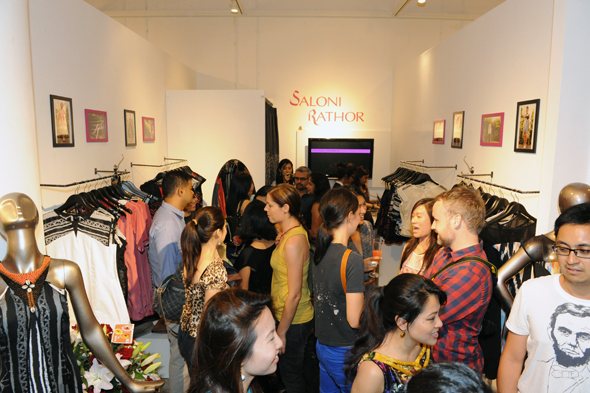
It’s a packed house at the retail launch of PARCO next NEXT’s new labels on 14th April.
Globalization has dealt local fashion labels a bad hand.
It used to be that fashion designers in Singapore could fill a niche between mass market apparel from the department stores and expensive luxury brands.
David Wang, vice president of the Textile & Fashion Federation (TaFf), lived in that era. As a local fashion pioneer in the 80’s, the runway for him to maneuver was much wider. Global brands like Topshop, Uniqlo, and H&M were not around to compete for the Singaporean’s fashion budget.
But the times changed.
“During my time, Singaporeans had pride in local brands. The good old days are gone. Now they look at price,” he says, “they’re very practical. If they look at a dress from a local designer that’s $399, they won’t support her. They’d rather go to H&M to pick up an entirely new wardrobe.”
While there’s a lot of hullabaloo these days about the power of e-commerce as a powerful, superlative, enabler for startups, David cautions that the Internet’s low barrier of entry results in more competition. Some blogshops, for example, offer cutthroat prices for their items.
In the face of such a brutal environment, PARCO next NEXT was started in 2010 to prop up the local fashion scene. It is a fashion incubator that picks promising fashion designers and puts them under an 18-month training and mentorship program to learn the ropes of being a successful fashion entrepreneur. They’re incubating the third batch.
What sets PARCO next NEXT apart from counterparts in countries like Korea, London, and the United States is their strong emphasis on retail: Incubatees are given a free storefront in the PARCO department store at Millenia Walk throughout the course of the program, renovated to reflect their branding.
The fashion designers are required to clock eight hours a week on the shopping floor, not so that they can become “cheap sales staff”, but because they would be able to understand customers and get better feedback.
This incubator has gotten such a strong reputation that delegations from Southeast Asia have come to learn about it. In fact, fashion designers from other countries wish they have something like this in their homelands.
But setting up PARCO next NEXT wasn’t easy. It required funding from the government, expertise from an industry body like TaFf, and also retail space from a wealthy private company like PARCO, based in Japan.





Stay updated on the go with our mobile app.
Get latest insights with smoother, more personalized experience through TIA mobile app.