Malavika Velayanikal · · 7 min read
What made a Japanese VC bet big on this young Indian logistics startup?

I like orange cream biscuits. Almost everyday, I have a couple of them with tea. Today, I enjoyed them a little more. That’s because Pushkar Singh, a bright young engineer, took me right back to the start of that biscuit’s long journey to my plate.
Singh helms a startup called LetsTransport. It uses technology to erase logistics woes for businesses in different verticals, from catering to construction. It has a fleet of 100 trucks in Bangalore, which can be booked either on-demand or on a contractual basis. Consumers can use it to book a truck anytime they need to relocate, transport furniture, or cart any other heavy goods within the city. Businesses use it for last mile logistics to make their supply chain more efficient.
Yes, LetsTransport is one of the many logistics startups that have sprouted in the past year. But there is a reason why this six-month-old tech startup bagged US$1.3 million in its first round of funding. And a reason that money came from Japanese VC firm Rebright Partners and seasoned entrepreneurs Ankush Nijhawan, Gaurav Bhatnagar, and Manish Dhingra.
To understand why, we have to return to my orange cream biscuits.

Sudarshan Ravi, Pushkar Singh, and Ankit Parasher – co-founders of LetsTransport
Full-time job of chasing trucks
A year ago, Singh was working with Indian conglomerate ITC. ITC is into multiple businesses, from fast moving consumer goods (FMCG) to hotels and technology. One of them is a biscuit label called Sunfeast. Singh was a manager in charge of its manufacturing operations.
Every time the company launches a new variety of Sunfeast in the market, a logistics nightmare begins for the managers. Each and every ingredient has to arrive at the factories at the right time. The finished product – cartons of biscuits – have to reach stores on time for the launch. There are countless whos, whats, whens, and wheres in between.
But they all hinge on one thing: “[that] the managers get down to the floor, pick up the phones, and start chasing trucks,” says Singh. “If a certain ingredient that goes into making a particular type of biscuit is missing, you cannot plan your operations in the factory or subsequent distribution network. To ensure that doesn’t happen and coordinate everything else, you will need to call up over 80 trucks – just for one particular product.”
It was a big problem waiting to be solved. He discussed it with Sudarshan Ravi and Ankit Parasher, friends from his college days at Indian Institute of Technology (IIT), Kharagpur. “We saw where technology could be infused into the logistics chain to make life easier and a little more efficient,” says Singh, recalling how the three friends started LetsTransport.
Vital cog for just-in-time manufacturing
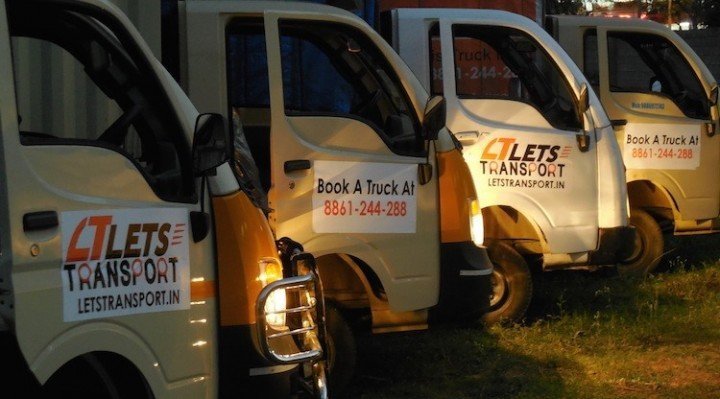
Singh, Ravi, and Parasher started testing the waters last November. They found no shortage of trucks in the market. At every local vehicle stand, there were a few trucks idling, their drivers lazing. But when you needed to hire a truck, it was hard to find one that fit the bill. And most times, you had to haggle with the driver.
Bigger problem in India than anywhere else
Understanding the needs of customers
Japanese efficiency





Stay updated on the go with our mobile app.
Get latest insights with smoother, more personalized experience through TIA mobile app.