Nadine Freischlad · · 4 min read
Indonesia’s academic research is about to become much more accessible
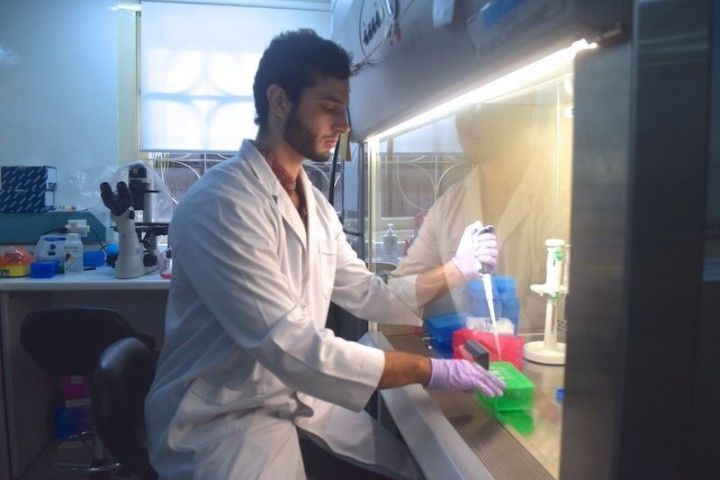
In a way, Anton Lucanus is just a kid from Perth in his early twenties who recently graduated from university. Yet despite his young age, Lucanus is one of those people with big ideas and the drive to make them work. His grand plan is to build Indonesia’s first open access research database, Neliti: a one-stop portal for Indonesia-related science research, spanning articles, studies, and raw data.
Lucanus is close to Indonesia through his studies and work as a researcher. He did volunteer work in the country as a teenager. In 2014, he returned as an exchange student, double-majoring in human biology and the Indonesian language. This year, he’s part of a research team based in Jakarta, conducting studies on virology with funds from the US Center for Disease Control. However, one of the major challenges Lucanus faces in his work is the lack of access to previously published data.
“The information is out there, but it’s hidden somewhere in cyberspace and difficult to locate. In worst cases, researchers have to personally visit the offices of research institutes and government bodies to find certain information,” explains Lucanus.
The lack of coordination between researchers, universities, and government agencies is a known problem in the archipelago. But so far, there hasn’t been an effective attempt to untangle the mess.
Lucanus remembers a scene from a science conference: a UN official proposed a solution to the communication problem. “He presented this complicated diagram with a thousand arrows, pointing this way and that, describing a flow of information,” Lucanus recalls with a laugh. The solution needed to be simpler, and Lucanus decided to take matters into his own hand.
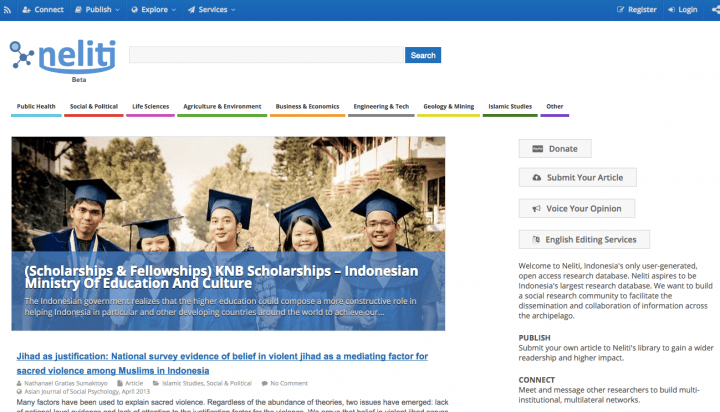
“Neliti is the first attempt to gather journal articles, datasets, reports, books, and conference papers, and put them in a single database. This saves valuable time and money for all researchers in Indonesia,” he explains.
One database, millions of connections
Lucanus is still involved in the virology research program, but he currently spends about half his time on Neliti, together with co-founders Surya Darma from Indonesia and Patrick Jones, who is based in Australia.
Neliti launched a beta version in late April. So far, it has seen some 130 uploads from about 150 registered users. The goal is to get to 3,000 members before starting a larger roll-out.
The site grows by importing articles, studies, and data in bulk through cooperations with universities and government bodies. It also encourages individual academics to sign up and submit their own articles.
But Neliti is more than a collection of documents. The platform offers tools to help researchers understand who their readers are and how their work is cited. For example, Neliti helps its users to obtain a so-called DOI for their papers. DOI stands for digital object identifier. It’s a system that can attach a range of metadata to documents permanently and securely. It also allows documents to be automatically indexed by databases, and ensures documents can be found even if the URL changes. Only a handful of organizations are entitled to assign DOI, so Neliti’s position as a mediator is crucial.
Finding international readership
Getting Indonesian research into the DOI system is just one piece of the puzzle. Neliti has a broader goal to move Indonesia’s entire research sector forward, says Lucanus. The database of journal articles, datasets, reports, books, and conference papers forms Neliti’s core. Beyond that, the site also includes research related career listings, information on grants and funding, as well as an events calendar.
Two sister sites in the pipeline





Stay updated on the go with our mobile app.
Get latest insights with smoother, more personalized experience through TIA mobile app.