- Premium Content It takes our newsroom weeks - if not months - to investigate and produce stories for our premium content. You can’t find them anywhere else.
 Jum Balea · · 11 min read
A deep dive into PropertyGuru’s financial numbers and market share
Southeast Asian online property classifieds firm PropertyGuru just shelved plans for a A$380 million (US$260 million) initial public offering. Despite seeing robust interest from investors, “uncertainty in the current IPO market” prompted the decision to postpone, the company said in its October 23 statement.
Beyond that, however, analysts have raised concerns about the firm’s growth story.
“While PropertyGuru is a good company, the forecasts [in the prospectus] are based on a bull scenario, leaving little room for any setbacks,” says Arun George of Global Equity Research who publishes on Smartkarma.
Tech in Asia looked into the IPO prospectus, along with analysts’ take and external stats, to identify some areas of caution and bright spots for would-be investors.
Not as good as it first looks?
PropertyGuru has recorded positive EBITDA – which means it’s operationally profitable – as well as rising margins and double-digit revenue growth rates, as per its prospectus.
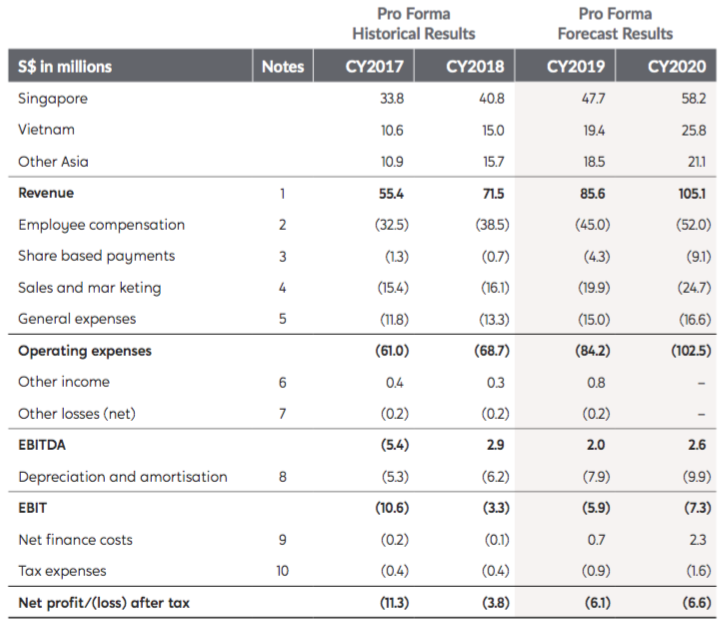
We look at the “pro forma” results to eliminate non-recurring or one-off items / Source: Prospectus
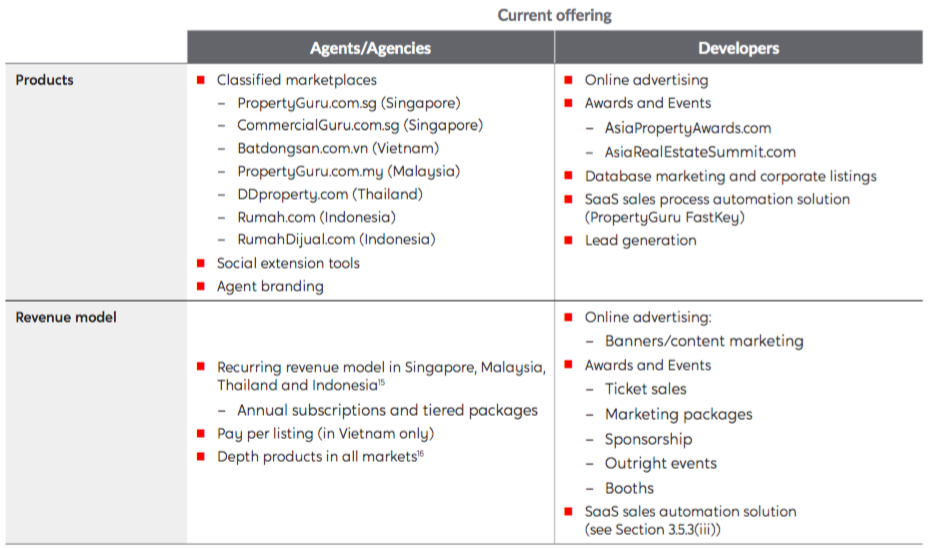
The KKR-backed company, which connects property buyers and sellers online, derives revenue mainly from real estate agent subscriptions (which accounted for 73% of 2018 revenue). Agents pay upfront fees for annual subscription packages, which provide them a number of listings and discretionary credits. These credits can be used to purchase “depth products” – add-ons like display rankings to enhance the performance of their listings. Agents have the option to buy additional credits to supplement those in their subscription package or get certain features directly on a cash basis.
Higher-tier packages offer more features like competitive insights, monthly advertising, and floor plans.
PropertyGuru also sources revenue from real estate developers (27% of 2018 revenue) for ads and use of its software-as-a-service platform FastKey to manage properties from launch to sales conversion, among others.
Source: Prospectus
But George and another analyst, Sumeet Singh of Aequitas Research, aren’t entirely convinced by the rosy financials PropertyGuru has presented, saying the company’s margins are supported by aggressive accounting policies.
That’s because the company capitalizes research and development costs – i.e. labor costs relating to the development of new products and platforms – with the view that new products “contribute to revenue growth in future periods.” Capitalized costs are not expensed as they are incurred but recognized over a period of time via depreciation or amortization.
While many companies like top Australian online classifieds REA Group also capitalize R&D costs, George says the “best in class” like UK’s Rightmove fully expense them. “If PropertyGuru would adopt the most conservative accounting policy, it would show no operational leverage between CY2018 to CY2019 and its EBITDA margin would halve in CY2020.”
Revenue projections ‘too optimistic’
Intensifying battle in main market
Widening losses in ‘Other Asia’ markets
Vietnam, adjacent services are bright spots
Stay ahead in Asia’s tech landscape
This is premium content. Subscribe to read the full story.
As the company postpones its IPO, analysts say its growth forecasts seem too bullish.
We know this is not ideal. ⌛ Sign up in 20 seconds. Cancel anytime.
Our subscriber community includes professionals from these companies:





Stay updated on the go with our mobile app.
Get latest insights with smoother, more personalized experience through TIA mobile app.













📅 Upcoming Events
22 October 2026
Payoneer x CSPN Summit 2026