Startup leaders are likely to encounter a term sheet at some stage, and that can be pretty intimidating, even for experienced founders.
Term sheets are non-binding and have no “one size fits all” approach, yet they shape the future of a startup for the next decade or even longer. For founders, they raise the fear of the unknown or making a mistake that they may regret later.
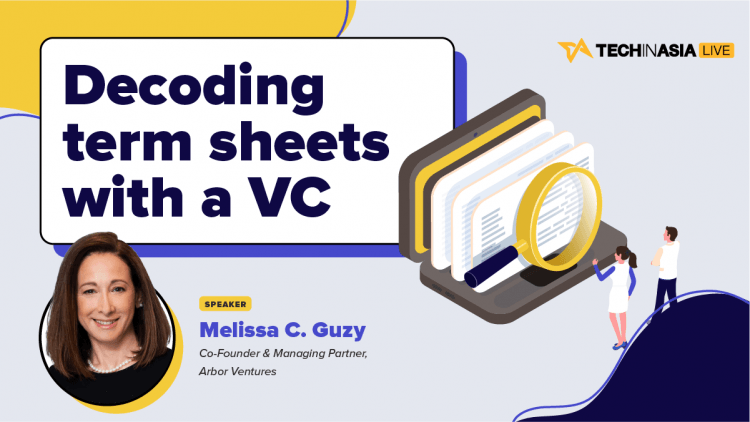
In our previous Tech in Asia Live event, held on February 4, we learned everything about that oh-so-complicated term sheet with Melissa Guzy, co-founder and managing partner of Arbor Ventures. With more than 25 years of experience both in the venture capital (VC) industry and as an entrepreneur, Guzy is most definitely well-versed in term sheets and has a lot of valuable tips to share with fellow founders.
Exclusively designed for our Tech in Asia Live and Core subscribers, the interactive workshop is part of our lineup of training-based events aimed at equipping founders with the necessary tools to navigate their challenging and often confusing startup journey. (We’ve already covered pitching to VCs, startup valuation, and exit strategies, and coming right up is cap table management!)
During the session, our attendees got to tap into an experienced VC’s knowledge and personally ask Guzy their burning questions. Here’s a sneak peek into what happened:
Session overview
Guzy kicked off the workshop by sharing that VC terms are starting to get standardized all over the world by associations such as the National Venture Capital Association (NVCA). Here’s a pro tip: you can visit their website here to download some useful sample documents!
She then went on to introduce two standard structures in VC financing, convertible debt and equity financing, before going in depth on the latter.
Guzy emphasized that it is crucial for founders to have documentations in order before getting started on term sheets because that is indicative of how detail-oriented they are as leaders. Before issuing term sheets, VCs would want to see a startup’s legal documents such as articles of association, existing financing documents, and its cap table. She warned that messy documents are often seen as red flags by investors – so make sure to choose a legal counsel that is experienced with the startup world!
When it comes to term sheets, Guzy advised founders to look beyond valuation numbers because they have very little to do with VC returns. Certain terms can actually undermine the face value of a startup valuation.
She then dove deeper into some key clauses in term sheets, from general ones such as “summary of terms,” “non-binding,” and “non-shop” to economic clauses such as “ESOP,” new money,” and “cap table.”
On the other hand, some clauses that founders need not spend too much time negotiating include “dividends,” “anti-dilution provisions,” and “registration rights.”
Guzy then showed a few real-world examples of how term sheets look like, before highlighting the importance of “term sheet manners.” When negotiating term sheets, founders and VCs should have mutual respect and open conversations. Since the investor-startup relationship can span many years, both sides should build trust and look at their relationship as a partnership rather than a mere business transaction.
The last 30 minutes of the workshop were spent answering the attendees’ burning questions. Some of the most interesting ones were:
- How do you protect the VC’s interests if startup documentation and financials are not in place yet?
- How do you recommend reaching a happy medium between existing shareholders vs new investors when their valuations of an early-stage company are far apart?
- From an investor’s point of view, what are the upsides and downsides of a convertible loan to a startup?
Through this workshop, our subscribers got a good understanding of the key clauses to look for when negotiating term sheets in their startup journey. Although it can be complicated, the process can definitely be made easier with the help of some studying (such as through our Tech in Asia workshops), a lawyer with VC experience, and the right investors.
Catch up on the full session
To ensure that our audience gets the maximum value out of their subscription, our workshops are crafted with quality content, valuable business lessons, a practical working template, and the chance for attendees to get acquainted with fellow founders from the region.
If you want to be part of the gang, simply subscribe to Tech in Asia Live at just US$0.16 per day. As a subscriber, you can also watch the full session on decoding term sheets with a VC here.
Stay updated on the go with our mobile app.
Get latest insights with smoother, more personalized experience through TIA mobile app.
Recommended reads
 Forrest Li on scaling Sea, building smarter bots, and founder grit
 SGX’s CEO says it doesn’t need a unicorn to win
 SMEs want AI too, but not the kind Big Tech is selling
 Oatside’s alt-milk rise hits a profitable gear
 Alibaba’s financial health in 12 charts
 Asia’s telcos bundle AI into mobile plans. Will it pay off?
 M-Daq chases bigger clients as revenue falls, losses grow
 VC tracker: Accel raises US$3.5b, including US$550m for India
 Graas buys Temasek-backed Trustana in agentic commerce push
 Doctor Anywhere posts healthier operations in 2025





Editing by September Grace Mahino
(And yes, we’re serious about ethics and transparency. More information here.)





