
Welcome to The Offset! Delivered once a month via email and through the Tech in Asia website, this free newsletter breaks down the biggest stories and trends in greentech. Get it in your email inbox by registering here.
Hello readers,
It’s become increasingly clear that businesses need to start paying attention to environmental and social considerations in order to stay competitive and relevant in the future. But the current macroeconomic environment is unfavorable for young companies to get the funding they need to decarbonize.
Moreover, global standards around things like ESG (an approach that focuses on environmental, social, and governance factors) are only starting to shape up. Still, some of Southeast Asia’s largest technology companies are taking the first steps to tackle their big carbon footprints.
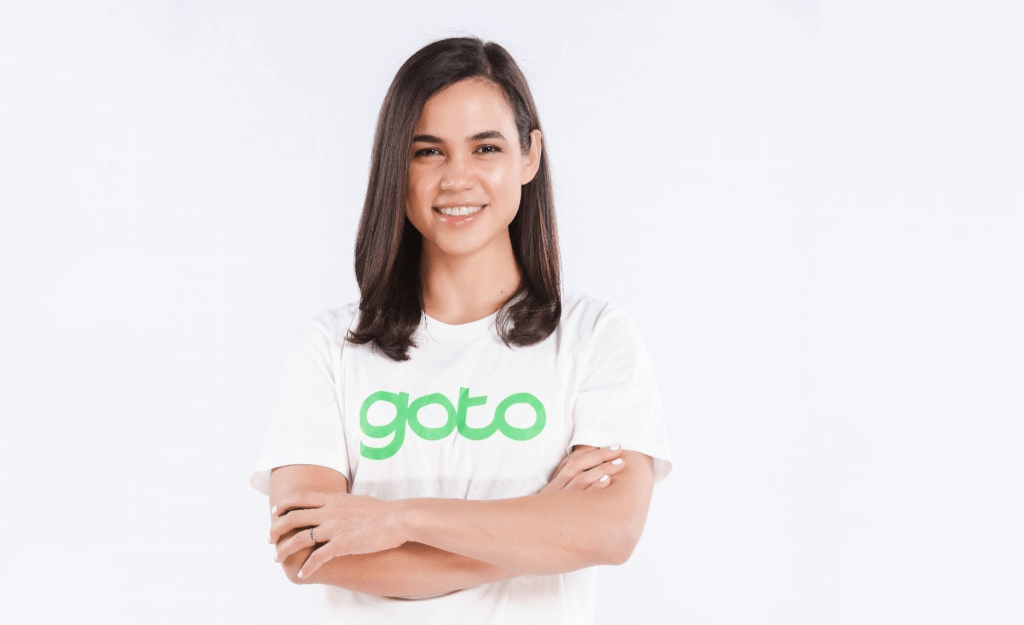
For this issue, we sat down with Tanah Sullivan who is leading the sustainability efforts at Indonesia’s largest tech company, GoTo Group. She talked about how her team laid the foundation for implementing sustainability initiatives across the expansive Gojek-Tokopedia ecosystem in the early days and offered some valuable advice for young companies who might be thinking about embarking on a sustainability journey.
Enjoy reading!
– Nicole
THE BIG STORY
SEA tech companies’ efforts into net zero
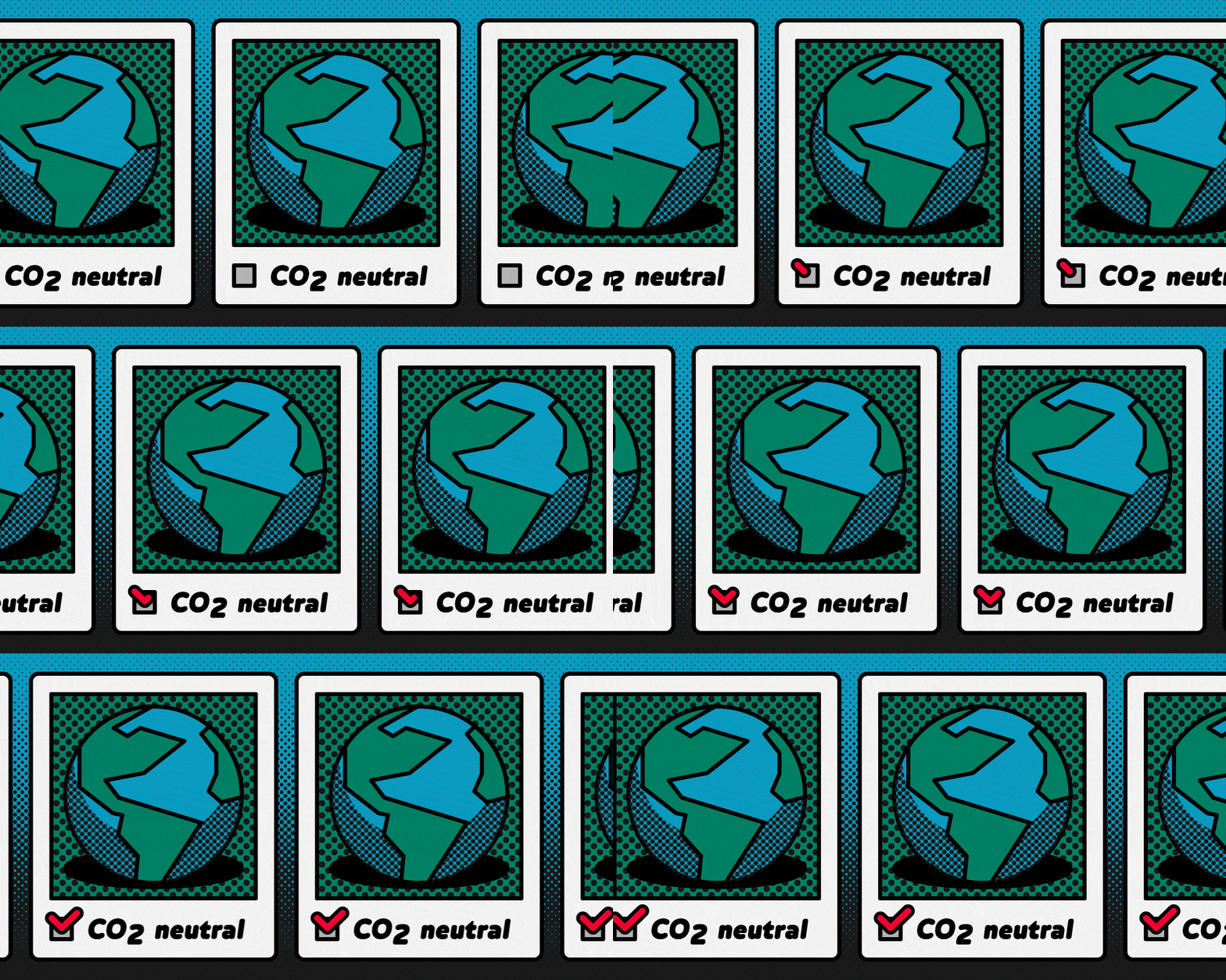
Image credit: Timmy Loen
Southeast Asia’s digital transformation has led to a surge in energy demand and, consequently, a substantial increase in carbon emissions. In this visual story, we look at how the region’s technology majors are confronting the issue and taking steps toward carbon neutrality.
DEEP READ: Q&A WITH TANAH SULLIVAN
Sullivan joined Gojek in October 2020, and Gojek and Tokopedia completed their merger in May 2021. She developed GoTo’s roadmap to sustainability from scratch.
What are the most important aspects of your job?
It’s about how to embed sustainability in our day-to-day operations and that it is slowly—and I say slowly because we are very careful about this—becoming part of the way every unit functions, from budget to corporate strategy to the fulfillment centers.
Another part of it is how we share the insights through all these efforts we are making. Yes, there is shareholder expectation that we do this, but there is also a broader and more diverse set of stakeholders that are part of the company’s considerations as it decides on its future strategy for growth.
How do you ensure business units across GoTo’s ecosystem are on the same page?
My team and I spent the better part of the first 12 months trying to understand all the business units, their corporate functions, and their operational realities. It would be easier to come work backward from (standard) industry best practices, but we didn’t want to be prescriptive in that sense.
For example, my team spends time at Tokopedia’s fulfillment centers and with Gojek drivers every month. So, when the transport team was mapping out the cities before launching EV (electric vehicle) pilots and discussing how to bring down the cost of e-bikes for our drivers, my team was there brainstorming with them. We want to make sustainability part of day-to-day operations.
What challenges did you encounter while implementing sustainability initiatives?
Getting the alignment that you need to be able to do things fast takes a lot of time. You need to build trust with the different teams internally and understand their operational realities before thinking about relevant recommendations.
Externally, one of our biggest challenges is our decentralized ecosystem with 15 million merchants and sellers across the region. So you’re trying to account for the waste that is being generated by the ecosystem, though it’s not directly produced by the company. How do we get the sellers to shift toward more sustainable packaging, especially when the cost of such packaging is still at a premium compared to single-use? That’s why it may seem like progress is not as rapid as we’d like it to be. Because we want to get it right before we introduce or scale anything across the ecosystem.
What was the process of developing a roadmap and expanding the Three Zeroes across GoTo?
The first thing we did was waste accounting of our entire ecosystem so we have a good understanding of our direct and indirect impacts. And we did the same with emissions. That was very telling in terms of how and where the biggest sources of our emissions and waste are coming from and then, what we should tackle first. We coupled that with a comprehensive materiality assessment, which we had never done before.
Then we did over a hundred hours of consultations with our shareholders and stakeholders (users, merchants, drivers, leadership, employees, regulators, NGOs, and some of the partners that we work with). That’s how the Three Zeros was formed.
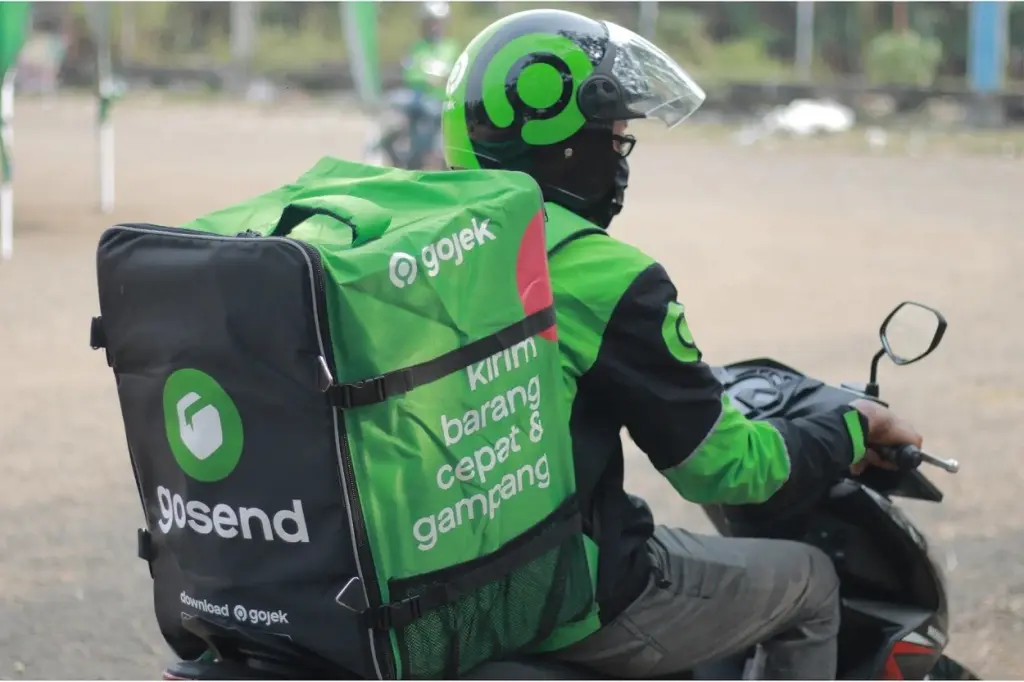
Photo credit: GoTo Group
How do you navigate the rapidly evolving landscape of ESG reporting?
I am fortunate because of the roles I’ve had at the World Economic Forum. I am a part of their working group on ESG reporting with institutions that are responsible for creating those reporting standards. Being privy to those conversations and what’s happening was insightful.
But I will say it’s still a bit of a wild west, especially for our industry. The best practices are being written as we go.
What advice would you give to other startups in taking steps toward net-zero?
These things are much easier to build in as your company grows. Embed this as much as possible into all the processes and operations you have. It can just be a matter of screening—whether it’s the new product or service you’re launching or the existing ones you have—with the relevant environmental and social considerations.
If you have the right governance structure and the right leadership, a lot of this stuff starts to become organic.The other thing is understanding your ecosystem and your stakeholders. For us, they’re the core of what we do. Also, make sure there is two-way communication and demonstrate how you’re integrating their feedback.
TRENDING NEWS
You can also check out Tech in Asia’s coverage of Asia’s greentech scene here.
1️⃣ BP buys 40.5% stake in massive renewables and green hydrogen project
BP Plc is taking the lead in the Asian Renewable Energy Hub. The US$36 billion project aims to install 26 gigawatts of solar and wind farms in Western Australia’s Pilbara region and use the renewable energy generated to split water molecules into hydrogen and oxygen. The project, once completed, would be operated by the oil giant. It is expected to produce about 1.6 million tons of green hydrogen or 9 million tons of ammonia per year, which could be used as fertilizers.
Why it matters:
Until recently, the hydrogen ambitions of major oil companies have been modest. However, as the pressure to transition to cleaner energy mounts, many of these firms are devoting a growing portion of their money to clean fuels like green hydrogen.
These deep-pocketed oil companies and their multibillion-dollar projects could help advance the production of green hydrogen. But, as it stands, there is still a long way to go before these projects are proved to be commercially viable.
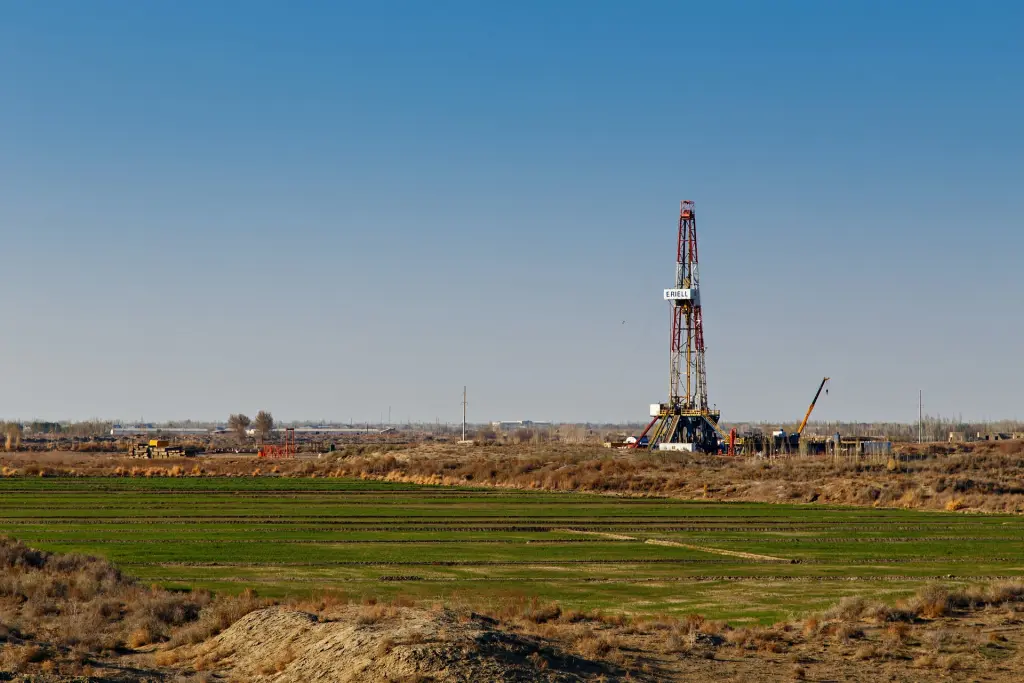
Photo credit: Worksite / Unsplash
2️⃣ Redwood Materials partners with Toyota to recycle batteries in the US
Redwood Materials, a lithium-ion battery-recycling startup founded by Tesla’s former CTO, is partnering with Toyota to collect, refurbish, and recycle batteries and battery materials for the Japanese carmaker’s planned North Carolina battery plant.
Under the partnership, the startup will collect and recycle batteries from Toyota’s retired hybrid and electric vehicles.
Why it matters:
The demand for lithium-ion batteries and battery materials is soaring with the global boom in electric vehicles. Redwood Materials has partnered with other manufacturers, including Proterra, Ford, Volvo, and Panasonic, to supply to other electric car factories in the US.
3️⃣ ESG loans with little transparency boom in China, Hong Kong
Sustainability-linked loans signed by Chinese and Hong Kong firms have reached US$13.1 billion, already surpassing last year’s mark of US$12.6 billion. These loans lay out sustainability targets for borrowers—if the companies meet them, they can pay lower interest, but if they don’t, the interest can be raised.
Why it matters:
Such sustainability-linked lending does not require companies to use the proceeds in ESG efforts. Moreover, borrowers are only encouraged to release details on how they meet the targets. The lack of transparency on these loans is just one of the many issues with the growing ESG industry.
4️⃣ Southeast Asia ‘well short’ of 1.5°C climate change goals: Bain, Temasek report
Southeast Asia’s decarbonization efforts are falling short, according to a report by Bain and Company and Temasek, with contributions from Microsoft. The report found that no country in the region is on track to meet the 2030 target compatible with the 1.5 degrees Celsius scenario.
Why it matters:
More countries in the region have made the commitment to reach net-zero emissions, but the challenges hindering climate action and investment in the region are yet to be solved.
STARTUP WATCH
1️⃣ Rimac raises more than $500m from Porsche, SoftBank, and Goldman Sachs
Croatian electric sports car company Rimac Group has raised 500 million euros (US$536 million) in a series D funding round led by SoftBank Vision Fund 2 and Goldman Sachs Asset Management, with participation from existing investors, including Porsche and Investindustrial. The funds will be used to further develop Rimac Technology, a subsidiary for designing and manufacturing electric vehicle components.
2️⃣ Sequoia China, GIC back $210m round of Envision Digital
Singapore-based greentech firm Envision Digital has raised US$210 million in a series A funding round led by Sequoia China, with participation from Singaporean sovereign wealth fund GIC. The company’s main offering, EnOS, is an AI operating system that helps organizations manage the production and consumption of renewable energy across their operations.
3️⃣ Hydrogen startup raises $198m for plants to produce green fuel
Green hydrogen startup Electric Hydrogen has raised US$198 million in a series B funding round led by Fifth Wall Climate Technology Fund. Other investors including S2G Ventures, Silicon Valley Bank, and Trinity Capital also participated. The Boston-based startup designs manufacturing facilities that extract hydrogen from water using renewable energy.
4️⃣ Fuel delivery firm Booster raises $125m in late-stage funding
Fuel delivery startup Booster has raised US$125 million in a series D funding round led by investment firm Rose Park Advisors, with participation from Japan’s Mitsubishi Corp. The California-based startup offers an on-demand platform for booking fuel services to its customers such as tech giants Amazon and IBM. The company said it is transitioning from conventional fuel sources to renewable and alternative fuel as its consumers become more environmentally conscious.
5️⃣ Hong Kong cell-cultured seafood startup Avant Meats raises $10.8m
Singapore and Hong Kong-based cell-cultured seafood producer Avant Meats has secured US$10.8 million in a series A funding round led by S2G Ventures. Other backers in the round include repeat investor ParticleX, as well as Lever VC, Artesian, Thia Ventures, CPT Capital, and the Good Protein Fund. Founded in 2018, Avant Meats is China’s first meat cultivation biotechnology firm. Going forward, the company is looking to produce traceable and sustainably cultivated proteins for consumption, skincare, and other applications.
That’s it for this edition – we hope you liked it! Do subscribe to continue receiving The Offset.
See you next month!
The Offset is made possible thanks to Taiwan Mobile.
The company earned the best telco title in the Global Views CSR Awards.
Taiwan Mobile is on a mission to transition to 100% green energy by 2040.
Stay updated on the go with our mobile app.
Get latest insights with smoother, more personalized experience through TIA mobile app.
Recommended reads
 The path that led to PayMongo’s crisis
 SG neobank secures $6.7m series A from SBI Group, others
 HK bento vending machine startup secures $2.8m pre-series A funding
 Standard Chartered backs Hong Kong eKYC firm’s multimillion-dollar round
 SG’s Silicon Box bags $200m in series B funding, claims unicorn status
 Nvidia, others inject $150m into enterprise AI firm
 The firms keeping SEA in the pink of health
 Tin Men Capital backs SG agritech firm’s $3m series A1
 Ex-Grab exec’s new climate tech venture lands seed funding
 SG healthtech firm gets additional funding after $4.8m injection





Editing by Jaclyn Tiu and Nikita Puri
(And yes, we’re serious about ethics and transparency. More information here.)





