 TIA Visuals · · 5 min read
SEA tech companies’ efforts into net zero
Charts and visuals, only for subscribers
As Southeast Asia grows at breakneck speed, its appetite for energy has ballooned by 2x from 550 terawatt-hours in 2000 to 1,100 terawatt-hours in 2018.
The region’s energy obsession shows no signs of waning. Already reeling from the effects of climate change, estimates suggest that, if left unabated, Southeast Asia’s carbon emissions will contribute to 90,000 premature deaths per year by 2030.
The good news is that major stakeholders, from corporations to governments, are taking action. Among them are Southeast Asia’s emergent tech giants. Relatively nascent, these players are charting their own paths toward net-zero carbon emissions.
The big picture in SEA
Emissions from electricity and heat production in the region are predicted to increase from 644 metric tons of carbon dioxide equivalent in 2018 to beyond 4,400 metric tons if the carbon intensity of electricity remains at its current level.
The global tech scene uses 1% of the world’s electricity. On average, big tech companies have seen a 20% year-on-year increase in electricity consumption, reaching as high as 43% in some years.
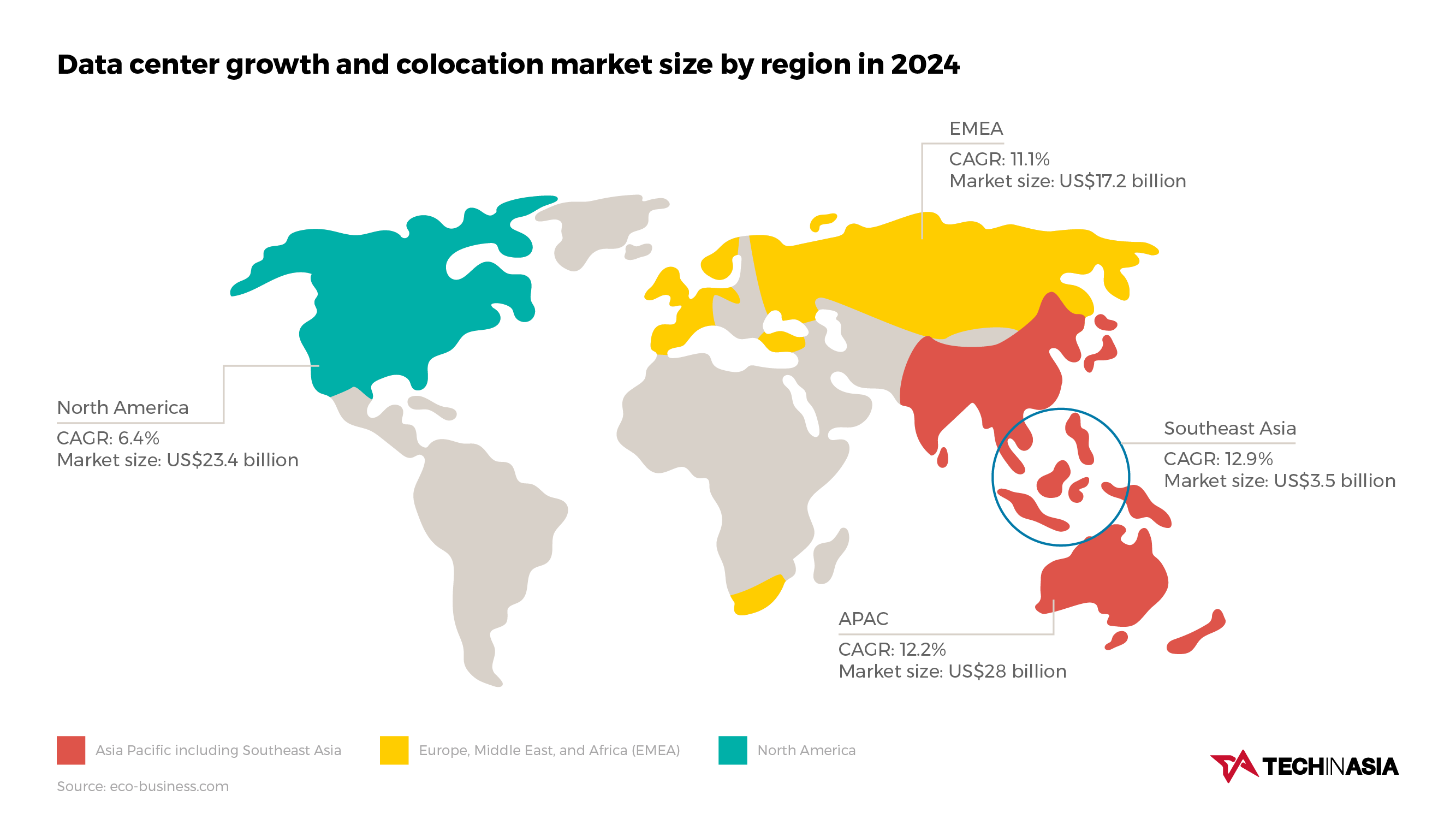
In Southeast Asia, digital transformation contributes to a substantial increase in carbon emissions. Facilities like data centers, which are proliferating across the region, require significant energy to keep servers cool.
Case in point: 60% of the region’s data centers are located in Singapore, and these facilities will account for nearly 12% of the country’s energy consumption by 2030.
With Southeast Asia expected to be the fastest-growing location for data centers over the next half-decade, the region’s energy consumption will surge past current levels by a significant margin.
What has been done?
At the highest level, most Southeast Asian countries have already pledged to achieve carbon neutrality.
Under the terms of the 26th United Nations Climate Conference of the Parties (COP26), delegates from nine out 10 ASEAN member states have committed to reaching net-zero carbon emissions during the global forum. Part of the new rules agreed upon at COP26 include reducing coal power generation and phasing out the use of inefficient fossil fuels.
Some Southeast Asian countries have also taken unilateral steps to address rising carbon emissions. Singapore is the first Asian country to join the Powering Past Coal Alliance, an international coalition that promotes the transition from coal to clean energy. Indonesia and Vietnam have also pledged to phase out coal power by the 2040s.
Businesses of all stripes are also hopping on the net-zero bandwagon.
Rising to the challenge
Credits
Share, tag us, and land on our Wall of ❤️ !
Stay ahead in Asia’s tech landscape
This is premium content. Subscribe to read and use our charts, graphics, and other visuals legally
The region’s growth has led to ballooning energy demand. Here’s how the tech giants are facing the issue and taking the steps to carbon neutrality.
We know this is not ideal. ⌛ Sign up in 20 seconds. Cancel anytime.
Our subscriber community includes professionals from these companies:





Stay updated on the go with our mobile app.
Get latest insights with smoother, more personalized experience through TIA mobile app.