Steven Millward · · 6 min read
6 reasons Alibaba just acquired an ‘Amazon clone for Southeast Asia’

Photo credit: Vendhq.
China’s ecommerce giant dropped a bombshell a few hours ago – it’s paying out US$1 billion to take a large stake in an online store often described as an Amazon clone for Southeast Asia.
The site, Lazada, was launched by Germany’s Rocket Internet in 2012. Like many of the ventures from Rocket, it was far from original – it was simply taking a proven idea from an established market (Amazon in the US) and applying it to a very nascent market. In Lazada’s case, it was going where neither Amazon nor Alibaba dared to venture: into a handful of Southeast Asia’s most promising countries.
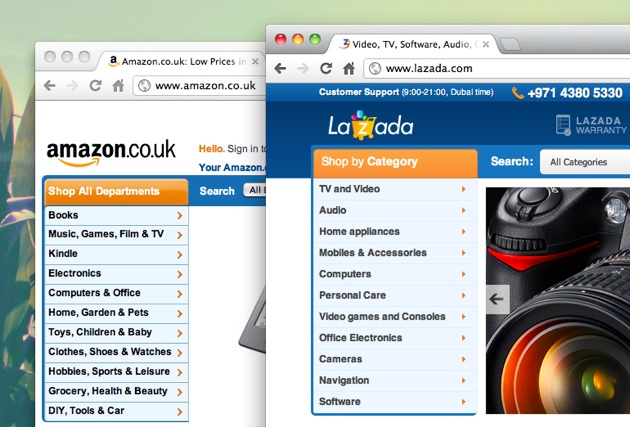
Amazon (left) versus Lazada (right), pictured in March 2012. Image credit: Tech in Asia.
Lazada took on a mixed bag of nations. Singapore is highly developed place and a relatively easy zone in which to set up an ecommerce business. Its other markets, however, are tough. Indonesia, Malaysia, the Philippines, Thailand, and Vietnam are all very early tech markets plagued by an array of issues and barriers.
With all that in mind, here are six reasons why Alibaba is diving into Southeast Asia with Lazada.
1. Alibaba has tapped China and needs new drilling grounds
Alibaba has 407 million annual active shoppers on its Taobao and Tmall marketplaces in China, according to the firm’s most recent earnings report. That’s more than double that of its nearest rival, JD, and exponentially ahead of Amazon’s struggling Chinese site.
China as a whole has 785 million mobile internet users, so Alibaba’s dominance is clear. In the past few years, Jack Ma and the crew came up with strategies to get people in the country’s far-flung places using ecommerce more often, including building distribution centres where delivery companies were lacking coverage.
“Alibaba plans to expend a lot of energy in the field of rural ecommerce. We’re really hoping to bring ecommerce to all of China’s villages, so that rural people can get a taste of the city life and sell their own products in the cities,” said Jack Ma at the end of 2014.
China, with its substantial middle class and urban populace, is now a very mature ecommerce market. It’s been a big thing since Ma launched Taobao in 2003, beating out eBay’s Chinese site.
Alibaba’s Lazada takeover brings the company onto fresh and fertile ground.

Alibaba founder Jack Ma. Illustration by Tech in Asia’s Andre Gunawan.
2. Southeast Asia is a fast-growing area with a rising middle class
3. Lazada has great traction
4. Lazada has already figured out how incredibly difficult Southeast Asia is
5. Buying is easier than building
6. Chinese sellers get access to Southeast Asia





Stay updated on the go with our mobile app.
Get latest insights with smoother, more personalized experience through TIA mobile app.